
Business communication management has become more complex than ever. Phones, cloud-based communication platforms, voice and video conferencing, and instant messaging for business now power daily operations. But when business communications systems grow difficult to maintain, expensive to upgrade, or unreliable during phone outages, dropped calls, and glitchy video meetings, organizations begin asking an essential question.
What are managed telecom services, and how do they help modern companies? Managed telecom services, also known as telecom managed services, allow organizations to shift communication infrastructure responsibilities to a managed telecom services provider. Instead of handling telecom operations alone, businesses partner with a third-party telecom provider that delivers outsourced telecom management, continuous optimization, and expert telecom support services. For small and medium-sized businesses (SMBs), this approach strengthens communication reliability, reduces IT team workload, and improves operational efficiency without enterprise-level complexity.
The State of Managed Telecom Services in 2026
By 2026, Unified Communications (UC) and advanced cloud services management define business connectivity. Traditional phone systems continue to fade as unified communications services combine voice services, video conferencing, and instant messaging into a single cloud-based platform. While this technology modernization creates flexibility and mobility, it also introduces vendor management challenges, telecom billing errors, rising maintenance fees, and pressure on IT resource management. Telecom managed services for SMBs solve these problems by delivering scalable communication solutions, improving business continuity, and building future-proof telecom systems aligned with business growth planning.
What Does a Telecom Managed Services Provider Do?
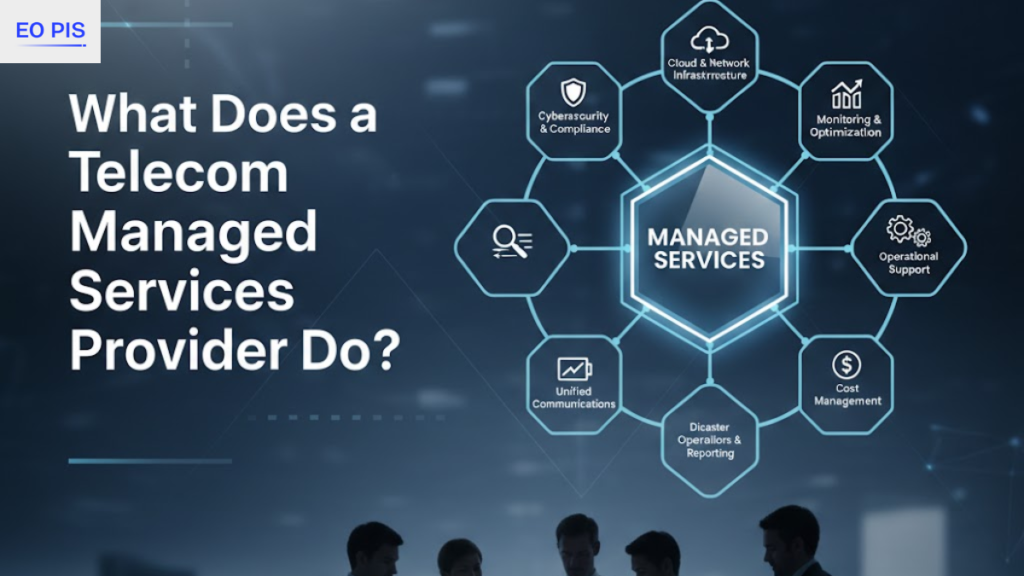
A managed telecom services provider operates as an outsourced telecom department. They oversee business communications systems, evaluate existing communication infrastructure, coordinate telecom system upgrades, enforce service level agreements (SLAs), manage telecom expense management (TEM), and deliver responsive telecom support services. This ensures organizations achieve stable cloud-based communication platforms without expanding internal teams or handling constant telecom troubleshooting.
Telecom Consulting & Optimization
Effective telecom managed services begin with expert consulting. Providers assess outdated services, inefficient tools, and unnecessary spending within the communication infrastructure. They then design optimized unified communications services that improve communication reliability, reduce dropped calls, and support ongoing technology modernization. This guarantees telecom systems match real operational needs rather than assumptions.
Contract Negotiations
Complex telecom contracts often hide unpredictable costs. A Managed Service Provider (MSP concept) handles vendor management, negotiates fair agreements, and ensures transparent billing. This protects organizations from telecom billing errors, stabilizes predictable monthly telecom costs, and strengthens long-term cost savings through strategic telecom expense management.
Inventory Management
Without visibility into devices, licenses, and subscriptions, companies risk paying for unused services. Inventory oversight within outsourced telecom management keeps every asset tracked, reduces maintenance fees, and supports smarter cloud services management. This creates cleaner budgets and a scalable communication infrastructure ready for growth.
Help Desk & Support
Daily telecom troubleshooting can overwhelm internal staff. Telecom support services provide a dedicated response team to resolve phone outages, video conferencing disruptions, and platform issues. Businesses benefit from a one-point-of-contact telecom system that accelerates resolution and strengthens communication reliability.
Proactive Monitoring
Modern telecom managed services rely on proactive monitoring of networks and cloud-based platforms. Performance tracking identifies risks early, protects business continuity, and prevents downtime. This approach ensures voice services, instant messaging, and video conferencing remain stable even as demand grows.
Key Functions of a Telecom Managed Services Provider
All services combine into a unified structure of outsourced telecom management, unified communications services, telecom expense management, vendor management, continuous monitoring, and scalable communication solutions. Together, they reinforce long-term business communication management, improve operational efficiency, and resilient future-proof telecom systems.
How Managed Telecom Services Help SMBs

Large enterprises maintain in-house telecom teams, but small and medium-sized businesses (SMBs) typically do not. Telecom managed services for SMBs provide enterprise-grade expertise without expanding the IT team workload. This allows SMBs to operate modern cloud-based communication platforms, maintain strong communication reliability, and execute confident business growth planning.
Save Costs and Remove Telecom Guesswork
Independent telecom management often leads to uncontrolled spending. Managed telecom services replace uncertainty with predictable monthly telecom costs. Providers eliminate telecom billing errors, unused services, and excess maintenance fees, delivering measurable cost savings and transparent financial planning.
Free Up Internal IT Resources
When specialists handle telecom troubleshooting, contract oversight, and system updates, internal teams regain focus. IT resource management improves as staff concentrate on innovation rather than telecom disruptions. This boosts productivity and accelerates technology modernization.
Improve Communication Reliability
Stable communication defines modern business trust. Managed telecom services providers enforce Service Level Agreements (SLAs), monitor performance, and resolve disruptions quickly. This ensures dependable voice services, smooth video conferencing, and uninterrupted instant messaging for business, strengthening customer confidence and business continuity.
You May Also Like: MaxxFour.com Platform Guide & Success Stories
Simplify Telecom Operations

Managing multiple carriers, platforms, and contracts increases risk. Managed telecom services unify everything into a single ecosystem supported by a third-party telecom provider. This simplification improves operational efficiency, reduces confusion, and keeps the communication infrastructure agile and scalable.
Conclusion
So, what are managed telecom services in practical terms? They are a strategic model for business communication management that replaces complexity with clarity and instability with performance. By partnering with a managed telecom services provider, organizations gain optimized cloud-based communication platforms, reduced IT team workload, reliable telecom support services, controlled telecom expense management, and strong communication reliability. For telecom managed services for SMBs, the outcome is clear: fewer disruptions, smarter cost savings, simplified operations, and future-proof telecom systems ready for long-term success. In 2026 and beyond, managed telecom services are not just support; they are a decisive competitive advantage.
FAQs:
What are managed telecom services?
Managed telecom services are a form of outsourced telecom management where a managed telecom services provider handles business communication management, including cloud-based communication platforms, voice services, and telecom support services. They help businesses maintain a reliable communication infrastructure without expanding internal IT resource management.
How do telecom managed services benefit SMBs?
Telecom managed services for SMBs reduce IT team workload, deliver predictable monthly telecom costs, and improve communication reliability. They also provide scalable communication solutions that support business growth planning and future-proof telecom systems.
What does a managed telecom services provider do?
A managed telecom services provider manages business communications systems, handles vendor management, oversees telecom system upgrades, and enforces service level agreements (SLAs). They also deliver telecom expense management and one point of contact telecom support for daily operations.
Can managed telecom services reduce telecom costs?
Yes, managed telecom services eliminate telecom billing errors, unnecessary maintenance fees, and unused services through telecom expense management. This creates cost savings and predictable monthly telecom costs for better financial control.
Why are managed telecom services important for modern businesses?
Modern businesses rely on cloud services management, video conferencing, and instant messaging for business, making the communication infrastructure more complex. Managed telecom services ensure operational efficiency, business continuity, and strong communication reliability in an increasingly digital environment.