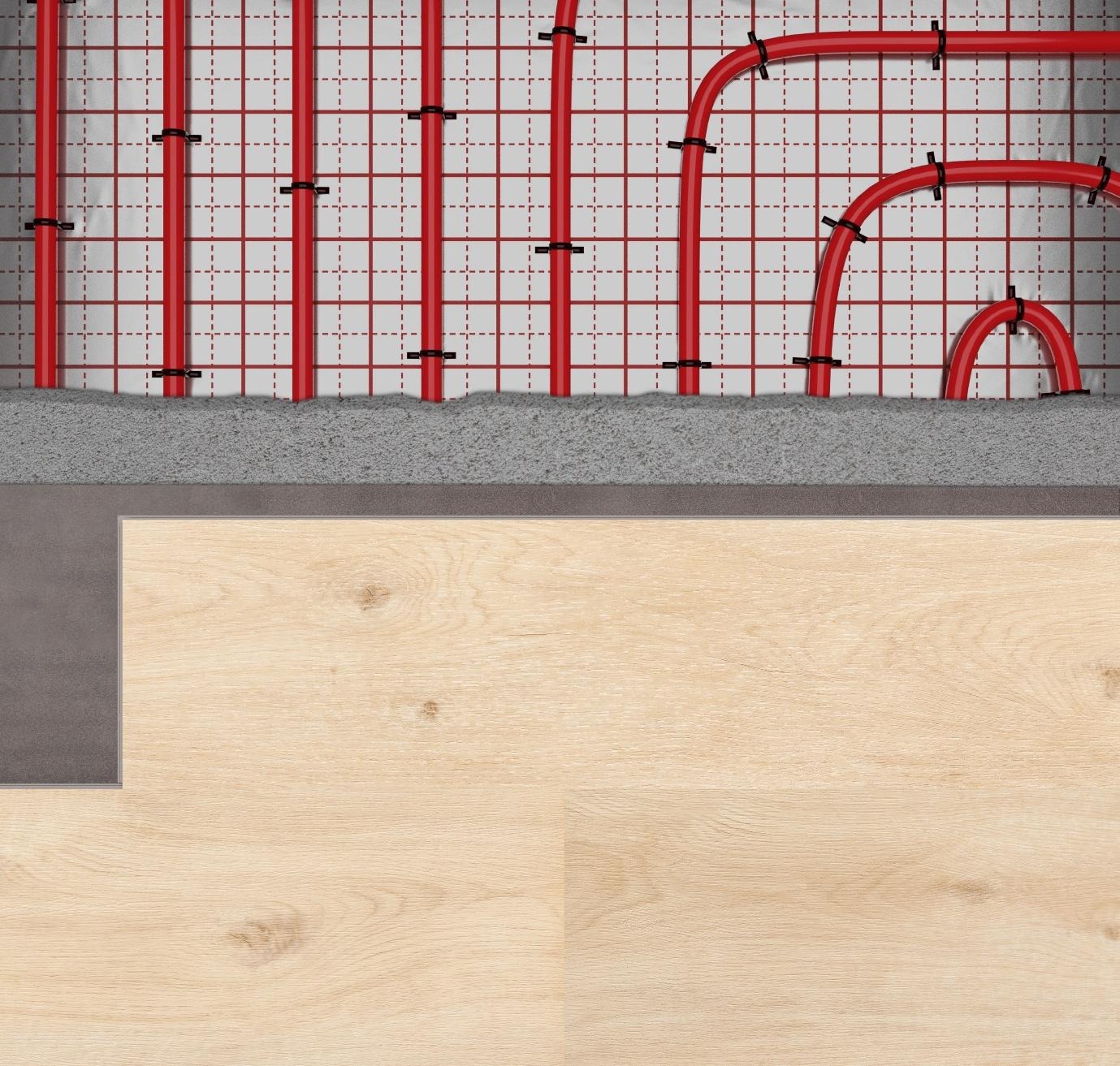
At Floor Land, we help homeowners across the UK create their dream living spaces with varied and high‑quality flooring solutions. Among those, our range of Quick-Step Vinyl is hugely popular. One of the most common questions we receive from customers choosing Quick‑Step Vinyl flooring is:
“What temperature should my underfloor heating be set to?”.
It’s an important question, because while vinyl flooring and underfloor heating are compatible with each other, there are essential temperature guidelines to follow to ensure your flooring retains its good condition for years to come.
This article explains the ideal temperature settings, why the 27 °C limit matters, how to operate your system safely, and how Floor Land can help you achieve the perfect installation.
Why Quick‑Step Vinyl works so well with underfloor heating
Quick‑Step vinyl flooring is engineered to be compatible with low‑temperature underfloor heating systems, making it an excellent choice for modern homes. Vinyl conducts heat efficiently, warms up quickly, and provides a comfortable, even temperature across the room.
According to Quick‑Step’s official guidance, all Quick‑Step vinyl floors can be used with low‑temperature underfloor heating, provided the system is correctly installed and controlled.
This compatibility is one of the reasons our customers at Floor Land love pairing Quick‑Step LVT with underfloor heating—especially in kitchens, bathrooms, and open‑plan living areas.
The most important rule is simple:
The maximum floor surface temperature for Quick‑Step LVT is 27 °C.
This is not the temperature of the water in the pipes or the heating element—
it is the temperature of the floor surface itself.
Exceeding this limit can cause:
• Expansion or contraction of the vinyl
• Warping or distortion
• Damage to the click system
• Voiding of manufacturer warranties
At Floor Land, we always emphasise this limit during installation consultations because maintaining it ensures your flooring stays beautiful and structurally sound.
How to control your underfloor heating correctly
To keep your Quick‑Step vinyl floor within the safe temperature range, we recommend the following:
1. Use a floor sensor
A floor sensor monitors the actual surface temperature and prevents overheating.
Most modern underfloor heating thermostats include this feature.
2. Increase heat gradually
When turning on your system for the first time—or after a long period of inactivity—raise the temperature slowly over several days. Sudden temperature changes can stress the flooring.
3. Avoid high water temperatures
If you have a water‑based system, ensure the water temperature is set low enough that the floor surface never exceeds 27 °C.
4. Maintain consistent heat
Underfloor heating works best when kept at a steady temperature rather than switching it on and off dramatically.
What temperature should the thermostat be set to?
Because every underfloor heating system is different, the thermostat setting that results in a 27 °C floor surface can vary. Factors include:
• Subfloor material
• Insulation
• Room size
• Heating system type
• Underlay choice
At Floor Land, we supply the full range of Quick‑Step LVT products, all of which sport an integrated underlay attached to the vinyl planks themselves. designed specifically to improve heat transfer and reduce heat loss. It will help your system reach comfortable temperatures more efficiently.
As a general guideline, many homeowners find that a thermostat setting between 21 °C and 25 °C (air temperature) provides excellent comfort when paired with underfloor heating beneath vinyl flooring. However, the floor surface must remain below 27 °C.
Quick‑Step vinyl flooring can be installed over:
• Water‑based underfloor heating
• Electric underfloor heating (embedded systems only)
• Suitable screeds and subfloors
However, heating films or systems placed directly on top of the subfloor are not suitable for Quick‑Step vinyl.
At Floor Land, our installation experts always check compatibility before fitting your flooring. We ensure:
• The subfloor is dry, level, and stable
• The heating system is correctly embedded
• The correct underlay is used
• The heating system is tested before installation
This prevents future issues and ensures your Quick‑Step vinyl performs exactly as intended.
Why the 27 °C limit matters
You might wonder why Quick‑Step sets this specific temperature limit. The answer lies in the material properties of vinyl.
Vinyl is a thermoplastic material, meaning it reacts to heat. While it is highly stable under normal conditions, excessive heat can cause:
• Softening of the material
• Expansion beyond design tolerances
• Stress on joints and locking mechanisms
• Discolouration in extreme cases
By keeping the temperature at or below 27 °C, you ensure the flooring remains dimensionally stable and retains its appearance.
Why choose Floor Land for your Quick‑Step Vinyl and underfloor heating?
At Floor Land, we specialise in supplying premium flooring solutions—including the full range of Quick‑Step vinyl flooring and underlays. When you shop with us, you benefit from:
• Expert advice on underfloor heating compatibility
• High‑quality Quick‑Step products at competitive prices
• Free delivery on qualifying orders
• A knowledgeable team ready to guide you through installation best practices
We’re committed to helping you create a warm, stylish, and long‑lasting floor that performs beautifully with your heating system.
Final Answer: The Ideal Temperature
To summarise:
• Maximum floor surface temperature: 27 °C
• Compatible with: Low‑temperature underfloor heating systems
• Key requirement: Use a thermostat with a floor sensor
• Best practice: Increase heat gradually and maintain steady temperatures
By following these guidelines, your Quick‑Step vinyl flooring will remain comfortable, stable, and beautiful for many years.
If you’d like personalised advice or help choosing the right flooring and underlay, the Floor Land team is always here to help.