A practical framework for comparing local repair, lining and replacement using evidence about the defect, pipe and site.
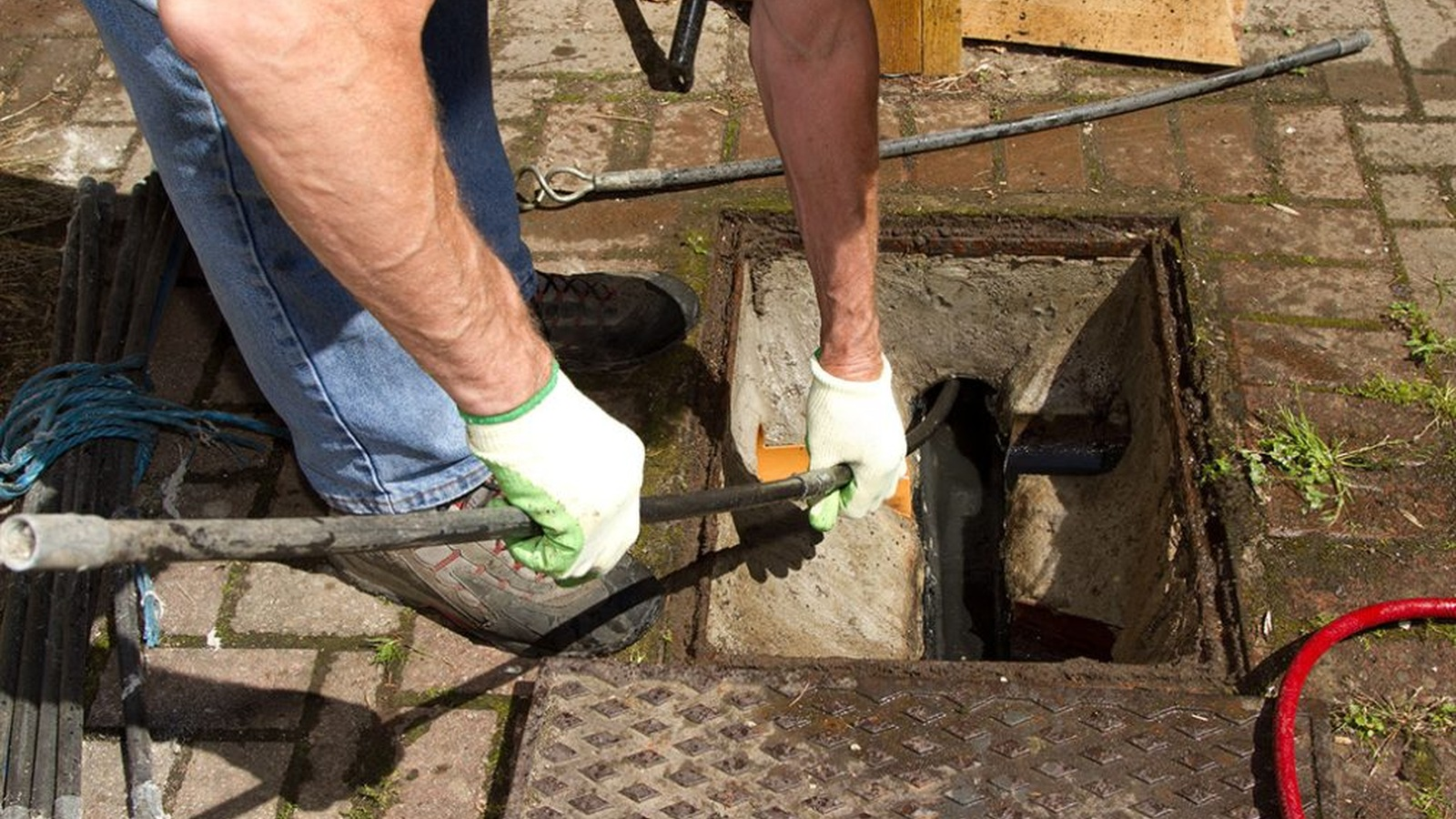
A damaged underground pipe exposed for targeted repair. Image sourced from the Quick Clear Drainage website.
Discovering a damaged drain creates two immediate questions: how serious is the defect, and does the pipe need to be repaired or replaced? The second question cannot be answered reliably from the symptom alone. Slow flow, odour, repeat blockage and ground movement can each arise from more than one cause. Even when a camera shows a crack or displaced joint, the right response depends on its extent, location, pipe material, remaining condition and the consequences of failure.
A sound decision begins with evidence and ends with verification. Between those points, the owner should understand what the proposed method will fix, which parts of the system will remain unchanged, how access affects the work and what future performance can reasonably be expected. “No-dig” and “full replacement” are not measures of quality by themselves. Each can be appropriate when matched to the right defect.
Stabilise the Situation Before Designing the Repair
If sewage is backing up, a chamber is overflowing or the ground has become unsafe, contain the immediate problem first. Stop using affected fixtures, restrict access and prevent contaminated water spreading. Emergency clearance may be required so that the drain can be inspected. This first visit should not be confused with a complete repair decision.
Where collapse, voiding or washout is suspected, avoid loading the area with vehicles or heavy equipment until it has been assessed. A sunken patch above a drain, recurring loss of bedding material or movement around a chamber can indicate more than an internal blockage. The site may need temporary protection while the investigation is arranged.
Record the symptoms and earlier work. Note where water appeared, which fixtures were involved, when the last clearance occurred and whether previous footage or measurements exist. A repeat defect at the same position should not be treated as a new isolated event.
Obtain a Clear View of the Defect
A camera inspection is often central to the decision, but the line must be clear enough for meaningful footage. Deposits, standing water and a severe obstruction can hide pipe surfaces. Cleaning may therefore be needed before a final survey. The footage should be related to a known access point and direction, with defects located by distance and, where necessary, surface tracing.
Ask for the finding in precise terms. Is the pipe cracked, fractured, deformed, displaced, penetrated by roots, poorly connected or partially collapsed? Is the defect local or repeated along the run? Are deposits the primary problem or a consequence of poor alignment? Does the camera pass through the full section?
An image without context can be misleading. Some older pipes show joints and surface features that are not currently causing loss of function. Conversely, a small visible opening can represent a larger void outside the pipe. The engineer’s interpretation should connect the image to flow, structure and site observations.
Assess the Extent, Not Just the Worst Frame
Repair decisions can be distorted by focusing on the most dramatic camera image. A single localised defect in an otherwise serviceable line may suit a targeted intervention. Multiple displaced joints, extensive deformation or a deteriorated material along the entire run can make piecemeal work poor value.
Request an overview of the full surveyed length. The report should identify the upstream and downstream limits of significant damage and any sections that could not be inspected. If two defects are close together, one longer repair may be more practical than separate patches. If they lie far apart, local treatments might preserve sound pipe between them.
Also consider branches and connections. A liner through a main run must account for laterals entering it. A replacement route may need to maintain falls and access to chambers. The decision is about the system, not only the visible wall of one pipe.
Understand What Local Repair Can Achieve
A local repair addresses a defined section while leaving the remainder in place. Depending on pipe condition and access, this may involve a short internal patch or excavation around the defect. Local methods can reduce disturbance and cost when the damage is genuinely limited.
The key question is whether the repair can form a durable connection with sound material on both sides. A patch cannot restore stability to a line that is broadly deformed or continuing to move. Internal repair also needs a suitable host pipe; it is not a way to ignore a missing section, severe collapse or inadequate alignment.
When comparing providers for drain repairs London, ask for the exact length and location of the proposed repair, the preparation required and the acceptance check. The proposal should state why the adjacent pipe is considered suitable to remain and how flow through the repaired area will be confirmed.
Consider Lining as a System, Not a Slogan
Lining creates a new internal surface within an existing pipe. It can seal certain cracks and joints over a longer section with less excavation than replacement. Its suitability depends on the host pipe retaining enough shape and stability, being clean, and allowing the liner to be installed and cured correctly.
Lining reduces internal diameter to some degree, although a smooth finished surface can still perform well when the design is appropriate. Connections, changes in direction, diameter transitions and access limitations must be planned. Roots or deposits need to be removed, and any void or structural instability outside the pipe may require separate attention.
Ask what survey evidence supports lining, how lateral connections will be managed and what final inspection will be provided. The value of lining comes from correct preparation and installation, not simply avoiding excavation.
Know When Replacement Is the Stronger Option
Replacement becomes more compelling when a pipe has collapsed, lost its line or level, deformed extensively, failed at many points or lacks a stable route for internal repair. It may also be preferable when access is already available during other construction, when the existing layout is fundamentally poor or when future access would be exceptionally difficult.
Excavation allows the defective pipe and surrounding ground to be examined directly. It can correct falls, renew bedding, alter a connection and install appropriate access. The trade-off is disruption: surfaces may need to be lifted, soil removed, utilities protected and finishes reinstated. In a building, access and contamination controls can make the work more complex.
The phrase drain replacement services should therefore describe a planned civil-engineering task, not simply digging until the problem disappears. The quotation should identify the route, pipe specification, levels, connections, chambers, excavation support, spoil handling, reinstatement and tests.
Evaluate Pipe Material and Remaining Life
Older drainage systems may combine clay, pitch fibre, cast iron, concrete and later plastic repairs. Each material presents different failure patterns and constraints. A short section of new plastic connected poorly to an older clay run can be the weak point. A broadly distorted material may justify a different strategy from one cracked clay joint.
Material identification should be included in the survey where possible. Ask whether the visible defect is typical of a local impact, root pressure, ground movement, corrosion, poor installation or wider age-related deterioration. The cause affects the likelihood that an adjacent section will fail next.
Remaining life cannot be predicted with certainty from one inspection. The practical question is whether the unaffected sections show enough integrity to support the chosen repair for a reasonable period. A provider should explain that judgement and its limitations instead of offering an unsupported lifetime claim.
Account for Ground, Access and Nearby Services
The same defect can produce different repair decisions at different sites. A pipe below a lawn may be accessible for targeted excavation. The same pipe beneath a finished kitchen, listed surface or busy entrance may favour an internal method if technically suitable. Depth, soil conditions, groundwater and available working space influence safety and cost.
Before excavation, services and utilities must be considered. Drawings are useful but do not replace appropriate locating and safe digging methods. Trenches may require support, and spoil needs a planned location. Rain can change ground conditions quickly, so temporary protection and pumping may be needed.
Access also affects lining and cleaning. Equipment needs a suitable entry point and enough straight working room. If the system lacks access, creating a new chamber may improve both the current project and future maintenance.
Compare Whole-Life Cost Rather Than the First Invoice
The cheapest immediate option can be poor value if it leaves a known defect that causes repeated callouts. Equally, replacing an entire run when one local repair would perform well wastes money and creates unnecessary disruption. Compare the total package: investigation, clearance, repair, reinstatement, downtime, documentation and expected maintenance.
Ask which assumptions underlie the price. Excavation may reveal uncharted services or unstable ground. Lining may require more cleaning than expected. A transparent quotation identifies these uncertainties and states how variations will be approved. Contingency is easier to manage when the triggers are defined.
For commercial properties, include interruption costs. A less disruptive method may have value beyond the contractor’s price if it allows essential facilities to remain available. For homeowners, consider the quality and warranty of reinstatement as well as the pipe repair itself.
Protect Connections and Drainage Performance
A repair is successful only if the system continues to carry flow as designed. The work should preserve pipe gradients, watertight connections and access for future inspection. Poorly made joints can snag waste or allow roots and water to enter. A level error can create standing water even when the new pipe itself is sound.
Where a liner crosses a lateral connection, the method for reopening or incorporating that connection must be clear. During replacement, changes in material should use appropriate connectors and support. Chambers should be left secure, accessible and correctly channelled.
Testing should match the work. This may include visual inspection, flow testing, leak testing or a post-installation camera survey. The client should know what constitutes acceptance before the job begins.
Keep a Proper Record of the Completed Work
A complete record should show the defect before work, the selected method, the repaired location and the result afterwards. Keep footage, photographs, measurements, material details, warranties and invoices. If a route or chamber was changed, update the property’s drainage sketch.
This record supports future maintenance and property transactions. It also prevents a later engineer from misidentifying a normal repair interface as a new defect. If a blockage recurs, the previous location and method can be compared quickly.
Documentation is particularly important where work passes beneath shared or managed areas. Provide relevant information to landlords, managing agents or other responsible parties and record any agreed future inspection.
Challenge Red Flags in a Proposal
Be cautious when major repair is recommended without footage or location evidence, when a quotation uses broad terms without dimensions, or when the proposed method is presented as suitable for every defect. A contractor should be able to explain alternatives and why they were rejected.
Other warning signs include pressure to approve excavation immediately when the site is stable, a refusal to identify exclusions, or a promise that clearance alone will permanently solve visible structural failure. Conversely, a responsible provider may pause to clean the pipe, repeat part of a survey or request additional access before fixing a price. That extra step can prevent an expensive wrong decision.
Ask for plain answers: what is damaged, where is it, why did it fail, what will be repaired, what will remain, and how will performance be checked? If those answers do not align, seek clarification before authorising work.
Consider an Independent Review for High-Consequence Work
When the proposed repair is expensive, crosses shared land or requires extensive excavation, a second technical view can be proportionate. Give the reviewer the same clean footage, route information and site constraints. Asking a second contractor to start from a different summary will produce opinions that are difficult to compare.
The purpose is not to collect quotations until one supports a preferred answer. It is to test the defect interpretation, boundaries of work and acceptance method. If two proposals differ, identify the precise reason: one may assume that adjacent pipe is sound, while another may price for uncertainty or include reinstatement the first excludes.
Resolve that difference before appointment. A short investigation that closes a critical evidence gap can cost far less than changing the method after excavation or installation has begun.
Final Perspective
Repair and replacement are not competing philosophies. They are tools for different conditions. Local repair preserves sound pipe around a limited defect. Lining can renew an appropriate existing route with reduced excavation. Replacement restores sections whose condition, alignment or stability no longer supports a reliable internal solution.
The owner’s best protection is a decision trail built from clean survey evidence, accurate location, a complete assessment of the run, a site-specific method and measurable verification. When each proposed cost is connected to a visible defect and a defined outcome, the decision becomes easier to defend. The result should not merely flow on the day the engineer leaves; it should address why the pipe failed and provide a record that supports the property for years to come.