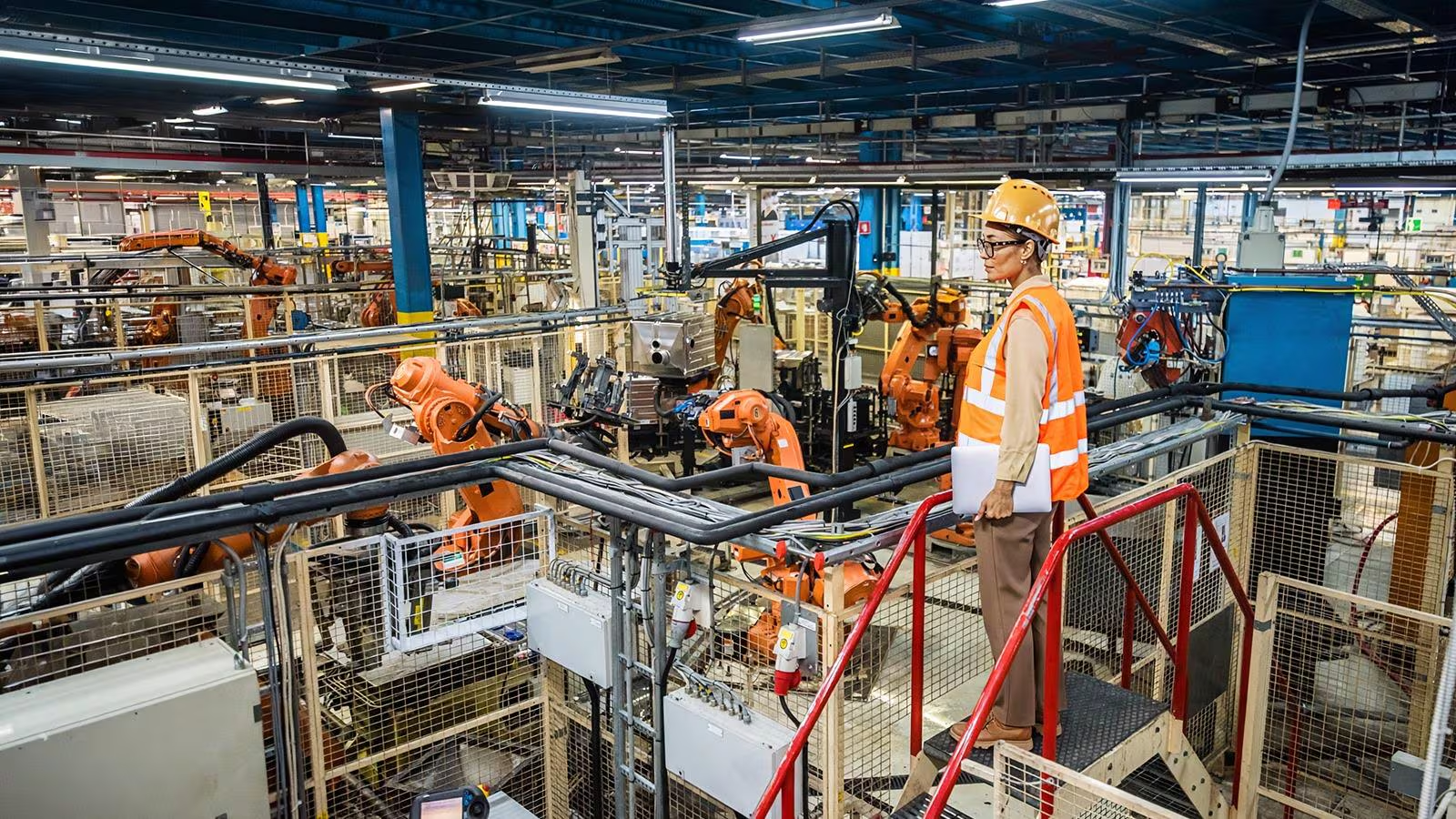
Output is not improved by just scaling up. Precision, coordination, and machinery efficiency improve output. All operational improvements come from optimized workflow, reduced waiting times, and efficient use of machinery—for example, investing in the correct kind of forklift is not just a logistics or operations question; it is also a finance and output question.
Workflow Mapping
Any good worksite handler is aware of this seminal rule—plan ahead, or be ready to fork over a pretty penny in losses. Study how materials move, how loading takes place, and how long machines wait in line. Most process inefficiencies happen between processes and not within a process, which is why you should create a mapped workflow, which will give you insight into how machinery is used and where it is used. The information helps determine whether you require more machinery or need to optimize machinery deployment.
Maximising Machinery Utilisation
Machinery utilization is a challenge in industries because some machines are utilized extensively while others remain unused for long periods. Such inefficiency reduces output and increases costs.
- Assign machines according to their work intensity.
- Plan work schedules and time slots for heavily used equipment.
- Monitor machine utilization rate weekly.
Maximising Operators’ Productivity
You can fork over a pretty penny on the best machinery imaginable, but if the operator has no clue about its function, that investment can fall on its face. Thus, you must:
- Develop operator training programs.
- Focus on efficient and precise handling and fuel economy.
- Skill assessment for all operators.
Slight changes in operator technique increase efficiency in terms of reduced cycle time and minimized machinery wear. This improves output levels significantly.
The Doctrine of Preventive Maintenance
Reactive maintenance brings your whole system to a grinding halt, requiring intervention, cessation of operations, and a bunch of money. Have an established schedule for servicing machines specially ones with heavy loads such as the backhoe loader, greatly help prevent unnecessary downtime.
- Replace parts before failure occurs.
- Monitor engine condition and hydraulic systems.
Machine breakdown leads to a series of downtime events as machines depend on each other. Preventive maintenance ensures that machines are in good shape.
Enhancing Material Handling Systems
Machines cannot function effectively without a material handling system. Poorly designed material handling causes delays, material damage, and requires many manual workers.
- Machines to travel along a specialized path.
- Pedestrians and machinery kept some distance apart
- Establish standard storage and pallet sizes.
When material handling is efficient, movement of goods becomes predictable. Thus, loading/unloading becomes efficient.
Implement Multi-Function Machinery
Machines capable of executing multiple tasks reduce the number of units required.
Multi-purpose machinery is highly efficient in increasing site productivity.
The best example is a backhoe loader that digs and loads soil, which is highly beneficial on compact sites or with limited time.
- Utilize multi-functional machines on small or dynamic sites.
- Minimize switching time from one machine to another.
- Have fewer machines without compromising productivity.
The idea is suitable for construction, utility, and mixed-industry industrial sites.
Apply Data Analytics for Decision-Making
Industrial outputs are measurable indicators. Let data drive operational decision-making processes. Analyze critical parameters like
- Machinery utilisation rate
- Cycle time
- Fuel consumption
- Downtime
Invest in Attachment and Accessory Upgrades
Minor machine modifications often yield the most significant gains in productivity. Attachments modify the capabilities of machines already in possession.
- Deploy specialized buckets for diverse materials.
- Introduce quick couplers for easier attachment switching.
- Upgrade tires and tracks depending on the terrain.
Machine optimization yields efficiency without requiring expensive machinery acquisition.
Increase Machine Fuel Efficiency
With the global oil crisis underway affecting fuel prices, a smart operator will predict the worst possible shortage and thus invest in the most fuel-efficient machinery. It may seem like you are breaking the bank at first, but fuel-efficient machines:
- Minimise idle time.
- Drive machines within specified capacity.
- Tire pressure and engine calibration should always be optimal.
The Role of the Loaders
Skid steer and backhoe loaders increase industrial production through the combination of flexibility and effectiveness. The small size and fast attachment exchange rate of skid steers allow them to shift quickly from one task to another, minimizing delays.
Summing It Up
The acceleration of industrial production is contingent upon hyper-automation, data synchronization in real-time, and AI-driven optimization that operates in tandem to make better and faster decisions about production. In addition, energy efficiency as an essential KPI and robust logistics support the process by providing stability under pressure and ensuring resilience against any disruptions, especially for indispensable equipment such as the skid steer loader.