Modern construction projects demand more than a traditional design. A project built on a linear design workflow. Today’s building design must address sustainability, energy efficiency, and long-term facility management from the very beginning. The Integrated Design Process answers this challenge by introducing an interdisciplinary design approach where stakeholders, construction operators, and design experts work together from day one.
This collaborative design Project replaces isolated planning with shared decision-making, strong design coordination, and continuous project integration. The result is better performance optimization, stronger risk reduction, and measurable IDP benefits. If you are searching for what the Integrated Design Process and IDP advantages are, this guide explains the Integrated Design Approach, the Integrated Design Method, and how BIM enables modern Integrated Project Management.
What Is an Integrated Design Project (IDP)?
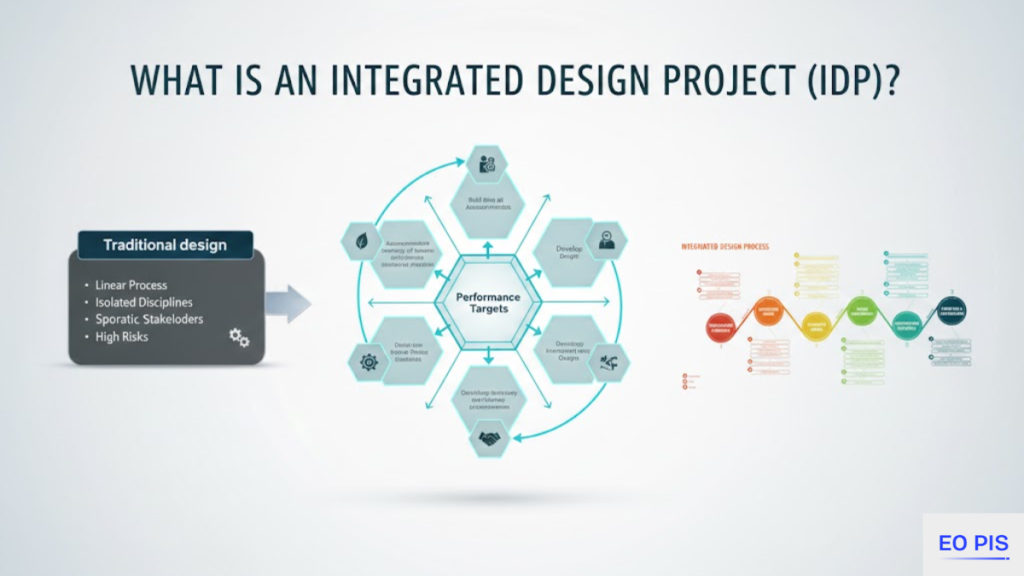
The Integrated Design Process or IDP (Integrated Design Process) is an Integrated Design Method where a multidisciplinary team collaborates across the entire project life cycle. Instead of separating architectural design, structural systems, and plant engineering, this interdisciplinary design approach ensures continuous communication between professionals and ongoing workflow optimization. This model is widely used in green building process development and high-performance building projects, where sustainable design solutions and long-term value are essential.
Integrated Design Project Meaning Explained Simply
In simple terms, the Integrated Design Process means planning, designing, and executing construction projects together rather than in isolation. A traditional design process often delays coordination, but IDP applies early-stage planning and an iterative design process where every discipline contributes from the start. This improves cost control, strengthens time scheduling, and supports continuous construction process improvement while avoiding late-stage redesign.
Definition of an Integrated Design Approach
An Integrated Design Approach is a structured IDP framework that aligns project objectives across all disciplines. It depends on stakeholder collaboration, shared decision-making, and consistent design coordination throughout the project life cycle. By applying life cycle design thinking beyond construction, IDP strengthens risk reduction, improves performance optimization, and ensures smoother delivery into the maintenance phase.
Why Integrated Design Is Important in Modern Projects

Modern construction projects face growing technical and environmental demands. The Integrated Design Process embeds energy efficiency and sustainability targets from the earliest concept stage. It reduces clash detection issues later, strengthens validation checks, and ensures alignment between project objectives and real outcomes. This makes the Integrated Design Approach essential for complex building design and high-performance buildings.
Key Benefits of the Integrated Design Project
The real IDP benefits appear across every stage of delivery. A connected multidisciplinary work team improves communication between professionals, strengthens project integration, and reduces errors. Early optimization strategies improve cost control and time scheduling, while sustainable design solutions raise long-term building value. These IDP advantages lead to better construction process improvement and smoother transition into Facility Management.
How IDP Improves Collaboration and Efficiency
The Integrated Design Process replaces siloed work with active stakeholder collaboration. Through Design charrettes and charrette workshops, teams align ideas early, refine optimization strategies, and maintain strong communication between professionals. This level of project integration increases workflow optimization, accelerates approvals, and minimizes misunderstandings throughout construction projects.
Integrated Design Process vs Traditional Design Project
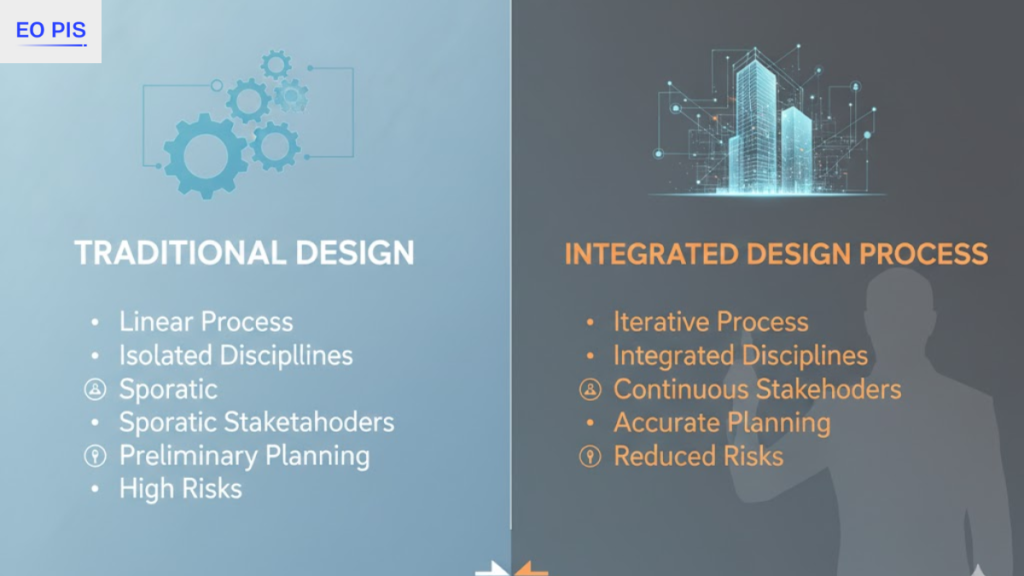
A traditional design process follows a linear design workflow where coordination often happens too late. In contrast, the Integrated Design Process uses early-stage planning, a continuous iterative design process development, and shared accountability. This reduces clash detection risks, improves validation checks, and strengthens performance optimization across the project life cycle.
How to Implement an Integrated Design Project
Applying the IDP framework successfully requires clear project objectives, committed stakeholders, and an engaged multidisciplinary work team. When shared decision-making becomes standard practice, design coordination improves naturally, and Integrated Project Management becomes more efficient across all construction projects.
Steps Involved in a Successful IDP Workflow
A successful Integrated Design Process begins with defining sustainability and energy efficiency goals, followed by assembling the multidisciplinary team. Design charrettes support stakeholder collaboration, while the iterative design process refines solutions through continuous project integration. BIM clash detection and validation checks prevent errors before construction, while life cycle design prepares a smooth handover into the maintenance phase and Facility Management.
How BIM Supports the Integrated Design Project
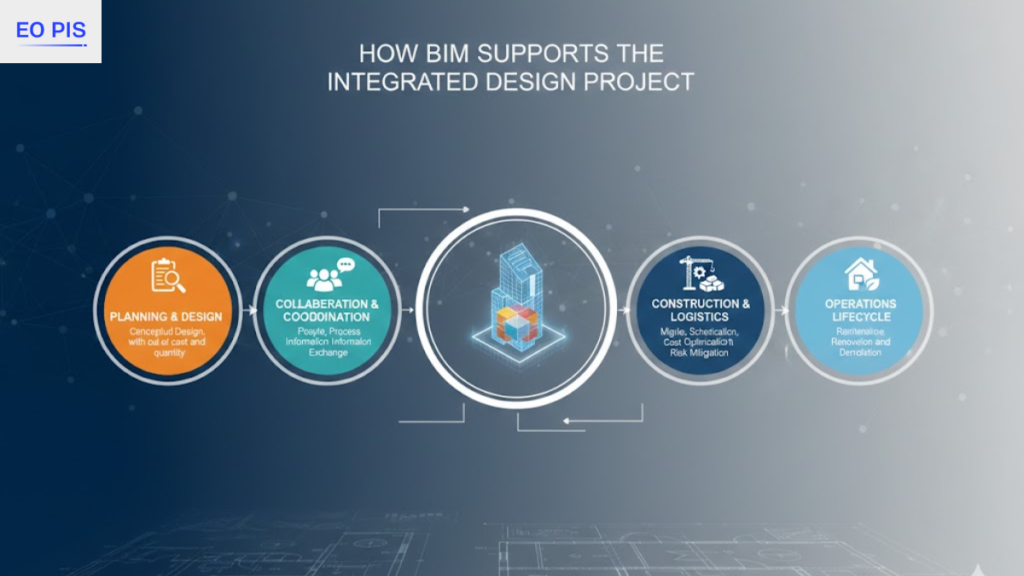
BIM or Building Information Modeling is a key driver of the Integrated Design Method. Using BIM methodology, BIM collaboration tools, and BIM coordination software, teams integrate architectural design, structural systems, and plant engineering into a shared digital environment. BIM clash detection identifies conflicts early, BIM code checking ensures compliance, and connected data strengthens communication between professionals. This transforms IDP into truly data-driven Integrated Project Management.
You May Also Like: Elizabeth Fraley Kinder Ready Court Case
Examples of Integrated Design in Real Projects
The Integrated Design Project is widely used in Green Building office developments focused on energy efficiency, hospitals requiring complex structural systems, smart campuses using BIM collaboration tools, and infrastructure projects demanding continuous project integration. In every case, IDP strengthens construction process improvement, reduces risk, and enhances long-term performance optimization.
Conclusion
The Integrated Design Project is a proven Integrated Design Approach for delivering smarter construction projects. By uniting a multidisciplinary team, encouraging stakeholder collaboration, and supporting shared decision-making, IDP reduces risks, improves sustainable design solutions, and strengthens life cycle design outcomes. When combined with BIM methodology, the Integrated Design Process becomes a complete system for high-quality building design, efficient Facility Management, and future-ready Integrated Project Management.
FAQs
What is the Integrated Design Project (IDP)?
The Integrated Design Project (IDP) is an interdisciplinary design approach where a multidisciplinary team collaborates from early planning to project completion. It improves design coordination, strengthens project integration, and delivers better outcomes across the project life cycle.
What are the main IDP benefits?
The key IDP benefits include stronger stakeholder collaboration, better cost control, reduced risk, and improved performance optimization. This results in smoother construction projects and higher-quality building design.
How is the Integrated Design Project different from a traditional design Project?
A traditional design Project follows a linear design workflow with late coordination. The Integrated Design Process uses early-stage planning and an iterative design Project, allowing continuous communication between professionals and fewer construction errors.
How does BIM support the Integrated Design Project?
BIM (Building Information Modeling) enables real-time project integration through shared digital models. With BIM collaboration tools, BIM clash detection, and BIM code checking, teams achieve accurate Integrated Project Management and better facility management planning.
Why is Integrated Design important for modern construction projects?
Modern construction projects demand sustainability, energy efficiency, and long-term life cycle design. The Integrated Design Approach ensures these goals are embedded early, creating high-performance buildings with lasting value.