As sustainability becomes a central concern for industries and governments, one concept is gaining importance in environmental discussions: Recyclatanteil. The term refers to the recycled content percentage or recycled material content used in a product or packaging. Rather than focusing only on how much waste is collected for recycling, Recyclatanteil measures how much of that material actually returns to the production cycle.
Understanding the Recyclatanteil meaning helps businesses, policymakers, and consumers evaluate whether products truly support sustainable production. When manufacturers increase recycled material usage, they reduce dependence on virgin materials, lower greenhouse gas emissions, and contribute to a functioning Circular Economy. As environmental pressure grows and resources become scarcer, this metric is becoming one of the most practical indicators of responsible, sustainable resource management.
What Does Recyclatanteil Mean in Sustainability?
In sustainability discussions, Recyclatanteil describes the proportion of recycled materials contained in a product or packaging. These materials originate from waste streams that have been collected through Recycling and Waste Management systems, processed through material recovery, and transformed into reusable recyclate.
Materials commonly reintroduced into production include Plastic, Glass, Metal, Paper, and Cardboard. By measuring how much of these materials are reused in new products, Recyclatanteil provides a clear sustainability indicator connected to Resource Efficiency and responsible manufacturing.
Unlike general sustainability claims, recycled material content is measurable. This makes it useful for evaluating sustainable product materials and comparing environmental performance across industries.
How Recyclatanteil Differs From the Recycling Rate
Many people assume that recycling rates and Recyclatanteil represent the same concept. However, they measure different stages of the material lifecycle.
The recycling rate measures how much waste is collected and processed for recycling. Recyclatanteil measures how much of that recovered material actually returns to the market in the form of products with recycled content.
A country may report high recycling rates but still have low recycled content in manufacturing. This often happens when materials are exported, downcycled, or lost during processing. Recyclatanteil therefore provides a clearer picture of whether closed-loop systems are functioning effectively within the Circular Economy.
Why Recyclatanteil Matters for the Circular Economy
The Circular Economy aims to keep materials circulating through multiple product lifecycles instead of being discarded after a single use. Increasing Recyclatanteil in the circular economy ensures that materials recovered through Waste Management return to manufacturing instead of becoming landfill waste or being burned in incineration plants.
This shift reduces the need for extracting new raw materials and supports resource conservation. When industries increase recycled content, they also lower energy consumption in manufacturing and reduce Carbon Dioxide (CO₂) emissions.
Over time, higher recycled content contributes to lower greenhouse gas emissions, reduced environmental pressure, and a smaller overall environmental footprint.
How Recyclatanteil Is Calculated in Products and Materials
Recyclatanteil is usually calculated as the recycled material percentage of a product’s total material composition. For example, if a packaging container contains 40 percent recycled plastic and 60 percent virgin plastic, its recycled content percentage is 40 percent.
Companies often verify recycled content through supply chain documentation, product material traceability, and independent certification. Accurate measurement supports Sustainability Reporting and helps organizations demonstrate compliance with Recycling Standards and Environmental Regulations.
Reliable data also helps consumers and regulators understand the real environmental impact of products.
Difference Between Recycled Materials and Virgin Materials
The distinction between recycled materials and virgin materials is central to understanding Recyclatanteil.
Virgin materials are produced directly from natural resources such as petroleum, timber, or mineral ore. Their production typically requires significant extraction, processing, and energy consumption.
Recycled materials, by contrast, come from products that have already been used and recovered through material recovery systems. After processing through recycling technology, these materials become recyclate, which can be reused in manufacturing.
Advances in recycling technology have significantly improved recyclate quality. In sectors such as metal recycling and glass recycling, recycled materials can perform almost identically to newly produced resources.
Environmental Benefits of Increasing Recyclatanteil
Increasing Recyclatanteil benefits the environment in several measurable ways. When industries rely more on recycled materials, they reduce pressure on natural resources and lower environmental damage caused by extraction.
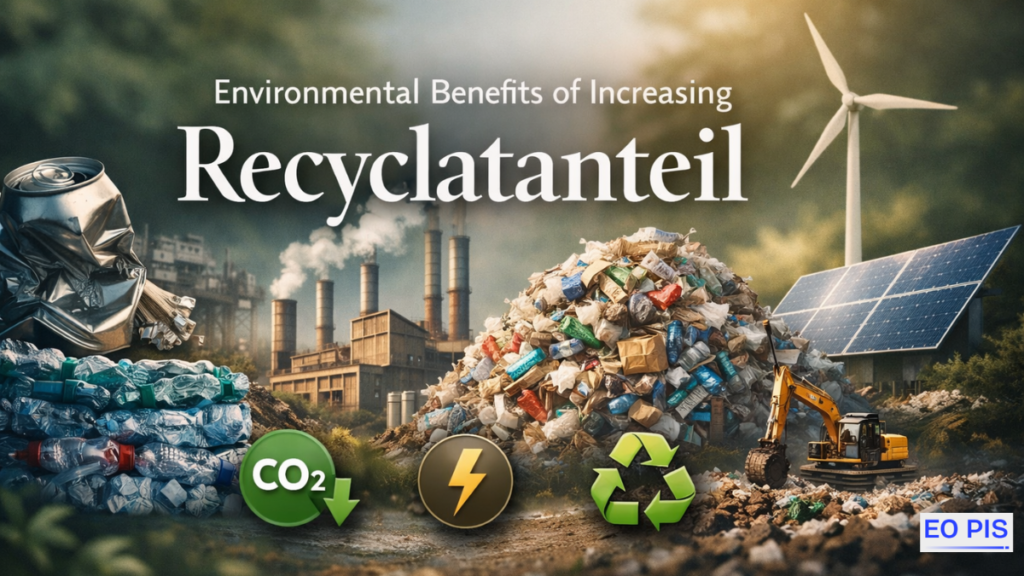
Higher recycled content can reduce greenhouse gas emissions, lower energy use in manufacturing, and limit the amount of waste sent to landfills. These changes help reduce pollution and support long-term environmental protection.
For example, producing aluminum from recycled metal requires far less energy than producing it from raw ore. Similar advantages exist for recycled plastics, paper, and glass.
How Businesses Use Recyclatanteil to Improve Sustainability
Companies increasingly use Recyclatanteil in industry as a measurable sustainability indicator. By integrating recycled materials into production, businesses can reduce environmental impact while strengthening their sustainability strategies.
Many organizations initially increase recycled content to comply with Environmental Regulations. Over time, however, companies often discover additional advantages. Products with visible recycled content can improve brand credibility and appeal to environmentally conscious consumers.
This shift reflects a broader trend in which sustainable product design becomes both an environmental responsibility and a competitive advantage.
Recyclatanteil in the Packaging Industry
The packaging industry is one of the most visible sectors adopting higher recycled content. Packaging materials frequently incorporate outputs from plastics recycling, paper recycling, cardboard recycling, and glass recycling systems.
A common misconception is that recyclable packaging automatically contains recycled material. In reality, many products are technically recyclable but still rely entirely on virgin resources.
Understanding Recyclatanteil in packaging helps clarify this difference and allows consumers to distinguish between recyclable products and those that actively reuse materials.
Industrial and Manufacturing Applications of Recyclatanteil
Recycled materials are increasingly integrated into industrial production. Sectors such as automotive manufacturing, electronics manufacturing, and the construction industry now incorporate recycled inputs into manufacturing processes.
Recycled metals, plastics, and construction materials help reduce environmental impact while maintaining product durability and performance.
As recycling technologies advance, more industries are able to incorporate recycled materials into complex manufacturing systems.
Government Regulations and Standards for Recyclatanteil
Governments worldwide are introducing policies that encourage higher recycled content. These Environmental Regulations and Recycling Standards aim to increase demand for recyclates and reduce environmental damage.
Some policies require minimum recycled content levels in packaging or construction materials. Others promote sustainability labeling and improved transparency through Sustainability Reporting.
These measures strengthen recycling markets and support the broader transition toward sustainable resource management.
How Consumer Awareness Influences Recyclatanteil Adoption
Consumer awareness plays a growing role in sustainability decisions. Many people now evaluate products based on environmental impact, including the use of recycled materials.
Clear labeling of recycled material content helps buyers identify products that support sustainability goals. Brands that communicate their recycled content effectively often gain greater trust and credibility.
However, purchasing decisions still depend on price, convenience, and availability. Companies that balance sustainability with affordability are usually the most successful in expanding recycled material adoption.
Quality and Safety of Products Made With Recycled Content
Modern recycling technology allows recycled materials to meet strict quality and safety standards. When properly processed, recycled plastics, metals, and glass can match the performance of products made from virgin resources.
Quality control systems, combined with product material traceability, help ensure recycled materials meet industrial specifications. As technology improves, the performance gap between recycled and virgin materials continues to narrow.
Key Challenges in Increasing Recyclatanteil
Despite its environmental advantages, increasing recycled content can present practical challenges. Manufacturers often face limited availability of certain recyclates and variations in material quality.
Another barrier lies in product design. Many products are not created with recycling in mind, which reduces the efficiency of material recovery systems. Mixed materials and complex packaging structures make it harder to recover usable recyclate.
Addressing these issues requires collaboration between designers, manufacturers, and recycling systems.
The Role of Innovation and Product Design in Recyclatanteil
Innovation is helping industries overcome many of the challenges associated with recycled materials. Advances in recycling technology, eco-design, and sustainable packaging are making it easier to incorporate recycled content into products.
Design strategies that simplify material combinations or improve recyclability strengthen closed-loop systems. These systems allow materials to circulate through multiple product lifecycles instead of becoming waste.
Improving material circularity will be essential for increasing recycled content across industries.
Is Recyclatanteil the Future of Sustainable Resource Management?
As environmental pressures increase and natural resources become more limited, recycled materials will play a larger role in global manufacturing. Increasing Recyclatanteil allows industries to reduce environmental impact while strengthening supply chain resilience.
Companies that adopt recycled content strategies early will likely be better prepared for future regulations and market expectations. By integrating recycled materials into sustainable production, industries move closer to fully circular manufacturing systems.
Conclusion
Recyclatanteil provides a practical way to measure how effectively industries reuse materials within modern production systems. By increasing recycled content percentage, manufacturers reduce dependence on virgin resources, lower greenhouse gas emissions, and support long-term Sustainability.
For consumers and policymakers, understanding recycled material content helps identify products that genuinely support the Circular Economy. As innovation improves recycling technologies and Environmental Regulations continue to evolve, Recyclatanteil will likely become one of the most important indicators of responsible resource management and sustainable industrial development.
You May Also Like MataRecycler: Smart Recycling for Everyone
FAQs About Recyclatanteil
1. What does Recyclatanteil mean in simple terms?
Recyclatanteil refers to the percentage of recycled material used in a product or packaging. It shows how much of the material comes from recycled sources instead of new raw resources. A higher Recyclatanteil usually indicates better support for sustainable production and the circular economy.
2. Is Recyclatanteil the same as the recycling rate?
No, they measure different things. The recycling rate shows how much waste is collected and processed for recycling, while Recyclatanteil measures how much recycled material actually ends up in new products. This makes Recyclatanteil a more accurate indicator of real material reuse.
3. Do recyclable products always contain recycled material?
No. A product can be recyclable but still be made entirely from virgin materials. Recyclatanteil specifically measures recycled content, which is different from whether a product can be recycled in the future.
4. Are products with high Recyclatanteil lower in quality?
Not necessarily. Modern recycling technology allows recycled materials such as metal, glass, and certain plastics to meet strict quality and safety standards. In many industries, recycled materials now perform similarly to virgin materials when processed correctly.
5. What challenges do companies face when increasing Recyclatanteil?
One major challenge is the consistent availability and quality of recyclates. Another often overlooked issue is product design—many products are not designed for easy recycling, which limits the supply of usable recycled materials. Improving recycling systems and product design helps increase Recyclatanteil over time.