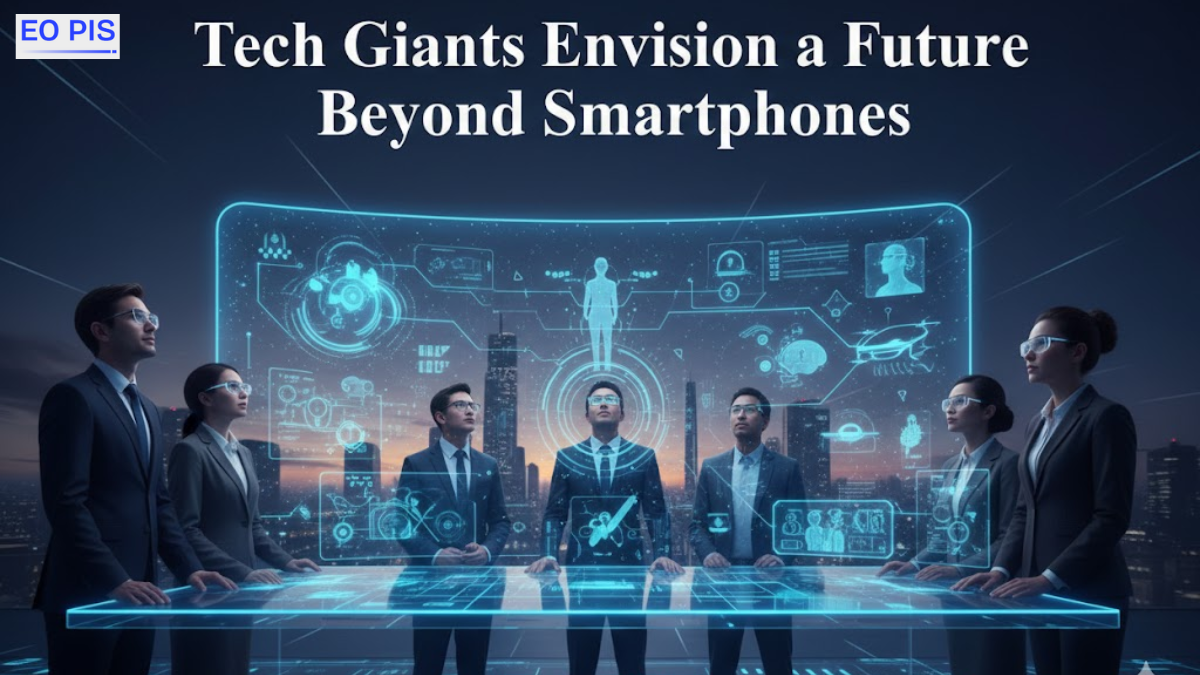
Tech giants envision a future beyond smartphones as innovation moves toward a new post-smartphone era defined by post-smartphone technology, hands-free digital experiences, and next-generation digital devices. For more than a decade, smartphones shaped communication, entertainment, and business. Today, smartphone upgrade limits, market saturation, and the device replacement cycle.
This shift is giving rise to a beyond-smartphones ecosystem where Augmented Reality (AR), Artificial Intelligence (AI), spatial computing, and ambient intelligence create immersive, always-connected experiences. Instead of holding screens, users will interact through AR glasses, smart wearables, and context-aware AI, marking the beginning of true smartphone replacement technologies.
The Limits of Smartphones Today
Smartphones are approaching physical and experiential ceilings. Battery limitations, processing constraints, and compact designs restrict breakthroughs. Constant screen dependence also contributes to digital fatigue and reduced engagement.
Key limitations include:
- Market saturation and slower device replacement cycles
- Smartphone upgrade limits offering minor yearly improvements
- Handheld dependency instead of seamless connectivity
- Growing concerns around privacy and ethics in data-heavy apps
Consumers increasingly expect technology to blend naturally into life, not demand constant attention. This expectation drives the search for a future beyond smartphones.
Key Drivers Behind the Post-Smartphone Transition
Several forces accelerate the move toward post-smartphone technology:
- Advances in AR, AI, and spatial computing
- Tiny sensors enabling lightweight wearable technology
- Demand for hands-free digital experiences
- Rising R&D investment in immersive computing
- Expansion of 5G / 6G connectivity and edge AI
- Enterprise acceleration in immersive training and collaboration
Together, these drivers support a new digital ecosystem where interactive interfaces, gesture control, and voice commands replace traditional touchscreens.
Breakthrough Technologies Powering the Change
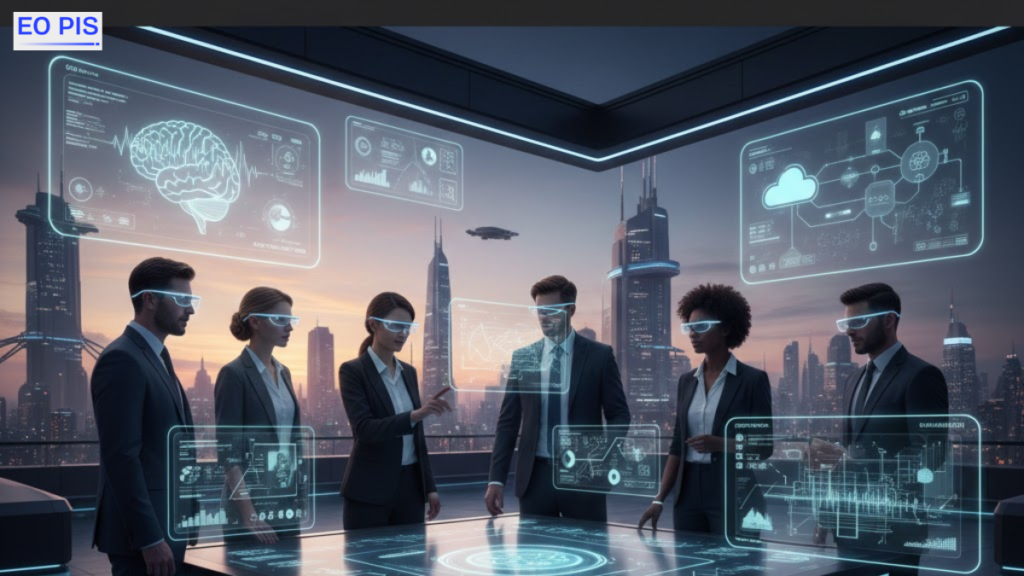
The post-smartphone ecosystem is powered by converging innovations:
- AR glasses delivering real-time overlays and AR navigation
- Context-aware AI providing predictive assistance
- Ambient computing for invisible, always-on support
- BCIs (Brain-computer interfaces) enabling thought-based interaction
- Cloud computing integration supporting heavy processing
- Edge AI is reducing latency for anticipatory interactions
These technologies enable immersive computing, personalized AI experiences, and seamless connectivity without reliance on handheld devices.
Major Tech Giants and Their Strategies
Leading companies are racing to define the future beyond smartphones, each shaping different parts of the consumer wearable ecosystem and enterprise immersive solutions.
Meta’s Vision for AR and AI
Meta and its Reality Labs division focus on AR glasses and immersive environments. Products like Hypernova smart glasses aim to deliver social interaction, holographic content, and context-aware systems powered by AI (Artificial Intelligence). Meta’s roadmap positions wearable displays as mainstream smartphone replacement technologies.
Neuralink’s Brain-to-Digital Approach
Neuralink is advancing BCIs through the N1 implant, allowing direct thought-based computing. Early trials show promising cognitive augmentation potential. While mass adoption faces user acceptance and regulatory hurdles, BCIs may eventually redefine human-device interaction.
OpenAI’s Plan to Embed AI Everywhere
OpenAI is developing ambient AI through tools like Operator AI and robotics integration. Its goal is predictive intelligence embedded into homes and workplaces, enabling personalized AI experiences without screens. This approach makes ambient intelligence the invisible backbone of the beyond smartphones ecosystem.
Google’s AI-Integrated AR Ecosystem
Google is building an open AR (Augmented Reality) platform through Android XR and the Astra project. Features like real-time translation, AR navigation, and spatial computing powered by edge AI and quantum computing infrastructure support scalable immersive computing experiences.
Apple’s Spatial Computing Revolution
Apple leads premium spatial computing with Vision Pro and upcoming AR Glasses. Its tightly connected ecosystem delivers seamless connectivity across devices. Apple prioritizes ergonomic design, privacy, and smooth cloud computing integration, making advanced post-smartphone technology accessible to everyday users.
Microsoft’s Mixed Reality and Holographic Push
Microsoft focuses on mixed reality and holographic interfaces through HoloLens and Azure Cloud. These tools power enterprise immersive solutions in training, engineering, and collaboration. Holographic AI and ambient computing strengthen industrial-scale digital ecosystems.
Consumer Implications of a Post-Smartphone World
For consumers, the future beyond smartphones means:
- Hands-free digital experiences
- Smart wearables replacing handheld screens
- Gesture control and voice commands
- Personalized AI experiences
- Seamless connectivity across environments
Imagine receiving directions through AR glasses, messaging via thought-based interaction, or having predictive assistance anticipate daily needs. The goal is natural, frictionless technology.
Market Outlook and Disruption Timeline
The adoption timeline shows early adopters vs mainstream separation. Between 2025 and 2030, enterprises will lead with enterprise immersive solutions. From 2030 onward, falling costs and better infrastructure requirements will drive consumer adoption.
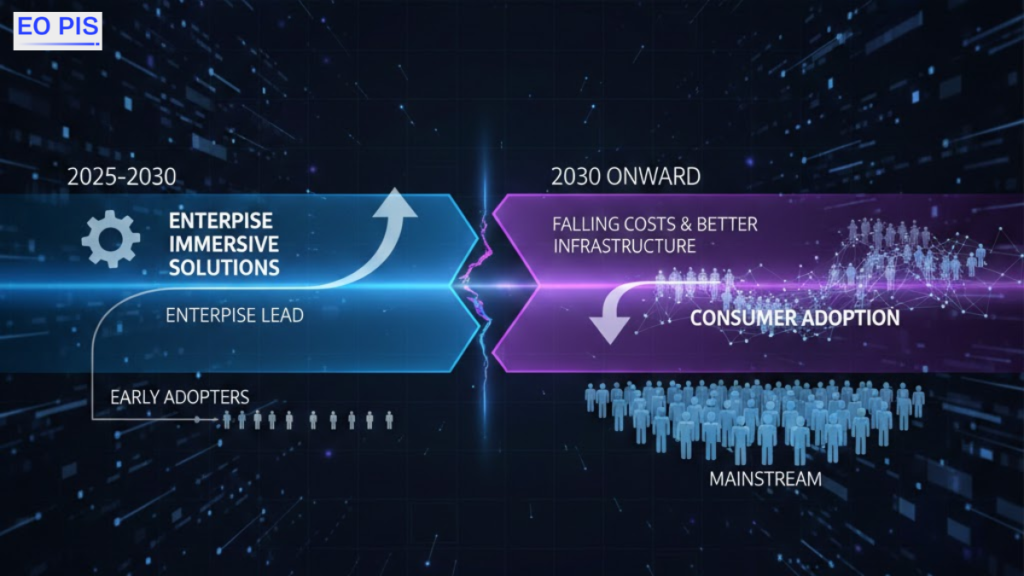
This post-smartphone era represents a multi-trillion-dollar market built on next-generation digital devices and ambient computing.
Challenges and Barriers in the Transition
Key barriers remain:
- Privacy and ethics in always-on data collection
- Cybersecurity risks in interconnected AI systems
- Affordability barriers for advanced wearables
- Battery limitations and processing constraints
- User acceptance of visible wearable tech
Overcoming these challenges will determine how quickly smartphone replacement technologies become mainstream.
You May Also Like: What Is Simpciyu?
Conclusion: What the Post-Smartphone Future Means
Tech giants envision a future beyond smartphones because human interaction with technology is evolving. The post-smartphone ecosystem will be defined by AR, AI, spatial computing, and BCIs, delivering immersive computing and ambient intelligence that feel natural and unobtrusive.
Rather than replacing phones overnight, next-generation digital devices will gradually reduce dependence on screens. The winners of this transformation will be the companies creating trustworthy, seamless, and human-centered post-smartphone technology — shaping how we live, work, and connect in the decades ahead.
FAQs
What does “future beyond smartphones” actually mean?
The future beyond smartphones refers to a shift from handheld devices to hands-free digital interaction through AR glasses, smart wearables, ambient AI, and spatial computing. Instead of relying on phone screens, users will access digital services seamlessly through voice, gestures, or intelligent environments.
Which technologies will replace smartphones first?
AR glasses, smart wearables, and AI-powered assistants are expected to lead early smartphone replacement technologies. These devices offer hands-free digital experiences, real-time information overlays, and personalized assistance without constant screen use.
Which tech giants are leading the post-smartphone era?
Meta, Apple, Google, Microsoft, OpenAI, and Neuralink are driving post-smartphone technology development. Their focus ranges from AR glasses and spatial computing to ambient AI and brain-computer interfaces that redefine human-device interaction.
When will the post-smartphone era become mainstream?
Early adoption is expected between 2025 and 2030, mainly in enterprise and premium consumer markets. Mainstream adoption is likely after 2030 as wearable technology becomes more affordable, comfortable, and socially accepted.
Will smartphones disappear completely in the future?
Smartphones will not vanish overnight but will gradually become less central as next generation digital devices take over key functions. Over time, AR, AI, and ambient computing will reduce dependence on physical screens, making phones secondary tools rather than primary ones.