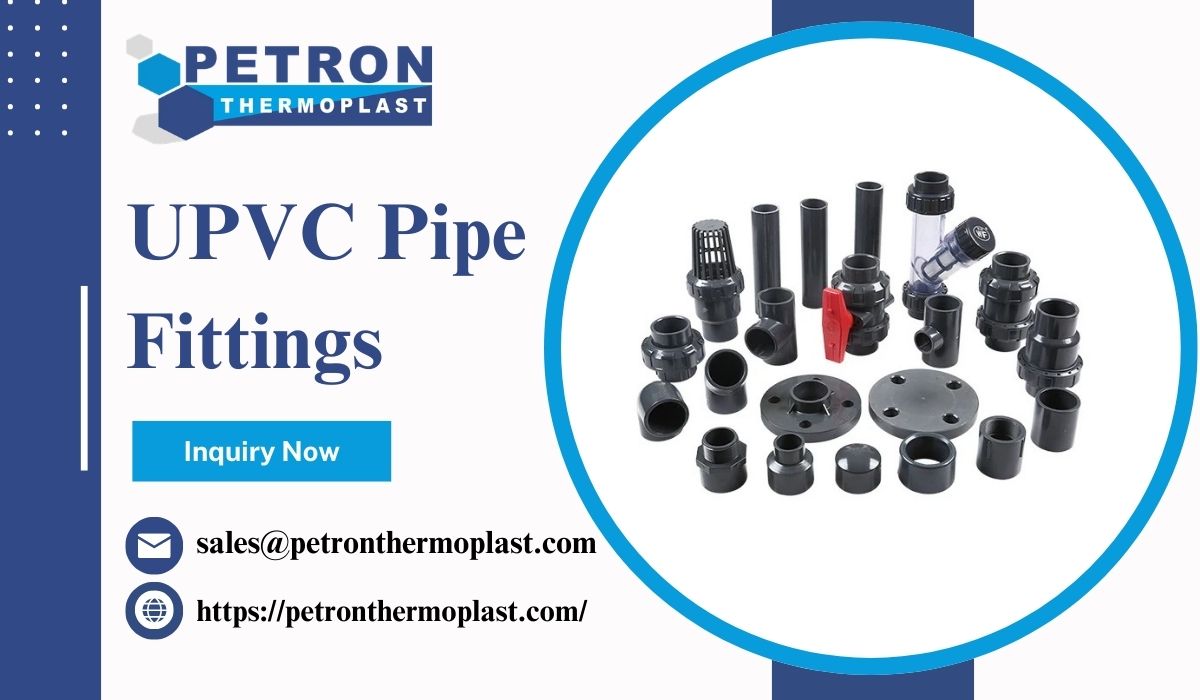
In today’s fast-evolving industrial landscape, the demand for high-performance piping systems has never been greater. From chemical processing plants and water treatment facilities to infrastructure projects and manufacturing units, industries require piping solutions that offer durability, efficiency, and long-term reliability. Among the various materials available, UPVC Pipe Fittings have emerged as a powerful solution—engineered to deliver exceptional performance under demanding conditions.
Designed for strength, corrosion resistance, and operational efficiency, UPVC pipe fittings are redefining how modern fluid transport systems are built and maintained. This comprehensive guide explores the true power of UPVC pipe fittings, their advantages, applications, and why they are the preferred choice for high-performance piping systems.
Understanding UPVC Pipe Fittings
UPVC (Unplasticized Polyvinyl Chloride) is a rigid thermoplastic material widely used in industrial piping systems. Unlike conventional PVC, UPVC does not contain plasticizers, which enhances its strength, rigidity, and resistance to environmental stress.
UPVC pipe fittings are components used to connect pipes, change flow direction, regulate fluid movement, or terminate pipelines. These fittings play a critical role in ensuring a seamless and leak-free piping network.
From elbows and tees to reducers and couplings, each fitting is designed to maintain consistent flow and structural integrity across the system. Their precision engineering ensures compatibility, easy installation, and long-term performance.
The Engineering Behind Performance
What makes UPVC pipe fittings truly powerful is the engineering that goes into their design and manufacturing. These fittings are created using advanced molding techniques and high-quality raw materials, ensuring uniformity, strength, and dimensional accuracy.
Precision Manufacturing
UPVC fittings are manufactured using injection molding or extrusion processes, allowing tight tolerances and consistent quality. This ensures that each fitting provides a perfect seal when connected to pipes.
Structural Integrity
The rigid molecular structure of UPVC provides high tensile strength and resistance to mechanical stress. This allows the fittings to withstand pressure variations and external loads without deformation.
Smooth Internal Surface
One of the key design advantages of UPVC fittings is their smooth internal surface. This reduces friction losses and enhances flow efficiency, making them ideal for high-performance fluid transport systems.
Key Features of UPVC Pipe Fittings
Premium UPVC pipe fittings are packed with features that make them suitable for a wide range of industrial and commercial applications.
Corrosion Resistance
UPVC fittings are inherently resistant to corrosion, making them ideal for transporting water, chemicals, and other fluids that can degrade metal piping systems.
Lightweight Design
Compared to metal alternatives, UPVC fittings are significantly lighter, which simplifies handling, transportation, and installation.
Leak-Proof Performance
High-quality sealing and precise dimensions ensure leak-free connections, reducing the risk of fluid loss and system failure.
Chemical Compatibility
UPVC is resistant to a wide variety of acids, alkalis, and industrial chemicals, making it suitable for chemical processing environments.
Long Service Life
UPVC fittings are designed to last for decades with minimal degradation, even in harsh operating conditions.
Low Maintenance
The non-corrosive nature of UPVC reduces maintenance requirements, saving time and operational costs.
Advantages of UPVC Pipe Fittings in Modern Systems
The growing adoption of UPVC pipe fittings across industries is driven by their numerous advantages.
Cost Efficiency
UPVC fittings offer a cost-effective alternative to metal piping systems. Their lower material cost, combined with reduced installation and maintenance expenses, makes them an economical choice.
Energy Savings
The smooth internal surface reduces friction, resulting in lower energy consumption for pumping fluids through the system.
Easy Installation
UPVC fittings can be easily joined using solvent cement or mechanical methods, reducing installation time and labor costs.
Environmental Resistance
UPVC is resistant to UV radiation, moisture, and environmental degradation, ensuring consistent performance in outdoor applications.
Safety and Reliability
UPVC fittings do not rust, scale, or react with most chemicals, ensuring safe and reliable fluid transport.
Types of UPVC Pipe Fittings
UPVC pipe fittings come in various types, each designed to serve a specific function within a piping system.
Elbows
Used to change the direction of flow, typically at 45° or 90° angles.
Tees
Allow branching of the pipeline into multiple directions.
Reducers
Enable connection between pipes of different diameters.
Couplings
Used to join two pipes together.
Unions
Provide easy disconnection for maintenance or replacement.
End Caps
Seal the end of a pipeline to prevent fluid flow.
Each fitting is designed to ensure optimal flow and system efficiency.
Applications of UPVC Pipe Fittings
UPVC pipe fittings are used across a wide range of industries due to their versatility and performance.
Water Supply Systems
UPVC fittings are widely used in residential and municipal water supply systems due to their durability and leak-proof nature.
Chemical Processing Plants
Industries handling corrosive chemicals rely on UPVC fittings for safe and efficient fluid transport.
Wastewater Treatment
UPVC fittings are ideal for handling wastewater and effluents due to their resistance to chemical degradation.
Irrigation Systems
Agricultural systems benefit from the lightweight and cost-effective nature of UPVC fittings.
Industrial Manufacturing
Manufacturing plants use UPVC piping systems for transporting liquids and chemicals.
Infrastructure Projects
UPVC fittings are used in large-scale construction projects for plumbing and drainage systems.
Why UPVC Outperforms Traditional Materials?
When compared to traditional materials like metal or concrete, UPVC offers several distinct advantages.
No Corrosion Issues
Unlike metal pipes, UPVC does not rust or corrode, ensuring longer service life.
Lower Installation Costs
The lightweight nature of UPVC reduces labor and equipment requirements.
Better Flow Efficiency
Smooth internal surfaces minimize friction losses.
Reduced Maintenance
UPVC systems require minimal upkeep compared to metal piping systems.
Longer Lifespan
UPVC fittings can last for decades without significant performance degradation.
Installation Best Practices
To maximize the performance of UPVC pipe fittings, proper installation is essential.
- Ensure correct alignment of pipes and fittings
- Use recommended solvent cement for secure joints
- Avoid over-tightening connections
- Follow pressure and temperature guidelines
- Provide adequate support to prevent stress on joints
Proper installation ensures a reliable and long-lasting piping system.
Maintenance and Care
Although UPVC fittings require minimal maintenance, regular inspections can enhance their lifespan.
- Check for leaks or joint issues
- Clean pipelines to prevent blockages
- Inspect fittings for wear or damage
- Replace faulty components promptly
These simple steps ensure consistent performance over time.
Why Choose Petron Thermoplast?
When it comes to high-performance UPVC pipe fittings, Petron Thermoplast stands out as a trusted name in the industry. With extensive experience in engineering plastics and industrial piping solutions, the company offers products designed for durability, efficiency, and reliability.
Key Benefits of Choosing Petron Thermoplast
- Premium quality raw materials
- Advanced manufacturing processes
- Wide range of pipe fittings and configurations
- Custom solutions for industrial requirements
- Competitive pricing with consistent quality
Petron Thermoplast is committed to delivering piping solutions that meet the evolving needs of modern industries.
The Future of UPVC Pipe Fittings
As industries continue to prioritize efficiency, sustainability, and cost-effectiveness, the demand for UPVC pipe fittings is expected to grow significantly. Advances in material technology and manufacturing processes will further enhance the performance and versatility of these fittings.
UPVC piping systems are already playing a key role in infrastructure development, water management, and industrial growth. With increasing awareness of their benefits, they are set to become the standard choice for modern piping systems.
Conclusion
The power of UPVC pipe fittings lies in their ability to deliver unmatched performance across a wide range of applications. From corrosion resistance and durability to cost efficiency and ease of installation, these fittings offer a comprehensive solution for modern fluid transport systems.
Designed for performance and built for reliability, UPVC pipe fittings are transforming the way industries approach piping systems. By choosing high-quality products from trusted manufacturers like Petron Thermoplast, businesses can ensure long-term efficiency, safety, and success. As the demand for high-performance piping solutions continues to rise, UPVC pipe fittings will remain at the forefront—driving innovation, efficiency, and reliability in fluid transport systems worldwide.