Understanding the Top 5 Mistakes After Knee Replacement is essential for protecting your knee replacement recovery and preventing avoidable setbacks. Whether your procedure was a total knee replacement, a minimally invasive knee replacement, or another form of knee arthroplasty, your outcome depends heavily on what happens after surgery. Many cases of delayed healing are not caused by the operation itself but by preventable knee replacement surgery mistakes during early recovery. Proper post-surgery knee care and realistic expectations are what ultimately determine long-term mobility and comfort.
Knee replacement is often performed due to osteoarthritis, knee cartilage degeneration, or serious knee injuries. While surgery restores alignment and relieves pain, the success of knee arthroplasty recovery depends on structured rehabilitation, inflammation control, and gradual strengthening.
Why Knee Replacement Surgery Mistakes Delay Healing Progression
Recovery is not simply a waiting period. It is a structured process involving joint mobility, muscle atrophy prevention, and controlled stress on healing tissues. When patients skip steps in their post-operative care, they interrupt circulation, delay tissue repair, and risk developing compensatory movement patterns that affect long-term outcomes.
A common misconception is that reduced pain equals full readiness. In reality, early overconfidence can interfere with healing progression and increase knee replacement complications.
How to Prepare for Knee Arthroplasty Recovery Before Surgery
Strong outcomes often begin before surgery. Pre-hab before knee replacement, also known as pre-habilitation (pre-hab), strengthens surrounding muscles and improves circulation. According to the Arthritis Foundation, patients who prepare physically before surgery often experience shorter hospital stays and smoother rehabilitation.
Effective post-operative planning includes home safety adjustments, arranging caregiver support after surgery, and planning for temporary use of assistive devices after knee surgery such as walkers, crutches, or even wheelchairs. Proper home recovery preparation reduces fall risk and supports early mobility restoration.
Original insight: Patients who focus only on the surgical procedure often overlook how much return-to-activity planning affects emotional confidence. Those who plan daily routines typically experience less anxiety and better rehabilitation adherence.
Mistake 1: Skipping Physical Therapy After Knee Replacement
Consistent physical therapy after knee replacement is critical for restoring strength and flexibility. Without structured knee rehabilitation exercises, stiffness increases, and gait correction becomes more difficult later.
Therapy supports circulation improvement, reduces blood clot risk, and promotes controlled inflammation reduction. Patients who fail to follow a rehabilitation plan often struggle with a reduced range of motion months later.
Original insight: Long-term mobility outcomes are influenced more by early therapy consistency than by surgical technique alone. Patients who maintain steady rehabilitation compliance often regain stronger, more natural walking patterns.
Mistake 2: Returning to Work After Knee Replacement Too Soon
The recovery timeline knee replacement varies, but most individuals need several weeks before resuming normal activity. Returning to work after a knee replacement prematurely increases swelling and delays tissue healing.
The body requires gradual reconditioning. Emotional pressure often drives early return, especially among active individuals or athletes. Even patients treated by high-level orthopedic specialists such as Ira Guttentag, MD, who serves as team physician for the Tampa Bay Lightning, understand that performance depends on respecting recovery phases.
Mistake 3: Poor Pain Management After Knee Surgery
Effective pain management after knee surgery supports safe movement. However, improper medication adherence can lead to setbacks. Excessive reliance on pain medication may mask strain, while avoiding medication entirely may limit participation in therapy.
Complementary methods such as icing therapy, controlled elevation techniques, and sometimes compression therapy help with swelling control and support recovery. Balanced pain management promotes movement without overstressing healing tissues.
Original insight: Swelling is often the most accurate daily feedback tool. Patients who treat swelling as a signal rather than an inconvenience tend to progress more steadily.
Mistake 4: Ignoring Early Signs of Knee Replacement Complications
Subtle symptoms can signal underlying problems. Persistent warmth, increased stiffness, or difficulty improving knee mobility and strength recovery may indicate inflammation or mechanical stress.
Serious concerns such as redness, fever, or calf pain require prompt evaluation to reduce infection prevention risks or address possible clot formation. Early communication with your orthopedic team prevents minor issues from becoming major setbacks.
Facilities such as Florida Medical Clinic and Orlando Health emphasize routine follow-up to monitor healing after orthopedic surgery, including procedures like ACL reconstruction, hip resurfacing, or spinal fusion, which share similar rehabilitation principles.
Mistake 5: Inadequate Post-Surgery Knee Care at Home
Effective post-surgery knee care extends beyond hospital discharge. Safe pathways inside the home, structured daily routines, and proper use of assistive devices after knee surgery protect joint stability.
Poor planning increases fall risk and disrupts healing progression. Patients who rush to abandon walkers or crutches often develop unstable movement habits that require later correction.
Original insight: The most common long-term complaint is not pain but subtle limping. Early instability can lead to lasting compensatory movement patterns, affecting the hips and lower back.
What You Should Never Do During Knee Replacement Recovery
Avoid high-impact stress, prolonged inactivity, or skipping therapy sessions. Extended immobility reduces circulation and increases stiffness, while aggressive activity interferes with tissue repair.
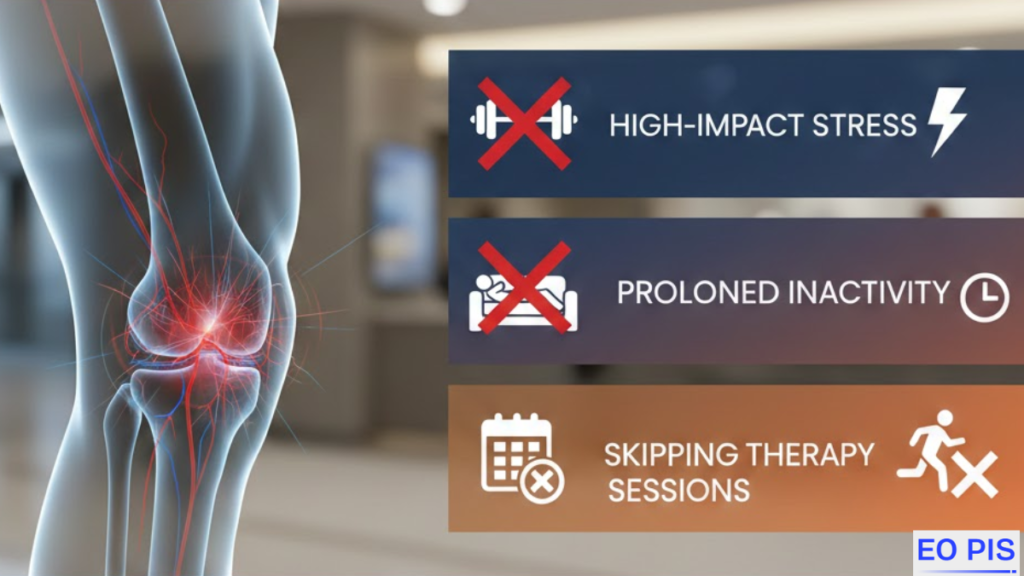
Balanced movement supports mobility restoration and protects long-term joint integrity.
How Long Knee Arthroplasty Recovery Really Takes
Full knee replacement recovery can take up to a year, although daily independence often returns within weeks. Factors influencing recovery include overall health, therapy consistency, and adherence to structured post-operative care.
Age alone is rarely the deciding factor. Consistency in rehabilitation and realistic recovery expectations are far stronger predictors of success.
Conclusion
Avoiding the Top 5 Mistakes After Knee Replacement significantly improves both short-term comfort and long-term function. Successful knee arthroplasty recovery requires structured therapy, responsible pain management, realistic activity progression, and proactive monitoring for complications.
While advances in orthopedic surgery and modern techniques such as minimally invasive knee replacement enhance surgical precision, the real determinant of outcome remains patient behavior. Thoughtful planning, steady rehabilitation, and careful response to warning signs protect mobility for years to come.
Recovery is not about speed. It is about consistency, awareness, and commitment to safe progress.
You May Also Like Top of Foot Pain: Causes, Relief, and When to Worry
FAQs: Top 5 Mistakes After Knee Replacement
What is the biggest mistake patients make after knee replacement surgery?
The most common mistake is inconsistent physical therapy after knee replacement. Skipping exercises or not following the rehabilitation plan can lead to stiffness, reduced range of motion, and slower knee mobility and strength recovery.
How long does knee replacement recovery really take?
Basic mobility may return within 4 to 6 weeks, but full knee arthroplasty recovery can take up to a year. Healing progression depends on therapy consistency, overall health, and how carefully you follow post-surgery knee care instructions.
Is it normal to still have swelling months after surgery?
Mild swelling can persist for several months, especially after increased activity. However, ongoing or worsening swelling may signal inflammation overload or knee replacement complications and should be evaluated by your surgeon.
Can stopping assistive devices too early cause long-term problems?
Yes. Giving up walkers or crutches too quickly can create compensatory movement patterns that affect your gait. Even subtle instability early on can lead to long-term limping or strain in the hips and lower back.
Does robotic or minimally invasive knee replacement guarantee an easier recovery?
No surgical technique guarantees a smooth recovery. While robotic-assisted or minimally invasive knee replacement may improve alignment, long-term outcomes still depend on rehabilitation adherence, pain management after knee surgery, and realistic recovery expectations.