Top of foot pain is a common concern that affects movement, comfort, and everyday function. People often notice pain on top of foot during walking, exercise, or even while resting, and it can signal underlying strain or injury. Understanding the causes of top of foot pain, recognizing foot pain symptoms early, and knowing the right treatment for top of foot pain helps prevent long-term complications. Whether you are managing foot pain from daily movement discomfort or sports-related strain, the right approach supports recovery, prevention of foot pain, and long-term mobility.
What top of foot pain means and why it happens
Pain on top of foot usually develops when tendons and ligaments experience stress beyond their normal capacity. The inflammation response in this area can lead to swelling and inflammation, mobility limitation, and persistent discomfort. Structural foot problems, pressure distribution changes, and repetitive strain often contribute to the condition. In many cases, managing foot pain starts with understanding how walking, standing, and footwear choices influence stress on the foot.
Early symptoms most people ignore (and when they matter)
Early foot pain symptoms often appear as mild stiffness, tenderness, or discomfort after activity. These signs may seem harmless, but they can indicate overuse injuries or foot mobility issues beginning to develop. Persistent symptoms, especially after walking and running, suggest the body is struggling with healing and recovery. Ignoring these signals is one of the most common reasons chronic foot pain develops over time.
Common causes of pain on the top of the foot are explained simply
The most frequent causes of top of foot pain include foot tendonitis, stress fractures, improper footwear, and repetitive impact activities. Extensor tendonitis occurs when tendons on the top of the foot become irritated. A stress fracture can develop from repetitive loading, especially in athletes and active lifestyle routines. Arthritis foot pain may also create stiffness and inflammation that affects daily movement. These conditions often arise when injury prevention strategies and activity modification are overlooked.
Can overuse, shoes, or activity trigger this type of pain?
Overuse injuries are one of the leading reasons for pain on top of foot. Sudden increases in exercise, long hours of standing, or poor footwear choices place extra pressure on the foot’s structure. Improper footwear disrupts pressure distribution and may compress tendons, leading to inflammation and mobility limitation. Even small lifestyle adjustments, such as changing training surfaces or routines, can significantly affect managing foot pain.
Medical conditions linked to top-of-foot pain
Certain conditions increase the likelihood of chronic foot pain. Arthritis, nerve irritation, and structural foot problems may cause ongoing discomfort. These issues can affect gait mechanics, muscle flexibility, and joint stability. When the inflammation response becomes persistent, pain management approaches must address both medical factors and daily movement patterns.
Less obvious causes doctors look for during diagnosis
A diagnostic evaluation often includes assessing gait mechanics, structural foot problems, and pressure distribution. Healthcare professionals examine how ankle stability, calf tightness, and walking patterns influence pain. Persistent symptoms may originate from movement imbalances rather than a single injury. This insight explains why treatment for top of foot pain sometimes requires more than rest.
How to tell acute pain from chronic foot problems
Acute foot injury usually appears suddenly after impact or excessive activity and improves with rest and recovery. Chronic foot pain builds gradually, often linked to repetitive impact activities and long-term strain. Mobility limitation, stiffness, and recurring discomfort suggest ongoing structural or functional stress.
When top of foot pain is serious enough to see a doctor
Medical consultation timing becomes important when pain persists despite home remedies and lifestyle adjustments. Swelling and inflammation, numbness, or difficulty walking signal a need for evaluation.
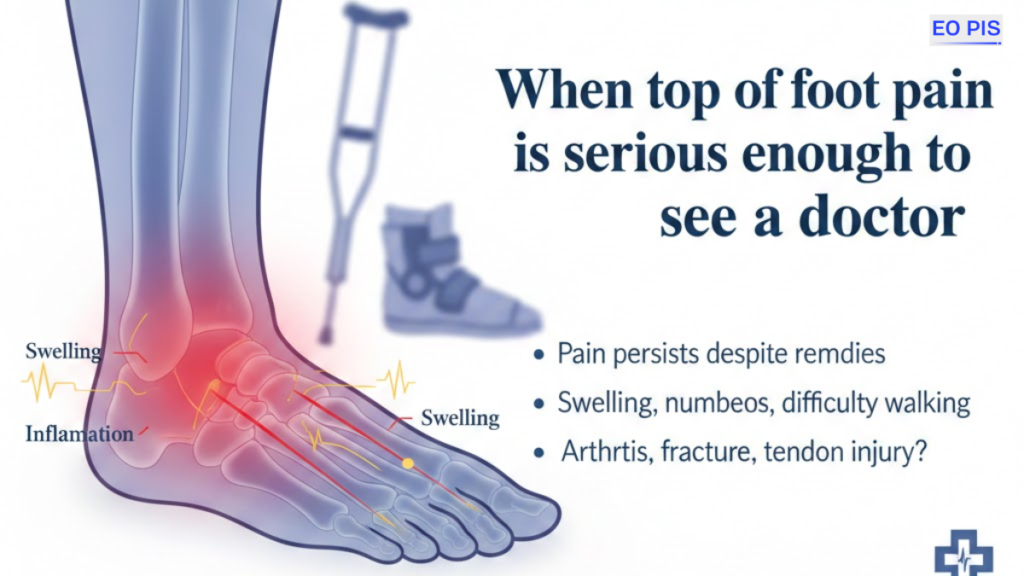
A healthcare professional can determine whether arthritis, a stress fracture, or a tendon injury is present.
How foot pain is diagnosed: tests, exams, and red flags
Diagnosis begins with physical examination and medical history review. Healthcare professionals assess mobility limitation, tenderness, and gait mechanics. Imaging may be used to confirm structural foot problems or a stress fracture. Red flags include persistent symptoms, severe swelling, and inability to bear weight.
Home treatments that actually help relieve top-of-foot pain
Effective pain relief strategies often start with rest and recovery, ice therapy, and supportive footwear. NSAIDs or ibuprofen may reduce inflammation response when used appropriately. Home remedies that combine gentle rehabilitation exercises, improved footwear choices, and activity modification often improve healing and recovery.
When professional care or physical therapy is worth it
Physical therapy for foot pain becomes valuable when symptoms persist or mobility limitation increases. A structured rehabilitation plan supports muscle flexibility, corrects gait mechanics, and strengthens surrounding muscles. Orthotics support may help redistribute pressure and improve comfort during daily movement.
Do you need imaging, medication, or surgery?
Diagnostic evaluation may include imaging when structural damage or a stress fracture is suspected. Anti-inflammatory medication can support short-term relief, while surgical intervention is usually reserved for severe structural problems. Treatment decisions depend on symptom severity, recovery progress, and underlying causes of top of foot pain.
Exercises and lifestyle changes that reduce recurring pain
Rehabilitation exercises, stretching routine, and gradual activity modification reduce recurring discomfort. Weight management, footwear choices, and strengthening routines improve pressure distribution and support injury prevention. These strategies support long-term healing and recovery while improving daily movement.
How to prevent top-of-foot pain during daily activities and sports
Prevention of foot pain depends on consistent habits. Athletes and active lifestyle individuals benefit from progressive training, supportive footwear, and a regular stretching routine. Lifestyle adjustments that prioritize recovery, flexibility, and balanced activity reduce walking and running strain.
Long-term recovery: what helps healing and prevents flare-ups
Long-term healing depends on maintaining muscle flexibility, correcting gait mechanics, and supporting structural alignment. Rest and recovery must be balanced with gradual activity. Persistent symptoms often improve when pain management approaches focus on both physical conditioning and daily movement patterns.
Conclusion
Top of foot pain is often a signal that the body is under strain, not just a temporary discomfort. Recognizing foot pain symptoms early, understanding the causes of top-of-foot pain, and applying the right treatment can prevent chronic foot pain and mobility limitations. Managing foot pain requires a balanced approach that combines rehabilitation exercises, supportive footwear, and timely medical consultation. Prevention of foot pain ultimately depends on consistent lifestyle adjustments, injury-prevention strategies, and awareness of how daily activities affect foot health.
You May Also Like Inomyalgia: Breaking the Stigma Around Chronic Pain Conditions
FAQs
What is the most common cause of pain on the top of the foot?
The most common causes are overuse injuries, extensor tendonitis, stress fractures, and pressure from improper footwear. These conditions develop when the foot absorbs more strain than it can recover from, especially during walking, running, or standing for long periods.
How do I know if my top of foot pain is serious?
Pain that lasts more than a week, worsens with activity, causes swelling, or makes walking difficult should be evaluated by a healthcare professional. Sudden sharp pain after impact or numbness spreading into the toes are also warning signs that need medical attention.
Can tight shoelaces or certain shoes cause pain on the top of the foot?
Yes, pressure from tight laces or poorly fitting shoes can irritate tendons and restrict blood flow, leading to discomfort and inflammation. This is often overlooked but can be a major contributor, especially for runners and people on their feet all day.
Why does top of foot pain return even after rest?
Rest reduces symptoms but does not always fix the root cause, such as gait issues, weak foot muscles, or structural imbalances. Without correcting how the foot handles pressure during movement, the pain can return once activity resumes.
Is it safe to keep exercising with mild top of foot pain?
Light movement is usually safe if pain is mild and not worsening, but continuing high-impact activity can turn minor irritation into a stress injury. Modifying workouts and improving footwear support helps maintain fitness while allowing healing to occur.