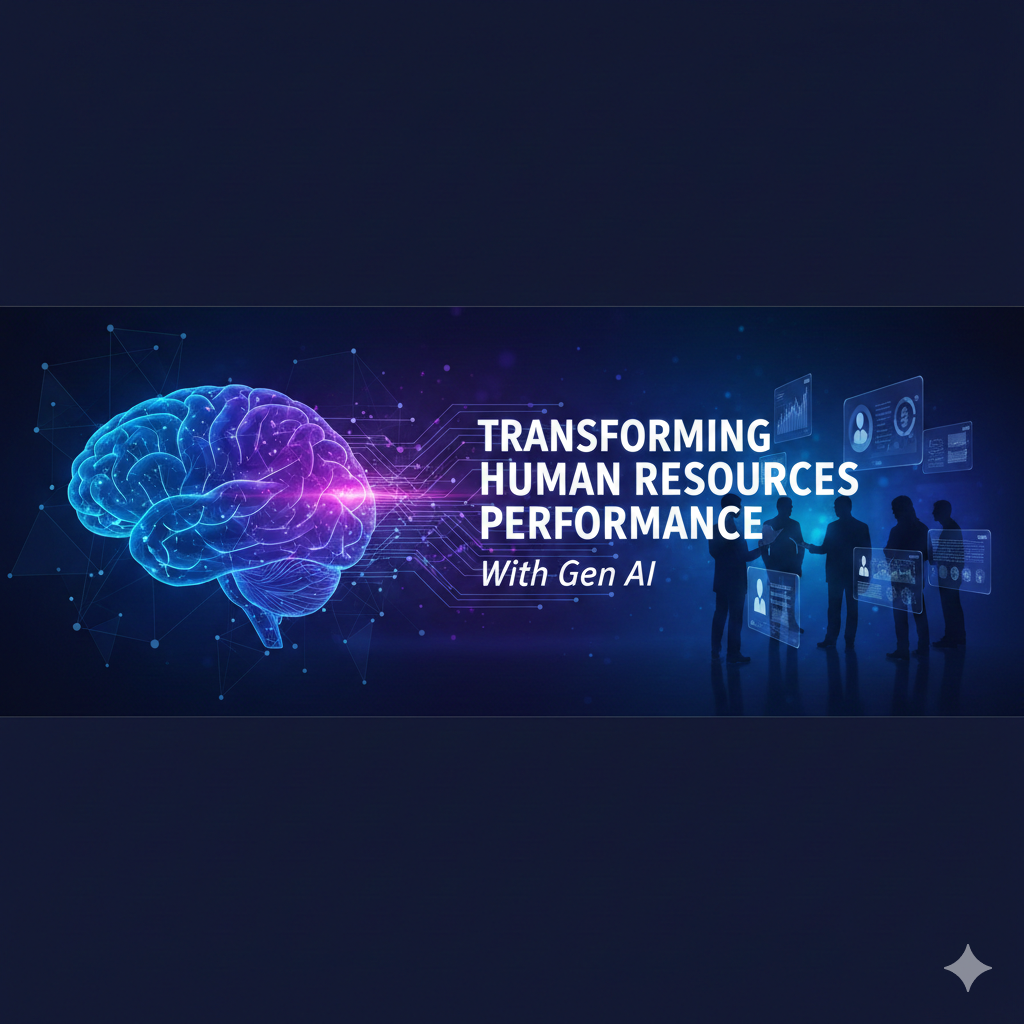
Human resources is undergoing a profound transformation. As organizations face growing pressure to improve workforce productivity, enhance employee experience and manage rising complexity, generative AI is emerging as a powerful enabler of change. HR leaders are exploring how advanced AI capabilities can streamline processes, support data-driven decisions and elevate the strategic impact of the function.
Unlike earlier automation technologies that focused primarily on transactional efficiency, generative AI augments knowledge work. It can analyze large volumes of workforce data, generate insights, draft communications and assist in planning. For organizations seeking guidance from experienced advisors, working with Top Generative AI Consultants ensures that adoption is structured, responsible and aligned with measurable business outcomes.
This article explores how generative AI is reshaping HR, the tangible benefits it delivers, practical use cases and why a benchmark-driven approach is critical to sustainable success.
Overview of gen AI in HR
Generative AI refers to advanced artificial intelligence models capable of creating new content, summarizing complex information and generating predictive insights based on patterns within large datasets. In HR, these capabilities extend across talent acquisition, workforce planning, learning and development, performance management and employee engagement.
Publicly available insights from The Hackett Group® highlight that generative AI can significantly improve HR productivity by automating manual tasks and enhancing analytical capabilities. Rather than replacing HR professionals, it empowers them to focus on higher-value strategic activities such as workforce strategy, talent development and organizational design.
The strategic application of Gen AI in HR requires careful alignment with governance, data privacy and compliance standards. HR functions manage sensitive employee information, making responsible AI deployment essential. Organizations that integrate generative AI into structured operating models and performance frameworks are more likely to realize sustained benefits.
Generative AI in HR can support:
- Drafting job descriptions and candidate communications
- Summarizing resumes and screening applications
- Generating personalized learning recommendations
- Analyzing employee engagement data
- Supporting workforce planning scenarios
- Creating policy documentation and internal communications
When deployed thoughtfully, generative AI transforms HR from a primarily administrative function into a strategic partner that drives measurable business performance.
Benefits of gen AI in HR
Increased HR productivity and capacity
One of the most immediate advantages of generative AI is improved productivity. HR teams often spend significant time on repetitive documentation, reporting and communication tasks. Generative AI can automate these activities, allowing professionals to redirect effort toward strategic initiatives.
For example, AI can draft policy updates, generate training outlines or summarize survey feedback in minutes. This reduces manual workload and accelerates response times across the organization.
Enhanced talent acquisition effectiveness
Recruiting remains one of HR’s most critical responsibilities. Generative AI can assist with writing compelling job descriptions, screening resumes based on predefined criteria and generating structured interview guides.
By improving consistency and reducing bias in early screening stages, AI helps recruiters focus on high-potential candidates while maintaining compliance standards.
Improved employee experience
Employee expectations continue to evolve. Workers expect timely responses, personalized development opportunities and clear communication. Generative AI-powered assistants can provide instant answers to common HR queries and generate tailored learning pathways.
These capabilities enhance accessibility and responsiveness, strengthening overall employee engagement.
Better workforce planning and analytics
Modern HR functions rely on data-driven decision-making. Generative AI can analyze workforce data, identify trends and generate summaries that inform leadership discussions.
For example, AI can support scenario planning by modeling potential hiring strategies or turnover impacts. This enables HR leaders to align workforce planning with business objectives more effectively.
Stronger compliance and risk management
HR must navigate complex regulatory environments related to labor laws, compensation policies and data privacy. Generative AI can assist in drafting compliant documentation and reviewing internal policies for alignment with regulatory requirements.
By augmenting governance processes, AI helps reduce risk while maintaining operational efficiency.
Use cases of gen AI in HR
Talent acquisition and onboarding
Automated job description creation
Generative AI can draft clear, inclusive and role-specific job descriptions aligned with organizational standards. This improves speed to market and ensures consistency across postings.
Resume screening and candidate summaries
AI can analyze large volumes of applications and generate concise candidate summaries for recruiters. This reduces administrative burden and improves decision-making speed.
Personalized onboarding materials
New employees can receive customized onboarding plans and training resources generated by AI based on role, location and experience level.
Learning and development
Personalized learning pathways
Generative AI can analyze employee skill profiles and career goals to recommend tailored training programs. This supports continuous development and internal mobility.
Content creation and course design
HR and learning teams can use AI to draft training modules, create assessments and summarize learning content. This accelerates course development while maintaining quality.
Performance management
Feedback summarization
AI can consolidate feedback from multiple sources into structured summaries for managers and employees. This enhances clarity and supports more meaningful performance discussions.
Goal alignment support
Generative AI can help draft performance goals aligned with organizational priorities, ensuring consistency and transparency.
Employee engagement and communication
Survey analysis and insights
Generative AI can analyze engagement survey results, identify themes and generate executive-ready summaries. This shortens reporting cycles and enables faster action.
Internal communication drafting
HR teams can use AI to draft policy updates, benefits communications, and change announcements with improved clarity and consistency.
Workforce planning and organizational design
Scenario modeling
Generative AI can support workforce scenario planning by modeling headcount changes, skill gaps and cost implications. This strengthens alignment between HR strategy and business growth plans.
Organizational diagnostics
By analyzing performance and engagement data, AI can generate insights into structural inefficiencies or capability gaps that require leadership attention.
Why choose The Hackett Group® for implementing gen AI in HR
Implementing generative AI in HR requires more than technology adoption. It demands benchmark-driven prioritization, strong governance and a structured roadmap aligned with measurable outcomes. The Hackett Group® brings a research-based and performance-focused approach to enterprise transformation.
Benchmark-informed opportunity identification
The Hackett Group® is widely recognized for its benchmarking research and Digital World Class® performance framework. This data-driven foundation enables HR leaders to identify performance gaps and prioritize AI use cases with the highest potential impact.
Rather than pursuing isolated pilots, organizations can focus on initiatives that align with strategic objectives and deliver measurable value.
Governance and responsible AI deployment
HR functions manage highly sensitive data. A structured governance framework ensures that generative AI initiatives comply with privacy regulations and ethical standards. Clear policies around data usage, transparency and accountability are critical to sustainable adoption.
Integrated transformation alignment
Generative AI should not operate independently of broader HR transformation initiatives. The Hackett Group® integrates AI adoption into workforce strategy, operating model design and digital modernization programs. This alignment enhances scalability and long-term success.
Structured evaluation and scaling
The Hackett AI XPLR™ platform helps organizations explore and prioritize AI use cases across enterprise functions. It provides structured insights that help HR leaders move from experimentation to disciplined implementation with confidence.
By combining benchmarking expertise with practical advisory capabilities, The Hackett Group® enables organizations to implement generative AI in a responsible, value-driven manner.
Conclusion
Generative AI represents a significant opportunity for HR organizations seeking to enhance productivity, strengthen workforce planning and improve employee experience. When deployed strategically, it augments human expertise, accelerates decision-making and supports measurable performance improvements.
However, successful adoption requires more than experimentation. HR leaders must establish governance frameworks, align initiatives with business strategy and prioritize use cases grounded in performance benchmarks.
As workforce expectations and competitive pressures continue to evolve, generative AI will play an increasingly central role in shaping the future of HR. Organizations that adopt a structured and research-informed approach can unlock sustainable value and position HR as a strategic driver of enterprise success.