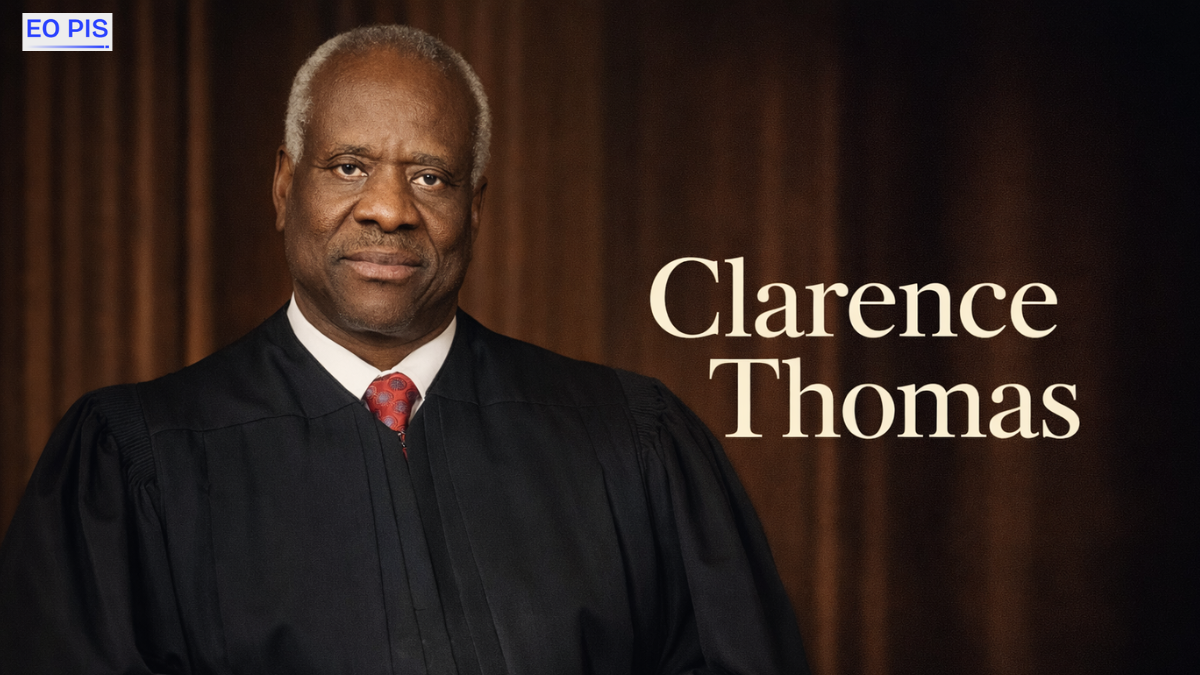
Who Is Clarence Thomas and Why Does He Matter Today?
If you’re searching for who is Clarence Thomas, this Clarence Thomas profile explains why he remains one of the most influential figures on the Supreme Court of the United States. Serving since 1991, his work has shaped American law, especially in areas like constitutional law, voting rights, and federal power.
Understanding the Clarence Thomas Supreme Court role matters in real life: his interpretations influence how laws are applied, how rights are defined, and how power is distributed between government institutions. His long tenure and consistent philosophy make him central to debates about the direction of the U.S. legal system.
What Shaped Clarence Thomas’s Early Life and Beliefs?
A key part of any Clarence Thomas biography is his upbringing in segregated Georgia. Raised with strict discipline by his grandfather, Thomas developed a worldview grounded in self-reliance and skepticism toward government intervention.
Insight: Many overlook how this background influences his civil rights stance he often emphasizes individual responsibility over structural policy solutions, shaping his later judicial reasoning.
How Did Clarence Thomas Build His Legal Career?
Thomas studied at College of the Holy Cross and later at Yale Law School. He worked in various legal roles, including at the Equal Employment Opportunity Commission.
This experience shaped his approach to constitutional interpretation and his broader skepticism of regulatory expansion—an important foundation for his later judicial philosophy.
Why Was His Supreme Court Nomination So Controversial?
The Clarence Thomas nomination controversy began when President George H. W. Bush nominated him to replace Thurgood Marshall.
The debate went beyond qualifications. It raised fundamental questions about ideology, representation, and the future direction of the U.S. Supreme Court.
What Happened During the Anita Hill Hearings?
The Clarence Thomas Anita Hill case became one of the most-watched Senate confirmation hearings in history. Anita Hill accused Thomas of workplace harassment, which he denied.
Common misconception: Many treat the hearings as purely political. In reality, they reshaped national conversations about workplace conduct and powe an impact still visible today.
How Does Clarence Thomas Interpret the Constitution?
At the core of Clarence Thomas’ judicial philosophy is a strict reliance on constitutional original meaning. He prioritizes textualism and challenges judicial precedent when it conflicts with the original understanding of the Constitution.
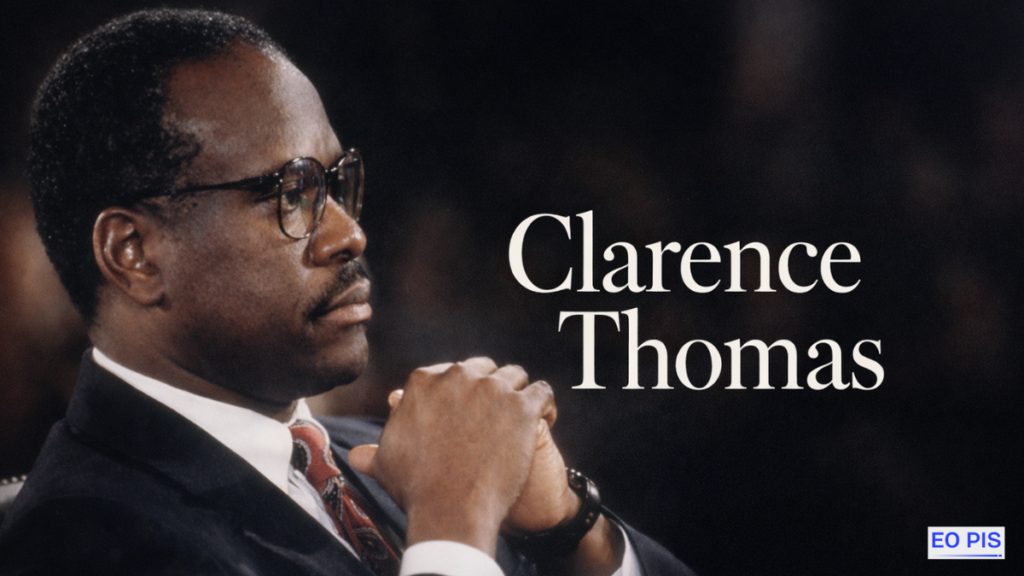
This approach reflects a belief in limiting judicial overreach and reinforcing the separation of powers.
What Is Originalism and Why Does Thomas Support It?
Originalism is the idea that the Constitution should be interpreted based on its meaning at the time it was written. Thomas supports this as a way to preserve legal stability and prevent courts from acting as policymakers.
Insight: In practice, originalism also shifts power away from courts and toward elected bodies making it a structural, not just philosophical, position within constitutional law principles.
How Has Clarence Thomas Influenced Major Supreme Court Decisions?
Many of Clarence Thomas Supreme Court decisions reflect his consistent legal framework. In cases like Roe v. Wade, he argued against broad constitutional protections not explicitly stated in the text.
His influence is also seen in how the Court increasingly revisits older rulings, signaling a shift in Supreme Court ideology.
What Are His Views on Voting Rights and Civil Rights Laws?
The Clarence Thomas voting rights views are often debated. In Shelby County v. Holder, he supported limiting federal oversight under the Voting Rights Act.
His civil rights law interpretation tends to favor a narrower reading, raising ongoing debates about voting rights restrictions and equality under the law.
Why Is Clarence Thomas Considered One of the Most Conservative Justices?
Thomas is widely associated with conservative jurisprudence, alongside figures like Antonin Scalia and Samuel Alito.
His positions often reflect:
- Limited federal authority
- Strong state governance
- Skepticism of expansive rights interpretations
This places him at the center of discussions about federal vs state power.
What Are the Key Ethics Controversies Around Clarence Thomas?
The Clarence Thomas controversies include scrutiny over undisclosed gifts from Harlan Crow.
These ethics issues have sparked debates about judicial transparency and the need for ethics reform in the judiciary.
Insight: Unlike lower courts, the Supreme Court lacks a fully enforceable ethics code, highlighting a structural gap in the legal system of the United States.
Do Financial Disclosure Issues Affect Public Trust in the Court?
Yes, concerns around disclosures directly impact public trust in the judiciary. When financial ties are unclear, it raises questions about political influence in courts.
Common mistake: Many assume all federal judges follow identical ethics rules. In reality, Supreme Court oversight is more limited.
How Does His Personal Life Influence Public Perception?
Thomas’s wife, Ginni Thomas, is politically active. This has raised concerns about conflicts of interest in cases linked to political issues.
While not proof of bias, it complicates perceptions of neutrality—an important factor in judicial branch ethics.
Should Clarence Thomas Recuse Himself From Certain Cases?
The recusal debate reflects broader concerns about judicial accountability. Critics argue that recusal protects institutional trust, while supporters caution against politicizing judicial decisions.
Insight: This issue highlights a deeper tension between personal independence and institutional credibility in lifetime judicial appointments.
What Is Clarence Thomas’s Long-Term Legacy on American Law?
The Clarence Thomas legacy and impact lie in reshaping constitutional interpretation. His work has influenced how courts approach judicial restraint vs activism and the role of precedent.
He has contributed to a legal environment where long-standing rulings are more open to reconsideration, changing expectations around stability in Supreme Court rulings.
Conclusion
This Clarence Thomas profile shows a justice whose influence extends far beyond individual cases. His judicial philosophy, controversies, and decisions continue to shape American law and the broader legal system.
For readers, the key takeaway is practical: understanding Thomas helps explain how constitutional interpretation affects everyday rights from voting access to federal authority. Whether viewed as a principled originalist or a controversial figure, his role in the U.S. Supreme Court remains central to the future of American governance.
You May Also Like Darah Trang: Biography, Career, Family, and Net Worth
FAQs
What is Clarence Thomas known for on the Supreme Court?
Clarence Thomas is best known for his originalist approach to constitutional interpretation and his consistent conservative rulings. He often challenges long-standing precedents and advocates limiting federal court power. His opinions have significantly influenced modern Supreme Court decisions.
Why was the Clarence Thomas confirmation controversial?
The confirmation became controversial due to allegations by Anita Hill during Senate hearings. The case divided public opinion and raised national awareness about workplace harassment. Despite the controversy, he was confirmed by a narrow vote.
What are the main criticisms of Clarence Thomas today?
Criticism of Clarence Thomas often focuses on ethical concerns, particularly undisclosed gifts linked to Harlan Crow. Some also question his stance on voting rights and civil rights laws. These issues have sparked broader debates about transparency and accountability in the judiciary.
Does Clarence Thomas have to follow the same ethics rules as other judges?
Not exactly—this is a commonly misunderstood issue. Supreme Court justices, including Clarence Thomas, are not bound by the same enforceable ethics code as lower federal judges. This gap raises concerns about oversight and potential conflicts of interest.
How do Clarence Thomas’s decisions affect everyday Americans?
His rulings influence real-world issues like voting laws, federal authority, and civil rights protections. For example, decisions related to the Voting Rights Act can impact how elections are conducted across states. This means his judicial philosophy has direct effects on citizens’ rights and daily life.