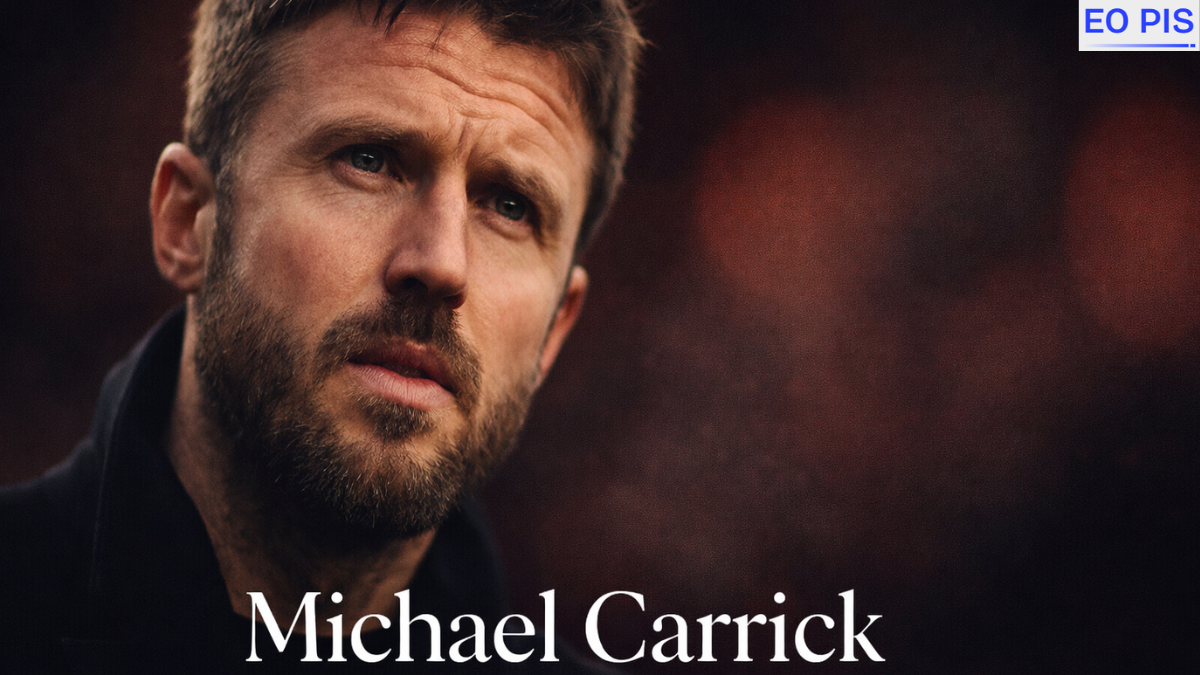
Michael Carrick’s return to Manchester United as head coach has quickly become one of the most discussed decisions of the season. The former midfielder, now stepping into the role of Michael Carrick manager at Old Trafford, arrives at a critical moment in the club’s rebuild. With questions around identity, results, and long-term direction, the debate is simple but important: Is Michael Carrick the right man to lead Manchester United forward in the Premier League?
Who is Michael Carrick, and what defines his coaching style?
Michael Carrick is best understood through his playing career calm, intelligent, and always in control. As a Michael Carrick head coach, those same traits shape his approach. His coaching style centers on possession-based football, structured build-up, and midfield control philosophy rather than high-risk pressing.
At both Manchester United and Middlesbrough, Carrick has preferred a clear tactical system, often a 4-2-3-1 formation, designed to create team structure and balance. His leadership style is calm and composed, prioritizing clarity over emotion.
This matters in modern football because clubs in transition often benefit more from stability than complexity.
Why did Manchester United appoint Carrick as head coach?
The appointment of Michael Carrick at Manchester United reflects both familiarity and necessity. After a disrupted season and the abandonment of a previous tactical project, the club needed a figure who understood its culture and expectations.
Carrick’s previous role under Ole Gunnar Solskjær and his brief spell after Ralf Rangnick’s arrival gave him insight into the dressing room. Combined with his experience at Middlesbrough, he offered a low-risk interim solution.
In the post-Ferguson era, Manchester United has repeatedly turned to former players like Ryan Giggs and Ruud van Nistelrooy in moments of instability. Carrick fits that pattern but with more managerial experience than most.
What problems is Carrick expected to fix at Manchester United?
Carrick inherits a team dealing with structural and psychological issues. The key problems include inconsistent performances, a lack of midfield balance, and unclear attacking patterns.
His role is to restore team structure and reduce chaos. Players like Bruno Fernandes, Casemiro, and Luke Shaw need defined roles within a functional system.
A common mistake in situations like this is expecting instant transformation. In reality, successful Premier League managers often begin by simplifying responsibilities before introducing tactical evolution.
How has Carrick performed in his early matches at United?
Early Michael Carrick results at Manchester United suggest improvement. Performances have shown better positional discipline, improved spacing, and more coherent attacking patterns.
However, short-term success must be viewed carefully. Many interim managers benefit from reduced pressure and simplified tactics. The real test is whether these improvements translate into consistency over time.
What did Carrick achieve during his time at Middlesbrough?
Michael Carrick’s tenure at Middlesbrough demonstrated his ability to quickly elevate a struggling team. After taking over a side near relegation, he led them into promotion contention with a strong Championship performance.
His team played attractive, possession-based football and developed key players such as Chuba Akpom, who thrived under his system before moving to Ajax.
Carrick also improved squad value, with players like Morgan Rogers attracting interest from clubs like Aston Villa. This highlights his strength in player development.
Why did Carrick struggle to sustain success at Middlesbrough?
Despite early success, Carrick’s Middlesbrough side struggled with consistency vs inconsistency. Opponents began to adapt to his tactical system, exposing limitations.
The most common criticism was a lack of tactical flexibility. His adherence to a 4-2-3-1 formation led to “Plan B criticism,” particularly during key moments like the play-off defeat to Coventry City.
This reflects a broader industry pattern: young managers often excel initially but face challenges when opponents adjust.
What tactical approach does Carrick use, and how effective is it?
Michael Carrick’s tactics focus on control rather than chaos. His system emphasizes:
- Midfield dominance
- Controlled build-up
- Structured attacking patterns
This approach can be highly effective in stabilizing teams. At Manchester United, it helps reduce the defensive gaps that previously exposed players like Casemiro.
However, against elite opposition, predictability can become a limitation if tactical flexibility is not developed.
Does Carrick have a clear Plan B when his system fails?
This remains one of the biggest questions surrounding Michael Carrick’s experience as a top-level manager.
While he has shown some ability to adjust, his reluctance to abandon core principles has been noted. Modern elite football requires adaptability within games, not just between them.
The difference between a good manager and a top-tier Premier League manager often lies in in-game adjustments rather than initial setup.
How do players and fans respond to Carrick’s leadership style?
Carrick’s calm, composed leadership style is widely respected. Players respond well to his clarity and consistency, particularly in high-pressure environments.
Fans also appreciate his connection to Manchester United, especially given his history as a player alongside figures like Wayne Rooney.
However, fan expectations remain high. Emotional connection can buy time, but results ultimately define long-term support.
What are the biggest strengths Carrick brings to Manchester United?
Carrick’s strengths are clear. He brings tactical clarity, strong communication, and an understanding of club culture.
He is particularly effective during squad transition periods, where stability is more valuable than experimentation.
His ability to improve team structure quickly makes him well-suited to interim roles.
What risks come with appointing Carrick as long-term manager?
There are legitimate risks. Carrick’s limited experience at the elite level raises questions about his ability to sustain success.
Manchester United operates under intense managerial pressure, with fan expectations, club finances, and Champions League qualification all at stake.
There is also the risk of tactical stagnation if he does not evolve beyond his current system.
Is Carrick experienced enough to manage a club like Manchester United?
Michael Carrick’s experience includes both coaching at Manchester United and managing Middlesbrough, but he has not yet proven himself over multiple Premier League seasons.
Experience alone is not the deciding factor—adaptability and growth are. Carrick must demonstrate that he can evolve in response to challenges.
How does Carrick compare to previous United managers post-Ferguson?
Carrick differs from previous managers in approach. He is less confrontational than José Mourinho and more tactically structured than Ole Gunnar Solskjær.
Compared to more ideological coaches like Ruben Amorim, Carrick is pragmatic. He prioritizes balance over identity-driven systems.
This makes him suitable for stabilization, but questions remain about long-term transformation.
What alternatives could Manchester United consider if Carrick falls short?
If Carrick does not deliver, Manchester United may consider experienced Premier League managers or emerging tacticians with proven adaptability.
The decision is not simply about replacing Carrick, it is about choosing between stability and ambition.
Few managers offer both.
Should Manchester United make Carrick the permanent manager?
The answer depends on outcomes. If Carrick delivers consistent results and secures Champions League qualification, his case becomes strong.
However, he must also demonstrate tactical growth and adaptability. Without that, he risks being seen as a short-term solution rather than a long-term leader.
Conclusion
Michael Carrick is the right manager for Manchester United at the present moment. His ability to restore structure, improve performances, and stabilize a team in transition is clear.
However, long-term success requires more than stability. It requires evolution, adaptability, and sustained performance at the highest level of the Premier League.
Carrick’s challenge is not just to fix Manchester United but to prove he can take them forward. His future will depend not on where he started, but on how far he can develop as a manager.
You MAy Also Like Clarence Thomas: Views, Controversies & Impact
FAQs
1. Is Michael Carrick a permanent or interim Manchester United manager?
Michael Carrick was initially appointed as a caretaker manager, meaning his role is temporary. His future depends on results, especially whether he can secure Champions League qualification and maintain consistent performances.
2. What is Michael Carrick’s coaching style at Manchester United?
Michael Carrick’s coaching style focuses on possession-based football, midfield control, and structured build-up play. He prefers a balanced system, often using a 4-2-3-1 formation to maintain defensive stability and attacking organization.
3. Why do some fans doubt Michael Carrick as a long-term manager?
Some fans question Carrick’s limited experience at the elite level and his past struggles with tactical flexibility at Middlesbrough. The concern is whether he can adapt against top teams over a full Premier League season.
4. What is the biggest hidden risk of appointing Michael Carrick permanently?
The biggest hidden risk is tactical predictability over time. While Carrick can quickly stabilize a team, opponents may eventually adapt to his system if he does not develop greater in-game flexibility.
5. Is Michael Carrick’s calm leadership style a strength or a weakness?
Carrick’s calm, composed leadership helps reduce pressure and improve player confidence, especially during unstable periods. However, in high-stakes moments, some teams benefit from more vocal or intense leadership, which raises questions about his long-term impact.
Visit Plangud