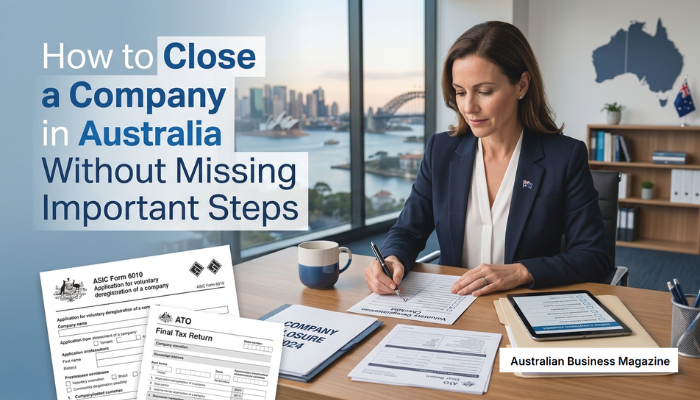
To deregister a company in Australia, formal deregistration is the only path the Australian Securities and Investments Commission (ASIC) recognises. That means settling debts, sorting your tax accounts, and lodging the right forms with ASIC (and no, locking the doors and walking away won’t cut it).
If you skip even one of those steps, you’re looking at ongoing fees, Australian Taxation Office penalties, or even personal liability as a director. We write about this regularly at https://abmag.com.au, and one thing is clear: preparation is what separates a clean closure from a costly one.
We’ll cover ASIC forms, tax clearance, employee obligations, and the legal loose ends most owners forget. Each step builds on the last.
Let’s get into it.
What Is Company Deregistration in Australia?
Your company officially exists on ASIC’s register. Company deregistration removes it from that register, regardless of your industry. Your company will no longer exist as a legal entity, and it can’t trade, hold assets, or take part in legal proceedings.

The difference between deregistration and winding-up is like returning your licence plates versus paying off the car loan first. Deregistration means confirming the company is debt-free and ready to close. On the flipside, the winding-up route requires you to settle the company’s assets and outstanding debts first.
Either way, your company needs to meet specific conditions before you can lodge your form.
Can You Voluntarily Deregister Your Company?
Yes, you can voluntarily deregister your company, but only if it meets every condition ASIC sets out. We’ve watched sole directors in Melbourne and Sydney face rejection because they lodged before confirming eligibility.

There are a few conditions your company needs to clear first.
Who Qualifies for Voluntary Deregistration
You only qualify if all members of the company agree to the closure. Your company also can’t owe any debts or penalties payable, or be involved in any active legal proceedings.
Beyond that, if you’re behind on your annual review fee, ASIC won’t accept the application either.
Assets, Debts, and Outstanding Liabilities
You need to distribute the company’s assets before you lodge your form. If you still owe credit providers or suppliers, the application won’t go through. For example, a forgotten supplier invoice from years ago can come back and block you if the company isn’t financially clear.
Employee and Superannuation Obligations
You need to pay every employee entitlement in full, from wages to unused leave. That includes any overdue superannuation payment (the ATO doesn’t let this one slide).
Keep in Mind: If your super guarantee lodgements aren’t current, the ATO can reject your deregistration.
Tax Obligations to Sort Before You Close
Once your company’s debts and employee payments are sorted, you’ll need to square things up with the ATO. ASIC won’t process your deregistration until your tax accounts show a clean slate.
You’ll need to prepare for three steps before you’re clear.
- Lodge All Final Returns: Submit your income tax, Goods and Services Tax (GST), and any other tax registrations still open with the ATO. Pay As You Go (PAYG) withholding counts here, too. If you still have an outstanding Business Activity Statement (BAS) or invoice report to file, lodge it before you begin the closure process.
- Cancel Your Registrations: After you lodge those returns, cancel your GST registration and PAYG accounts. If you leave them open, they’ll assume your company is still operating and owing.
- Get ATO Clearance: After all of that, you need clearance from the ATO. They’ll confirm your company has zero outstanding tax obligations, then pass the green light to ASIC. Think of this clearance as the receipt they need before your company comes off the register.
Your ATO clearance and ASIC application go hand in hand (if one stalls, so does the other). Once the tax is sorted, you’re ready to lodge with ASIC.
How the ASIC Deregistration Process Works
The ASIC deregistration process has three parts: lodging your form, paying the fee, and waiting for approval. You’ll handle all of it through ASIC.
Each part has its own requirements, so here’s what to expect:
Lodging Form 6010 With ASIC
Form 6010 is the one form you need to apply for voluntary deregistration. It asks you to declare that your company meets all of ASIC’s eligibility conditions. You can lodge it electronically through the ASIC portal or post it by mail with any supporting documents.
Either way, you should complete every section accurately and make sure details match your company’s current records. If anything doesn’t line up, ASIC will send it back.
Fees and Timeframes
The application fee is $50 (including GST). From there, expect around two months from the date they receive it. If you’ve ever waited on a government body to process paperwork, you already know how that feels. During that period, ASIC publishes a notice and waits for objections.
If any come through, ASIC will notify you directly before making a final decision.
Life After Deregistration
Once the deregistration goes through, your company stops existing in its own right as a legal entity. That means former directors lose all authority to act on its behalf, and any Corporations Act obligations wrap up at that point.
If reinstatement is ever needed post-deregistration, ASIC can do it under specific legal requirements. But you’ll need a fresh application and a separate fee.
Quick Note: The ASIC side might be complete, but state licences, insurance policies, and contracts can still follow you if you don’t cancel them.
Legal Loose Ends Most Owners Forget
A few obligations sit outside ASIC’s scope entirely, and they don’t disappear on their own. We’ve seen this firsthand with business owners across Queensland and WA, who received a letter months later about a state licence still active after deregistration.
State licences and permits don’t cancel themselves. You need to contact each issuing authority directly to get them closed. When you leave one active, you risk fines or breaching local regulations down the track. You also need to cancel any registered business names separately through the ASIC portal.
Insurance policies are another loose end, as active policies keep charging premiums after deregistration. So cancel active cover and stop throwing money away on policies that protect nothing.
From there, review any existing contracts the company signed before closure, because some legal obligations survive deregistration and can still bind former directors.
Give Your Business the Send-Off It Deserves
Closing a company in Australia carries real consequences when you miss a step. That means debts, tax accounts, and ASIC forms all need to be sorted in the right order. With the right approach, directors across Australia wrap this up cleanly every day.
This article covered eligibility, tax obligations, the ASIC deregistration process, and the legal loose ends most owners overlook. We also covered legal loose ends and how to avoid delays that cost you time and fees.
So when you decide you’re ready, our team at ABmag will take you through every step. We’ll provide the expert advice and support you need to close your company properly and move forward with confidence.
Reach out today and get it done right.