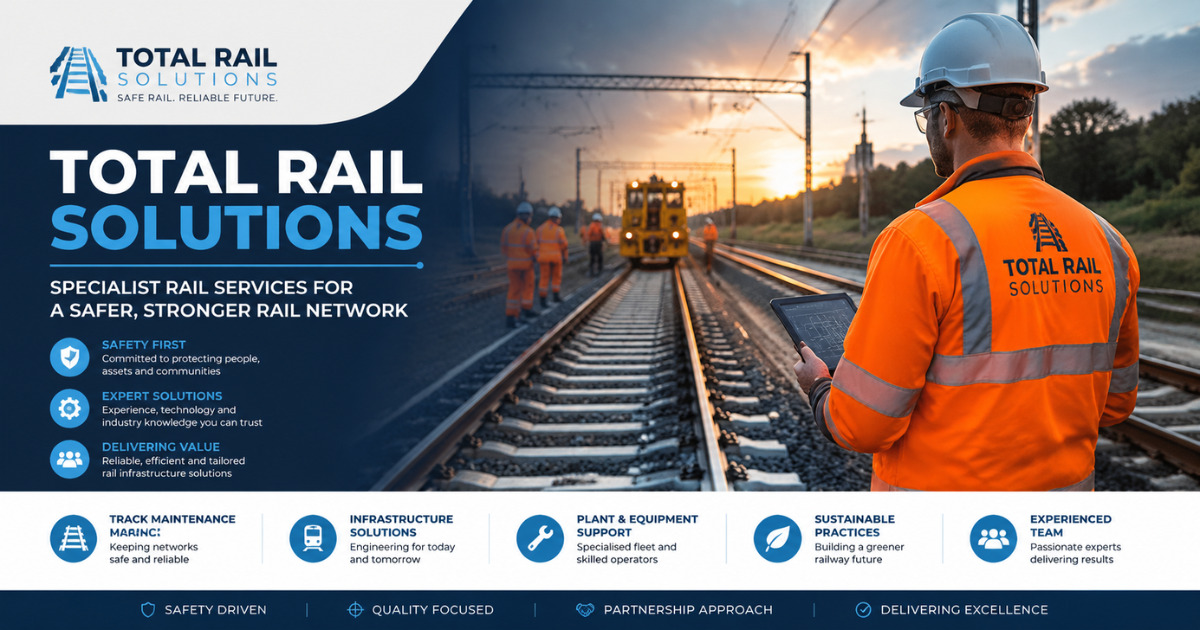
Total Rail Solutions is a specialist rail services provider focused on supporting railway infrastructure, maintenance, and operational requirements. Companies looking for reliable rail partners need to understand not only what services are available but also how specialist contractors improve safety, efficiency, and long-term infrastructure performance.
Rail networks are complex environments where safety, compliance, planning, and technical expertise all work together. Whether the requirement involves maintenance support, engineering activities, vegetation management, or trackside operations, choosing the right rail contractor can directly affect project success.
This guide explains what Total Rail Solutions represents within the rail industry, how specialist rail services work, what factors to consider before choosing a provider, and the practical limitations businesses should understand.
What Is Total Rail Solutions?
Total Rail Solutions refers to a specialist approach to railway support services, where trained professionals provide maintenance, engineering, and infrastructure-related solutions for rail networks.
Unlike general construction companies, rail specialists understand the unique requirements of railway environments, including operational safety, access restrictions, compliance procedures, and coordination with railway operators.
Rail infrastructure requires continuous attention because tracks, surrounding areas, equipment, and operational systems must remain safe and reliable. Specialist contractors help railway organisations maintain performance while reducing disruption.
Understanding the Role of a Specialist Rail Contractor
Rail contractors operate in highly controlled environments where even small mistakes can create safety concerns or operational delays.
A specialist rail provider typically focuses on areas such as:
- Railway infrastructure maintenance
- Trackside support services
- Engineering assistance
- Vegetation and environmental management
- Safety-focused site operations
- Project support for rail upgrades
The main value of a specialist provider is not simply completing physical work. It is understanding how that work affects the wider railway system.
How Total Rail Solutions Fits Into the Rail Infrastructure Sector
The railway industry depends on multiple connected organisations, including infrastructure managers, operators, engineers, and maintenance teams.
A rail services company supports this ecosystem by helping maintain assets and ensuring railway environments remain functional.
From routine maintenance activities to larger infrastructure projects, specialist contractors provide additional capability when organisations need experienced teams without expanding their internal workforce.
Total Rail Solutions Services Explained
Rail service providers often support multiple areas of railway operations. The exact services offered should always be verified directly with the provider before making commercial decisions.
Rail Maintenance and Infrastructure Support
Rail maintenance focuses on keeping railway assets safe, operational, and reliable.
Typical maintenance activities may include:
- Trackside inspections
- Infrastructure support
- Asset maintenance assistance
- Site preparation
- Safety-related improvement work
Preventive maintenance is especially important because identifying problems early can reduce expensive repairs and operational disruption.
Rail Engineering and Project Delivery
Engineering support plays an important role in railway development and improvement projects.
Rail engineering services may involve:
- Technical planning
- Project coordination
- Infrastructure improvement support
- Engineering assessments
- Implementation assistance
In real use, engineering capability matters because railway projects involve multiple stakeholders and strict operational requirements.
Vegetation Management and Trackside Safety Services
Trackside vegetation is often overlooked, but uncontrolled growth can affect railway visibility, access, drainage, and maintenance activities.
Professional vegetation management helps maintain safer railway environments by controlling risks around infrastructure.
What most guides miss is that railway reliability depends not only on tracks and trains but also on the surrounding environment.
Why Rail Operators Need Specialist Maintenance Partners
Rail networks cannot rely on occasional repairs alone. They require structured maintenance approaches that protect safety and improve reliability.
Safety, Compliance, and Operational Reliability
Railway environments operate under strict safety expectations.
A capable rail partner should understand:
- Site safety procedures
- Workforce training requirements
- Operational restrictions
- Risk assessment processes
- Industry compliance expectations
A contractor’s technical ability matters, but their safety culture is equally important.
Reducing Delays Through Preventive Rail Maintenance
Unexpected failures can create significant disruption for railway operators.
Preventive maintenance helps organisations:
- Identify issues earlier
- Improve asset reliability
- Reduce emergency repairs
- Plan work more efficiently
A practical way to check a provider’s capability is to review their experience with similar railway environments rather than focusing only on service descriptions.
A Real-World Rail Maintenance Workflow: From Planning to Completion
A professional rail project usually follows a structured process.
Step 1: Site Assessment and Risk Planning
Before work begins, teams typically evaluate:
- Site conditions
- Safety requirements
- Access limitations
- Operational impact
- Required equipment
Good planning reduces unexpected problems during execution.
Step 2: Controlled Maintenance Execution
Rail work requires careful coordination because teams often operate around active infrastructure.
Successful execution depends on:
- Skilled personnel
- Clear communication
- Safety procedures
- Proper equipment
- Accurate scheduling
From what I’ve seen, many infrastructure challenges are not caused by the physical task itself but by poor planning and coordination.
Step 3: Inspection, Reporting, and Continuous Improvement
After completion, organisations should review:
- Work quality
- Safety outcomes
- Maintenance records
- Future recommendations
Documentation helps improve future railway projects and supports long-term asset management.
Total Rail Solutions Compared With Other Rail Service Approaches
Choosing a rail partner depends on project requirements, internal resources, and risk tolerance.
| Option | Best For | Strength | Weakness | Risk | Final Verdict |
| Specialist Rail Contractor | Complex railway projects | Industry-specific knowledge | May cost more than general contractors | Low when properly selected | Best for safety-critical work |
| General Construction Company | Basic infrastructure tasks | Broad construction experience | Limited rail expertise | Medium to high | Suitable only for simpler projects |
| Internal Maintenance Team | Large railway organisations | Full operational control | Requires investment and staffing | Depends on capability | Good for established operators |
Choose This If…
A specialist rail provider is usually the right choice when:
- Safety requirements are high
- Railway experience is essential
- Projects involve operational environments
- Compliance knowledge matters
Avoid This If…
A specialist provider may not be necessary when:
- The project has no railway-specific requirements
- Internal teams already have sufficient expertise
- The work does not involve rail infrastructure
Common Mistakes When Choosing a Rail Services Provider
Choosing the wrong contractor can create unnecessary costs, delays, or safety concerns.
Choosing Based Only on Price
A common mistake is selecting the cheapest option without evaluating experience, safety standards, and project capability.
Lower upfront costs can sometimes create higher long-term expenses if work quality or reliability becomes an issue.
Ignoring Safety Records and Industry Experience
Rail projects require specialised knowledge.
What most guides miss is that experience in general construction does not automatically equal experience in railway environments.
Companies should evaluate:
- Previous project types
- Workforce expertise
- Safety processes
- Industry understanding
Limitations: When a Rail Solution Provider May Not Be the Right Fit
This may fail when organisations choose a provider without matching capabilities to project requirements.
For example:
- A small maintenance task may not require a large specialist contractor.
- A provider without experience in a specific rail environment may not be suitable.
- Poor communication between stakeholders can still create project issues.
The right choice depends on project complexity, safety requirements, timeline, and available resources.
Advanced Rail Industry Factors to Consider in 2026
The rail industry continues to evolve with greater focus on:
- Digital monitoring technologies
- Predictive maintenance
- Sustainable infrastructure
- Data-driven asset management
- Improved workforce safety systems
Future rail contractors will increasingly need to combine practical field expertise with technology-supported decision-making.
Is Total Rail Solutions the Right Choice for Your Rail Project?
Total Rail Solutions may be suitable for organisations that need specialist rail support, experienced teams, and infrastructure-focused expertise.
Before choosing any rail provider, consider:
- Does the company understand your type of railway environment?
- Can they meet safety and compliance expectations?
- Do they have relevant project experience?
- Can they scale with your requirements?
The best rail partner is not always the cheapest option. It is the one that provides reliable delivery, appropriate expertise, and long-term value.
Final Thoughts on Total Rail Solutions
Total Rail Solutions represents the type of specialist support required in modern railway infrastructure environments where safety, reliability, and technical knowledge are essential.
A successful rail partnership depends on more than completing a task. It requires understanding operational challenges, managing risks, and delivering consistent quality.
Whether evaluating Total Rail Solutions or another rail contractor, businesses should focus on capability, experience, safety standards, and long-term project requirements before making a decision.
FAQs
What is Total Rail Solutions?
Total Rail Solutions is a rail services provider focused on supporting railway infrastructure, maintenance, and operational requirements. The company’s suitability depends on the specific project needs, location, and services required.
What services does Total Rail Solutions provide?
Total Rail Solutions provides specialist rail-related support services connected with railway infrastructure and maintenance. Exact service availability should be verified directly because providers may update their capabilities over time.
Why do railway companies use specialist contractors?
Railway companies use specialist contractors because rail environments require specific safety knowledge, technical skills, and operational understanding. Specialist support can help improve reliability while reducing pressure on internal teams.
Are specialist rail contractors always better than general contractors?
No, specialist rail contractors are not always necessary for every project. They are usually more valuable when safety requirements, technical complexity, or railway-specific experience are important factors.
What should I check before choosing a rail services company?
You should check experience, safety processes, relevant project history, and technical capability before choosing a rail services company. A provider’s ability to handle your specific environment matters more than a general service list.
How is rail maintenance changing in 2026?
Rail maintenance is becoming more data-driven through digital monitoring, predictive maintenance, and improved asset management approaches. Companies increasingly combine field expertise with technology to improve reliability.