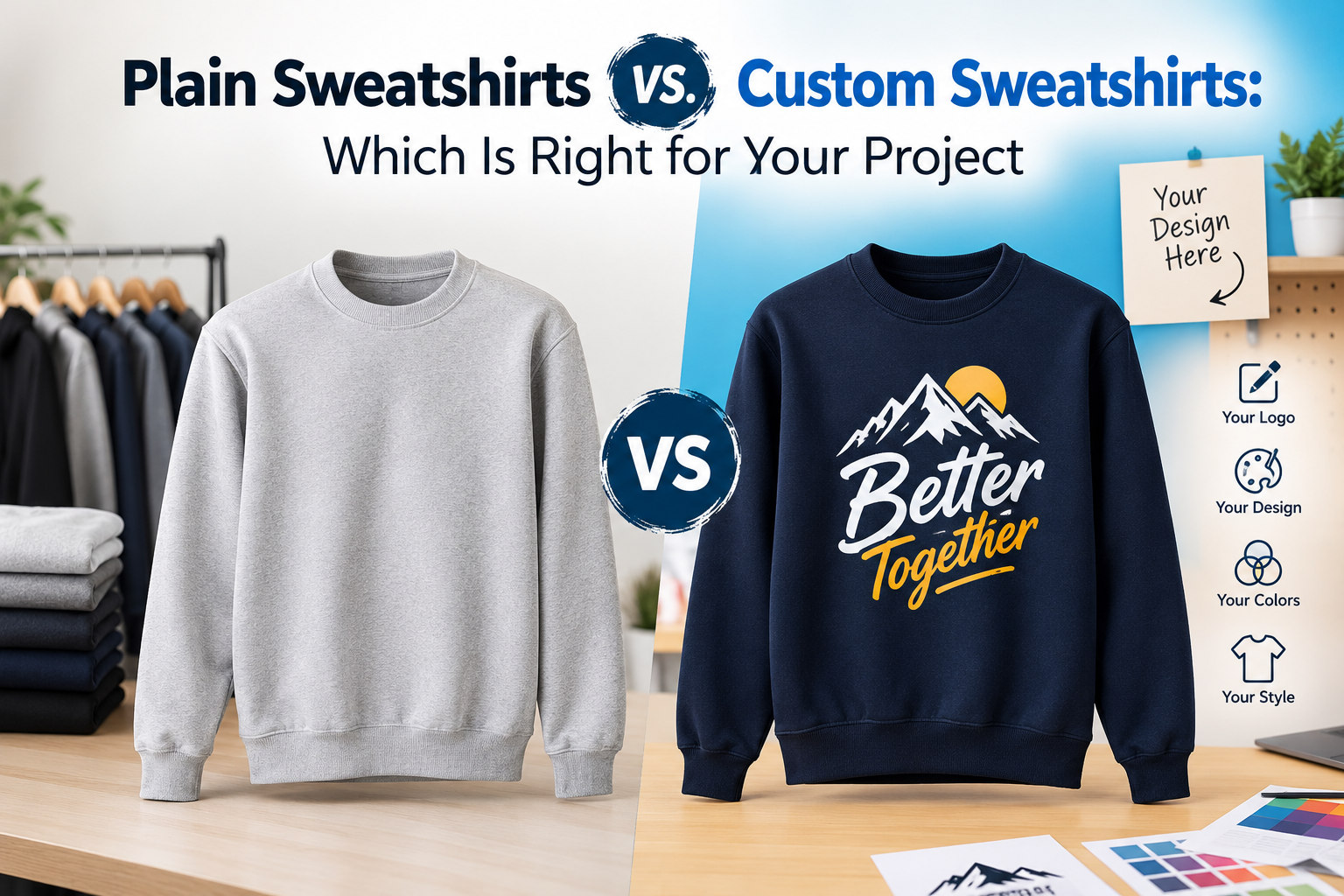
Launching an apparel initiative—whether for an emerging lifestyle collection, an internal workforce rollout, a community fundraiser, or a university cohort—requires an early structural decision: should you deploy unadorned, minimalist garments, or invest in bespoke decorative processes? Project coordinators and brand managers frequently assume that adding graphics, badges, or typographic elements automatically enhances a garment’s perceived value. However, rushing into complex customization without assessing the intended setting, audience wear patterns, and long-term utility often introduces unexpected overhead, extended lead times, and narrow aesthetic appeal.
Evaluating plain sweatshirts against custom decorated alternatives requires an objective look at manufacturing timelines, budget allocation, fabric longevity, and end-user psychology. While customized garments excel at building explicit group cohesion and public brand visibility, undecorated fleece delivers timeless versatility, elevated styling flexibility, and immediate procurement efficiency. Determining the optimal direction depends on aligning your specific project goals with the functional strengths of each approach.
The Case for Plain Sweatshirts: Versatility, Speed, and Minimalist Utility
Unembellished fleece garments have evolved far beyond basic utility wear; they represent a cornerstone of contemporary minimalist fashion and functional workplace uniforming. When an initiative prioritizes understated quality, immediate delivery, and cross-functional wearability, plain apparel offers distinct operational and aesthetic benefits.
Without the constraints of explicit logos, event dates, or promotional typography, plain fleece integrates seamlessly into diverse daily environments. Recipients can wear an unbranded garment to a casual office, during weekend travel, or beneath structured tailoring without broadcasting a commercial sponsor or past event. This neutrality dramatically extends the functional lifespan of the garment, ensuring it remains in active wardrobe rotation rather than being relegated to home lounging or sleepwear.
Procuring a dependable staple like a Gildan sweatshirt in an unadorned state allows project managers to leverage industrial yarn strength and pre-shrunk fleece stability at an accessible unit cost. These foundational garments deliver consistent color depths and balanced poly-cotton durability, making them reliable choices for rapid workforce outfitting or simple, clean everyday apparel programs.
Furthermore, opting for unembellished apparel eliminates the entire decoration production schedule. Projects facing tight event deadlines avoid artwork vectorization, screen engraving, test strike-offs, press setup queues, and curing inspections, allowing inventory to be packaged, shipped, and distributed in a fraction of the time required for bespoke manufacturing.
The Everyday Practicality of the Plain Crewneck Sweatshirt
Within the unembellished category, the plain crewneck sweatshirt serves as the ultimate multi-purpose garment. Its clean, collarless neckline and balanced proportions bridge the gap between relaxed leisurewear and smart-casual professional outfitting.
Unlike hooded garments that carry an inherently informal, athletic connotation, a clean crewneck layers neatly over collared woven shirts, polo collars, or under tailored overcoats without creating uncomfortable bulk around the neck.
From an inventory and distribution perspective, plain crewneck fleece simplifies warehouse management. Facilities and human resource coordinators can maintain an on-demand stock of neutral crewnecks across standard sizes, issuing them immediately to new hires, seasonal contractors, or event staff without worrying about obsolete event dates or discontinued promotional graphics.
The Case for Custom Sweatshirts: Group Identity, Branding, and Impact
When the primary objective of a project is fostering community pride, driving visual marketing, or creating an exclusive retail product, custom decoration becomes indispensable. Tailored artwork transforms an off-the-shelf fleece blank into a distinct identity piece that communicates belonging, shared achievement, or creative expression.
In corporate and institutional settings, decorated sweatshirts build tangible team unity. When employees or volunteers wear matching branded fleece during public trade expositions, charity walks, or outdoor community activations, they project an organized, professional presence that builds trust with external audiences. Internally, high-quality decorated apparel serves as a tactile reward, commemorating project completions, corporate anniversaries, or athletic championships.
For commercial apparel startups, decoration is the primary vehicle for artistic differentiation and brand storytelling. Thoughtfully positioned graphics, unique colorways, and bespoke neck labeling turn everyday fleece into collectible merchandise that commands retail margins and fosters customer loyalty.
Evaluating Custom Decoration Techniques and Physical Constraints
Investing in customized sweatshirts requires selecting an embellishment method that complements both the graphic artwork and the physical properties of the fleece textile:
High-density plastisol screen printing provides exceptional color opacity and crisp edge definition, making it the industry benchmark for bold typographic layouts, athletic numbering, and vibrant multi-color logos on poly-cotton fleece.
Soft-touch water-based and discharge printing chemically bonds with raw cotton cellulose fibers, yielding a lightweight, breathable graphic that cannot be felt by the hand, creating the soft hand-feel demanded by boutique lifestyle consumers.
Precision embroidery, 3D puff stitching, and direct-to-film transfers provide tactile, dimensional relief, elevating executive corporate gifts, collegiate crests, and subtle chest monograms with exceptional wash durability.
However, custom embellishment introduces production variables that must be actively managed:
Minimum order quantities imposed by commercial print and embroidery shops can constrain tight budgets or limit size flexibility.
Upfront tooling costs, including film output, screen burning, and embroidery digitizing fees, inflate the initial capital investment required before a single piece is decorated.
Extended lead times of two to four weeks are standard during peak autumn and winter production cycles, requiring early planning to prevent event-day delays.
Financial Analysis and Budget Realities
Balancing plain against customized apparel ultimately requires examining unit economics and total cost of ownership:
Plain garments involve a straightforward financial structure: blank unit cost plus bulk freight. Because there are no decorative press charges, setup fees, or ink flash surcharges, the per-unit expense remains low, allowing organizations to allocate budget toward higher-tier fabric weights or larger unit volumes.
Customized apparel carries a multi-layered cost structure. The total per-unit price combines the base blank garment, embroidery stitch counts or screen color passes, setup fees, specialized ink additives, and individual folding and poly-bagging charges. While custom apparel justifies higher retail pricing in consumer markets, internal corporate initiatives must weigh these added costs against the actual visual benefit delivered.
Strategic Decision Framework for Project Planners
Selecting the right path comes down to answering four foundational operational questions:
What is the primary operational setting? If the garment is intended for smart-casual client meetings, varied multi-department wear, or quiet daily tasks, an unbranded, high-grade plain sweatshirt provides superior professional flexibility. If the setting involves a public exhibition, outdoor rally, or athletic competition, customized graphics are essential for clear visual identification.
What is your hard delivery deadline? If your timeline is under ten business days, plain blanks provide a dependable, risk-free fulfillment route. If you have four to six weeks of runway, custom decoration can be scheduled, sampled, and executed without rush premiums.
What are the long-term wear expectations? Plain fleece integrates seamlessly into long-term personal wardrobes, minimizing textile waste and maximizing daily utility. Custom apparel shines when commemorating specific milestones, building community identity, or generating direct retail sales.
How strict is the total project budget? If financial resources are tightly capped, investing in a heavier, more durable plain blank often yields a higher perceived quality than applying cheap, crack-prone printing over a thin, low-grade fleece blank.
Achieving Optimal Project Outcomes Through Informed Garment Selection
Whether your initiative calls for the quiet, versatile elegance of an unadorned crewneck or the bold, communicative power of a fully decorated custom design, success relies on understanding your functional priorities. By assessing timeline constraints, decoration costs, and daily wear environments, you can direct your apparel investment where it delivers the highest practical value.
Approaching sweatshirt procurement with clear technical intent ensures your final garments—plain or decorated—provide lasting comfort, reliable durability, and genuine satisfaction for every wearer.