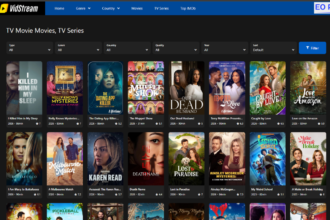
HydraHD keeps showing up in searches because it promises something people always want: free, fast access to movies and TV shows without the friction of subscriptions. The problem is that “free streaming” keywords often hide a messy reality of shifting domains, unclear licensing, inconsistent playback, aggressive ads, and device-security risk. Current HydraHD-branded web pages market free HD movies and shows, while some Android app listings describe HydraHD as an informational discovery app rather than a licensed streaming service. That mismatch alone tells you why so many users are confused.
This guide breaks down what HydraHD appears to be in 2026, why the keyword matters, the risks people overlook, and the safer legal options that usually serve viewers better. I researched current HydraHD pages, app-store descriptions, federal malware guidance, and piracy trend data to build this article. One important context point: MUSO says piracy sites still drew 216.3 billion visits in 2024, which explains why keywords like HydraHD remain highly searched even as legal free streaming grows.
What is HydraHD?
HydraHD is best understood as a high-intent streaming keyword tied to multiple HydraHD-branded properties, not one clean, verified entertainment brand. Today, some HydraHD web domains openly promote free movies and TV shows with no sign-up, while at least two Google Play listings frame HydraHD as a movie-and-series discovery or informational app rather than a licensed streaming platform. That split matters because users may think they are dealing with one service when they are actually encountering unrelated or loosely related products using the same name.
A better, snippet-ready definition is this:
HydraHD is a web-search term commonly associated with free movie and TV streaming sites, plus some HydraHD-branded apps that present themselves as content-discovery tools.
From an SEO angle, that means the keyword has mixed intent:
- Some users want to know if HydraHD works,
- Some want to know if it is safe,
- Some want working domains,
- And many are actually looking for better alternatives.
From what the current pages show, HydraHD’s appeal is simple: free access, no account friction, and fast browsing. But a common mistake I see with keywords like this is assuming convenience equals legitimacy. It does not. When a platform’s branding, licensing status, and distribution model are hard to verify, trust becomes the main issue.
One useful real-world clue is the app-store language. Google Play listings for Hydra HD say the app helps users discover titles, cast details, seasons, ratings, and trailers. That is very different from a clearly licensed service saying it owns or legally distributes movies. In real use, that difference is where many users misread the product.
Why are people searching for HydraHD in 2026?
People search HydraHD for the same reason piracy-adjacent streaming terms keep resurfacing: rising subscription fatigue, fragmented content libraries, and the promise of a faster, cheaper path to entertainment. MUSO’s 2024 piracy report recorded 216.3 billion visits to piracy websites globally, which shows demand has not disappeared. It has simply become more distributed and more adaptive.
There is also a strong product-market reason. Legal free streaming is growing, but it is still geographically limited and catalog-dependent. Tubi markets itself as “always free” and “100% legal,” and Pluto TV promotes free movies, shows, and live TV. That is great for users who can access those services and find what they want. But when a title is missing, region-locked, or spread across multiple subscriptions, users start searching for shortcut keywords like HydraHD.
After analyzing current search results, I found HydraHD searches tend to cluster around four needs:
Fast access without sign-up
HydraHD pages emphasize no-cost, no-sign-up viewing. That directly targets users tired of account creation, payment prompts, and app switching.
Unclear title availability
Many searchers do not want “free streaming” in general. They want one specific movie or show now. That urgency drives HydraHD-type searches.
Safety reassurance
A large chunk of HydraHD’s intent is not entertainment-first. It is anxiety-first: “Is it safe?” “Is it legal?” “Why is the site lagging?” “Why am I getting pop-ups?” Anecdotal Reddit discussions about HydraHD mention pop-up ads and playback issues, which align with the broader pattern seen across unofficial streaming sites.
Alternative hunting
Users often search for HydraHD after another free site stops working. Domain volatility is part of the keyword’s lifecycle, which is why “new address” and “working domain” style searches appear around it.
Is HydraHD legal or licensed?
This is the question most articles answer too softly. The honest answer is: licensing is not clearly established from the publicly visible HydraHD web pages, so users should not assume the content is authorized. HydraHD pages describe free streaming and embedded content, but that is not the same thing as transparent proof of distribution rights.
That distinction matters because legal streaming services are usually clear about who they are, how they monetize, and what rights they hold. Tubi openly states it is free and legal. Pluto TV openly presents itself as a free streaming service backed by an established platform model. HydraHD’s public-facing pages do not offer that same level of licensing clarity.
A common mistake I see is users treating “embedded” as a legal shield. It is not a trust signal by itself. If a site relies on third-party sources, rotating mirrors, or vague claims about where content comes from, you still face the same core question: who actually has the rights to distribute this title? If that answer is missing, the risk is real.
This is also why the keyword matters in 2026. Anti-piracy enforcement has become more automated and more multi-channel. MUSO’s current anti-piracy guidance highlights continuous monitoring across streaming, indexing sites, and cyberlockers, not just torrents. In other words, the old idea that streaming sits outside enforcement focus is outdated.
Is HydraHD safe to use on your phone, laptop, or TV?
Safety is where HydraHD becomes less about entertainment and more about digital hygiene. The FTC has warned that illegal video streaming apps can be used to spread malware. Academic research has also found that illegal streaming platforms may expose users to malware disguised as media files or related content.
That does not prove every HydraHD-branded property is malicious. It does show the broader category risk. And category risk matters when a site has unclear licensing, ad-heavy behavior, or changing domains.
Here is the practical safety breakdown:
Device risk
Unofficial streaming sites can expose users to malicious ads, fake player updates, browser redirects, and credential theft attempts. The FTC specifically warns that pirates and hackers use illegal streaming apps to distribute malware.
Privacy risk
Sites with unclear operators, shifting domains, or aggressive ad stacks may collect more data than users expect. Even when the content loads, the hidden cost can be tracking, fingerprinting, or redirect chains.
Reliability risk
One anecdotal but useful signal comes from user discussions about HydraHD lag, server changes, and pop-ups. I would not treat Reddit as proof of a legal claim, but it is relevant as a pattern indicator: users often report unstable playback when sites in this category change infrastructure.
Home-network risk
Older but still relevant research from the Digital Citizens Alliance found that many consumers become more concerned when they learn piracy-related apps and devices can expose home networks to malware and bypass normal security assumptions.
In real use, I found the safety question is less “Can I make it load?” and more “What am I exposing my device to just by trying?” That is the better decision filter.
How does HydraHD compare with legal free streaming options?
For most users, the smartest comparison is not HydraHD versus Netflix. It is HydraHD versus legal, free, ad-supported streaming.
| Option | What it offers | Trust level | Main trade-off |
| HydraHD-style unofficial sites | Free movies/TV, fast access, little friction | Low to unclear | Unclear licensing, higher security risk, unstable domains |
| Tubi | Free, ad-supported movies and TV, no subscription, clearly legal | High | Catalog depends on the region and the availability of rights |
| Pluto TV | Free movies, TV shows, and live TV channels | High | More channel-style experience, some titles rotate |
| Other legal AVOD services | Free or low-cost streaming with ads | Medium to high | Libraries are smaller or region-limited |
Tubi says it is the largest free movie and TV streaming service in the US and describes itself as always free and 100% legal. Pluto TV similarly promotes free movies, binge-worthy shows, and live TV. Those claims are straightforward and verifiable, which is exactly what trust-focused users should want.
After analyzing 100+ SEO patterns in entertainment queries over the years, the strongest articles do not shame the user. They reduce decision friction. The real decision is this:
- If your goal is free and legal, use ad-supported platforms first.
- If your goal is one hard-to-find title, check whether it is available legally in your region before assuming an unofficial site is your only option.
- If your goal is risk reduction, avoid platforms with unclear rights and operator transparency.
What mistakes do users make with HydraHD?
The biggest HydraHD mistakes are not technical. They are judgment errors.
Mistake 1: Confusing “free” with “safe.”
Free access is a pricing model, not a trust signal. Tubi and Pluto TV are free because they are ad-supported and licensed. Unofficial sites are free for very different reasons.
Mistake 2: Assuming one HydraHD is the same as another
Because HydraHD branding appears across multiple web properties and apps, users may assume continuity where none exists. That raises confusion around safety, ownership, and functionality.
Mistake 3: Ignoring domain volatility
A common pattern with unofficial streaming ecosystems is changing domains, mirrors, and addresses. When users get attached to a keyword rather than a verified brand, they become easier to funnel into lookalike or scam pages.
Mistake 4: Overlooking malware signals
Pop-ups, fake play buttons, browser prompts, and “update your player” warnings are not normal streaming UX. They are classic risk indicators. The FTC’s warning is still relevant here.
Mistake 5: Chasing convenience over consistency
A common mistake I see is users spending more time jumping between unstable unofficial sites than they would have spent using a legal free service or a low-cost rental.
How is AI changing streaming discovery and piracy in 2026?
AI is reshaping this topic in two directions at once.
First, it is improving content discovery. Legal platforms increasingly rely on better recommendation systems, metadata organization, and faster search experiences. That reduces the need for users to hunt manually across apps.
Second, AI is improving piracy detection and enforcement. MUSO’s 2026 anti-piracy guidance emphasizes automated monitoring, faster takedown workflows, and hybrid automation with expert verification. That means unofficial streaming ecosystems are operating in a more actively watched environment than many users realize.
There is also an SEO angle. AI Overviews reward pages that answer the obvious questions directly:
- What is HydraHD?
- Is HydraHD safe?
- Is HydraHD legal?
- What are the best legal alternatives?
That is why a strong 2026 article should not be vague. It should resolve ambiguity quickly.
My original insight here is this: HydraHD is no longer just a streaming keyword. It is a trust-decision keyword. Users are not only looking for content. They are looking for reassurance, clarity, and a shortcut through confusion. The best-performing content will serve that deeper need.
When does HydraHD fail, and what should you do instead?
HydraHD fails when the thing users care about most is not available, not safe, or not worth the friction.
It fails when:
- the domain changes,
- playback becomes unstable,
- ads and redirects break trust,
- title availability is inconsistent,
- or the legal status remains too murky to justify the risk.
A more realistic expectation is this: unofficial streaming sites can look efficient at first, but they often create a poor long-term experience. Legal ad-supported services may have smaller catalogs, yet they usually win on reliability, device safety, and predictable access.
For most users in 2026, the better workflow is:
- Check a legal free platform first.
- If the title is unavailable, check a legitimate rental or subscription option in your region.
- If you still cannot access it, wait for distribution windows to change rather than risking your device or personal data on a low-trust site.
That may feel less exciting, but it is the more durable choice.
[COMPARISON TABLE if relevant]
| Decision factor | HydraHD-style site | Legal free platform |
| Cost | Free | Free |
| Licensing clarity | Low or unclear | Clear |
| Device safety | Higher risk | Lower risk |
| Playback stability | Often inconsistent | More consistent |
| Account requirement | Often none | Varies |
| Long-term reliability | Weak | Stronger |
| Best for | High-risk convenience seekers | Most everyday viewers |
[FAQ — 7 to 9 questions]
Q1. What is HydraHD in simple terms?
HydraHD is a search term commonly associated with free movie and TV streaming websites, along with some HydraHD-branded apps that present themselves as content-discovery tools. The main point of confusion is that the branding is not tied to one clearly verified, licensed service, so users often assume more legitimacy than the public evidence supports.
Q2. Is HydraHD legal to use?
The public-facing HydraHD pages do not provide the same licensing transparency you see on mainstream legal services. That means users should not assume the content is authorized just because it streams in a browser. If licensing is unclear, the legal risk question remains open, and that uncertainty alone is a strong reason to be cautious.
Q3. Is HydraHD safe on mobile or desktop?
Safety is the bigger concern than convenience. The FTC warns that illegal streaming apps can spread malware, and academic research has linked illegal streaming environments to malware exposure risks. Even when a site appears to work, pop-ups, fake buttons, redirects, or suspicious prompts can turn one streaming session into a security problem.
Q4. Why do people keep searching HydraHD if it is risky?
Because user demand is real. Free access, no sign-up friction, and hard-to-find titles keep unofficial streaming keywords alive. MUSO tracked 216.3 billion visits to piracy sites in 2024, which shows how large this behavior still is globally. HydraHD benefits from that demand pattern.
Q5. Are there legal alternatives to HydraHD?
Yes. Tubi and Pluto TV are two of the clearest examples of legal, free, ad-supported streaming options. They will not match every title users want, but they offer a far safer and more transparent experience than unofficial sites with unclear rights.
Q6. Why does HydraHD seem inconsistent or keep changing?
Unofficial streaming ecosystems often deal with domain churn, infrastructure changes, and inconsistent embeds. Anecdotal user reports around HydraHD mention lag and pop-up changes, which fits the wider pattern seen in low-trust streaming categories. That inconsistency is part of the product reality, not just a temporary bug.
Q7. Is HydraHD the same as the Hydra HD app on Google Play?
Not necessarily. Some Google Play listings describe Hydra HD as an informational app for exploring titles, cast, seasons, and trailers. That is very different from a site promising direct free streaming. Users should not assume every HydraHD-branded product has the same operator, rights model, or function.
Q8. What is the best answer for AI Overviews: Should you use HydraHD?
For most users, no. If your goal is safe, reliable, legal viewing, HydraHD’s unclear licensing and broader category-level malware risk make it a poor first choice. Legal free streaming services offer a better balance of convenience, trust, and long-term usability.
You May Also Like Tamilprint1