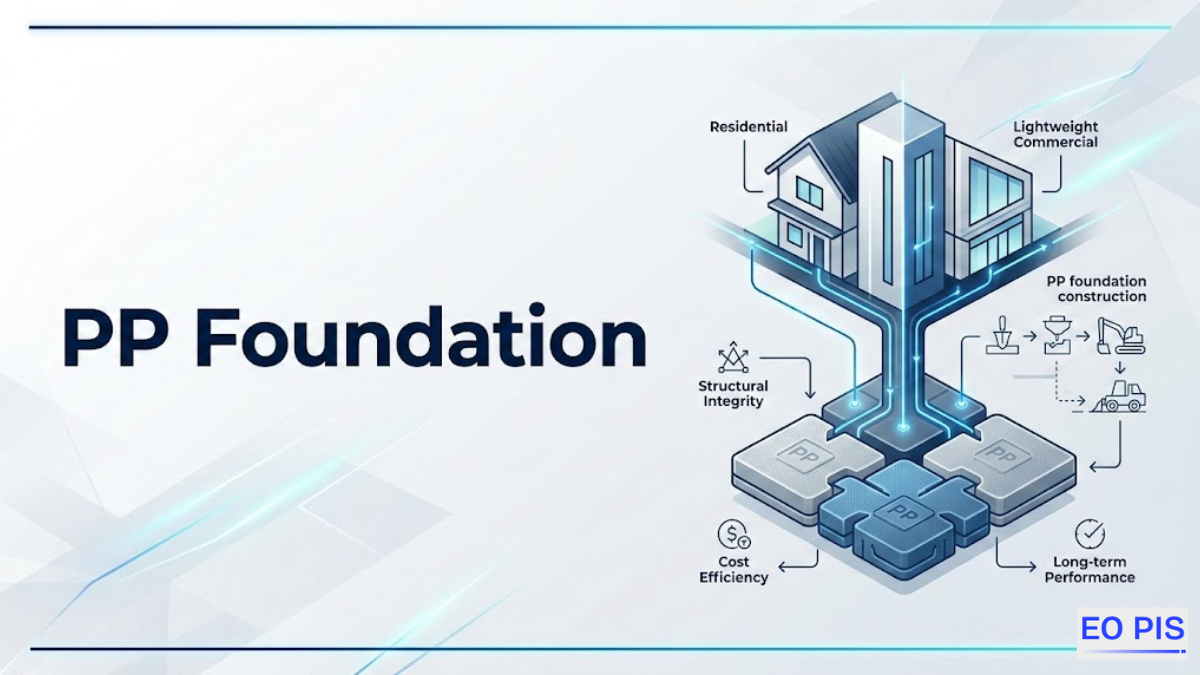
When planning a structure, choosing the right PP Foundation approach can directly influence structural integrity, cost efficiency, and long-term performance. Whether you’re considering a residential foundation solution for single-story homes or a commercial foundation base for lightweight commercial buildings, understanding how a PP foundation system works is essential. This guide explains PP foundation construction, its uses, benefits, installation process, and when it functions best as a lightweight foundation system for moderate load structures.
What Is a PP Foundation and How Does It Work?
A PP foundation system integrates polypropylene-based materials such as geotextiles or geogrids into the base layer of a structure. Unlike traditional systems that rely heavily on excavation depth alone, PP foundation design focuses on improving foundation load distribution through reinforced base preparation.
The concept is simple but powerful. Structural loads are transferred from walls and columns into the ground through a stabilized layer that enhances load-bearing capacity. By improving load transfer and minimizing uneven settlement, the system reduces structural stress and the risk of cracking in buildings over time.
In practice, this lightweight foundation system improves structural reliability without excessive material use. It supports material waste reduction and efficient performance, particularly where soil conditions are stable but not perfect.
When Is a PP Foundation the Right Choice?
The primary PP foundation uses include single-story homes, sheds, small industrial units, and lightweight commercial buildings. It performs well where bearing capacity is adequate, and soil expansion risk is minimal.
It is not typically recommended for multi-story buildings or areas dominated by expansive clay soil unless combined with additional reinforcement strategies. The key is matching the foundation system to moderate load structures rather than overdesigning unnecessarily.
From a cost-effective construction standpoint, reduced excavation depth and optimized material use make this system attractive when budget constraints and project timelines matter.
Why Polypropylene Is Used in PP Foundation Construction
Polypropylene offers durability, moisture resistance, and chemical stability. Unlike organic materials, it does not degrade easily underground. This makes it well-suited for foundation reinforcement roles where moisture levels fluctuate, especially in heavy rainfall regions or during monsoon seasons.
Another advantage lies in tensile strength. When incorporated beneath a gravel base or crushed stone layer, polypropylene materials help maintain aggregate layering and prevent subgrade mixing. This enhances foundation durability and long-term performance.
How PP Layers Improve Soil Stability and Drainage
Effective soil preparation begins with subgrade preparation and ground compaction. Once compacted using a mechanical compactor, the PP layer acts as a separation, filtration, and reinforcement.
It prevents water accumulation by allowing controlled drainage while blocking soil fines. Proper drainage planning, including perimeter channels and grading adjustments, ensures that moisture does not reduce bearing capacity over time.
This is especially important in climates where heavy rainfall can weaken soil gradually rather than suddenly. Improved drainage directly supports structural integrity and reduces maintenance risks.
Key Components in PP Foundation Design
PP foundation construction often incorporates:
Concrete or reinforced concrete for structural strength
Steel reinforcement bars or steel mesh for tensile resistance
Crushed stone or gravel base for stability and drainage
Moisture barrier or waterproof coating in moisture-prone environments
Each element contributes to foundation durability. Proper curing process management after pouring concrete ensures long-term structural reliability.
Soil Preparation and Site Assessment Essentials
No PP foundation installation should begin without proper soil testing and bearing capacity analysis. Site assessment evaluates composition, moisture levels, and load-bearing capacity.
Subgrade preparation is critical. Loose soil must be compacted to reduce future settlement. Ignoring proper compaction creates uneven load distribution, leading to structural stress and potential cracking in buildings.
One often-overlooked real-world factor is landscaping impact. Tree root interference can disrupt soil stability over time, so spacing and drainage must be considered early.
PP Foundation Installation Process
The construction process begins with marking and controlled excavation. After excavation depth is reached, the subgrade is leveled and compacted. The PP layer is then installed with careful overlap alignment to support proper load transfer.
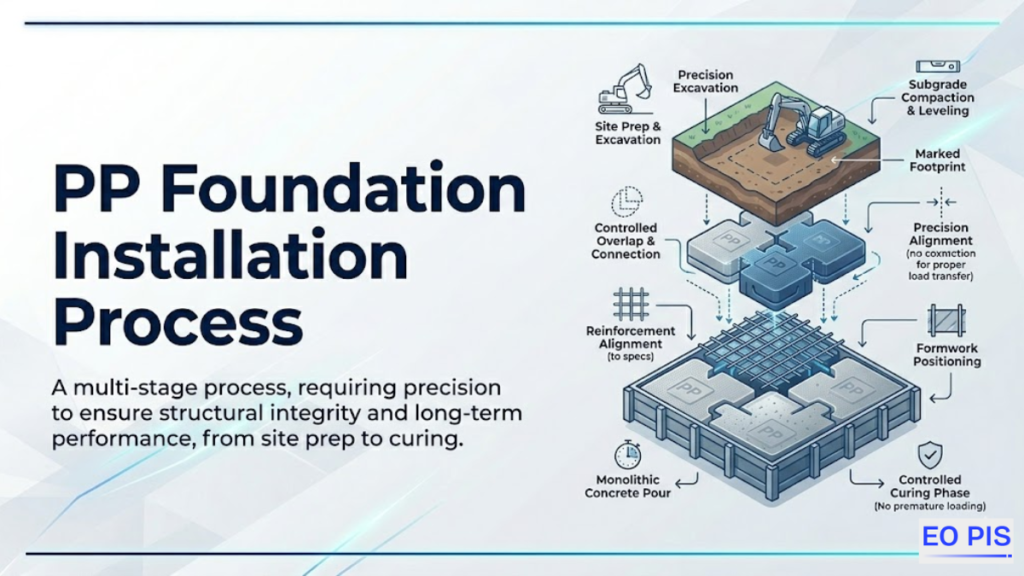
Formwork is positioned before placing concrete. Reinforcement is aligned according to the PP foundation design specifications. After pouring, the curing process must not be rushed, as premature loading compromises foundation durability.
Precision during installation directly affects long-term performance.
Common Mistakes in PP Foundation Installation
Many issues arise not from material defects but from poor execution. Installing on saturated soil without stabilization, skipping drainage planning, or using the wrong reinforcement level undermines structural reliability.
Another misconception is that foundation reinforcement eliminates the need for proper compaction. It does not. Ground compaction creates density; reinforcement improves distribution. Both are essential.
What Drives PP Foundation Cost Efficiency?
PP foundation benefits include moderate material usage, reduced excavation, and shorter project timelines. However, cost depends on soil conditions, reinforcement level, and site assessment findings.
Spending slightly more on proper soil preparation and moisture barriers can prevent expensive foundation maintenance later. Cost efficiency should be evaluated across the lifecycle, not just at installation.
Long-Term Performance and Maintenance
Foundation maintenance for a properly constructed PP foundation system is generally minimal. Regular inspection for minor surface cracks and monitoring drainage slopes protects long-term performance.
In regions with monsoon seasons, ensuring that perimeter channels remain clear reduces water accumulation and protects the reinforced base. Preventive attention is far less expensive than structural repairs.
Is a PP Foundation Worth It?
For moderate load structures in suitable soil conditions, the answer is often yes. It enhances structural integrity, supports load distribution, and improves foundation durability without excessive excavation.
It is not a universal solution, but as a residential foundation solution or commercial foundation base, it balances performance with practicality.
Conclusion
A PP Foundation represents a strategic approach to foundation design that combines soil preparation, foundation reinforcement, and intelligent material use. By improving load-bearing capacity, minimizing uneven settlement, and enhancing drainage, it supports structural reliability for decades.
Successful PP foundation construction depends on accurate site assessment, disciplined installation, and informed design choices. When applied correctly, it delivers foundation cost efficiency, durability, and long-term performance for structures built on stable to moderately stable soils.
Foundations may remain unseen, but they define the safety and longevity of everything above them. Making informed decisions at ground level ensures confident construction from day one.
You May Also Like Jernsenger: Meaning, Origins, and Modern Relevance
FAQs
1. Is a PP foundation strong enough for a house?
Yes, a PP foundation system can be strong enough for single-story homes and moderate load structures when the soil has adequate bearing capacity. Its performance depends more on proper soil preparation and load distribution design than on the material alone. It is not typically recommended for heavy multi-story buildings without additional structural support.
2. How is a PP foundation different from a traditional concrete foundation?
A traditional concrete foundation relies mainly on mass and depth, while a PP foundation construction approach improves soil performance using reinforcement layers like geotextiles or geogrids. The goal is better load transfer and reduced uneven settlement. In many cases, this allows for reduced excavation and improved drainage control.
3. Can a PP foundation fail if drainage is poor?
Yes, and this is often overlooked. Even a well-designed PP foundation system can weaken over time if water accumulation reduces soil bearing capacity beneath it. Proper drainage planning is just as important as reinforcement because long-term moisture exposure is one of the biggest hidden risks.
4. Does adding a PP layer mean I can skip soil testing?
No. This is a common misconception. A PP layer improves performance, but it does not replace professional site assessment or bearing capacity analysis. Skipping soil testing increases the risk of structural stress and uneven settlement later.
5. Is a PP foundation worth the extra cost?
For moderate load structures on reasonably stable soil, it often is. The upfront investment can improve foundation durability, reduce settlement risk, and lower long-term maintenance expenses. When evaluated over the building’s lifespan, the cost efficiency becomes more evident.