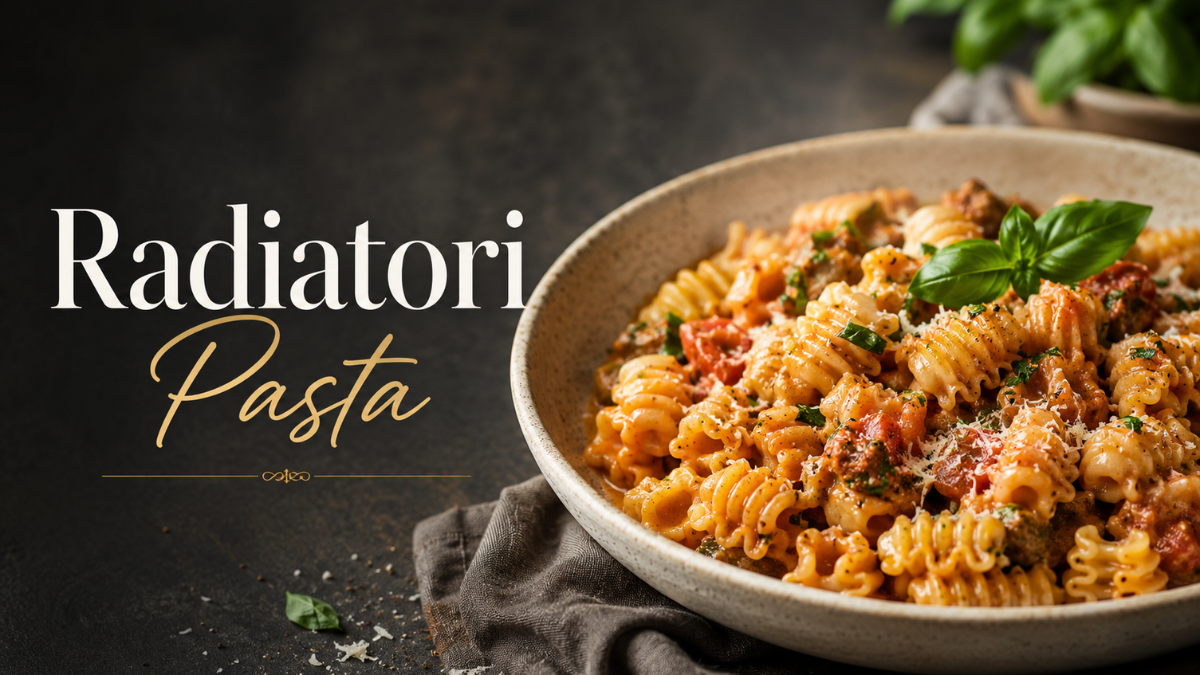
Radiatori Pasta is a short, ridged pasta shape designed to catch sauce in its folds and grooves. It resembles a small, old-fashioned radiator, which explains its memorable name. Its compact structure makes it especially useful for creamy sauces, vegetable mixtures, pesto, tomato sauces, and hearty dishes with small pieces of meat or cheese.
Compared with smooth pasta shapes, radiatori offers more places for sauce and finely chopped ingredients to settle. That means each forkful can carry pasta, sauce, and toppings together instead of leaving most of the sauce at the bottom of the bowl.
What Is Radiatori Pasta?
Radiatori is a short pasta shape with layered, ruffled edges wrapped around a compact centre. The name comes from its resemblance to a radiator. Depending on the brand and retailer, you may also see the singular form radiatore pasta used in product descriptions or recipes.
Many dried versions are made with durum wheat semolina. For example, Garofalo describes its radiatori as a short, bronze-drawn durum wheat semolina pasta with a rough surface and a cylindrical shape with wavy layers.
Radiatori stands out because it balances three useful qualities:
- It is sturdy enough for rich sauces and baked dishes.
- Its ridges catch small ingredients such as herbs, minced vegetables, and crumbled cheese.
- Its unusual shape makes a simple pasta meal look more interesting without requiring a complicated recipe.
Why Does Radiatori Pasta Hold Sauce So Well?
The shape is not only decorative. Radiatori has a practical purpose: its ridges increase the surface area available for sauce.
A smooth pasta shape can work beautifully with delicate sauces, but thicker sauces may slide away from it. Radiatori behaves differently. Its folds collect sauce and help hold small pieces of food in place.
This makes radiatori a strong choice when your sauce contains:
- Roasted vegetables
- Finely chopped onions
- Mushrooms
- Ground meat or sausage
- Pesto
- Melted cheese
- Beans
- Herbs
- Small tomato pieces
Bronze-cut versions can add another layer of texture. Bronze dies create a rougher and more porous pasta surface, which helps sauce cling more effectively.
Where Did Radiatori Pasta Come From?
The exact history is not completely settled.
Some sources describe radiatori as a twentieth-century pasta shape created between the First and Second World Wars. Other sources note a widely repeated theory that it was developed later and inspired by industrial heating fixtures or car radiators.
The safest conclusion is simple: radiatori is a relatively modern pasta shape inspired by radiator-like forms. Its ridged design became popular because it is visually distinctive and highly effective at carrying sauce.
Avoid presenting a precise inventor or exact creation date unless you have a verified primary historical source.
A Current Product Update for US Shoppers
Update note: May 2026. Radiatori itself is not a newly invented pasta shape. However, Barilla America announced on May 20, 2026, that it was adding Radiatori to its Organic Al Bronzo line. The company described this version as a deep-ridged, five-winged shape designed to capture sauce from different angles. The product was scheduled to appear at Kroger stores in June 2026 before expanding to selected US retailers during the summer.
This product-specific update may be useful for US readers looking for radiatori in supermarkets. Availability will vary by country, retailer, and date.
Best Sauces for Radiatori Pasta
The best sauce depends on the dish you want to make, but radiatori is most useful when the sauce has enough body to cling to the pasta.
| Sauce Type | Why It Works | Good Additions |
| Creamy mushroom sauce | The sauce settles into the folds while mushrooms add texture | Parmesan, spinach, garlic, thyme |
| Tomato and vegetable sauce | Chopped vegetables fit naturally into the ridges | Courgette, peppers, aubergine, basil |
| Meat ragù | The compact shape catches small pieces of meat | Beef, turkey, sausage, herbs |
| Pesto | The ridges hold thick herb-based sauces well | Green beans, peas, cherry tomatoes |
| Cheese sauce | Melted cheese coats the ruffled edges | Broccoli, cauliflower, breadcrumbs |
| Olive oil and roasted vegetables | The pasta works well when tossed with finely chopped ingredients | Lemon zest, herbs, toasted nuts |
| Bean-based sauce | Beans create a filling, budget-friendly meal | Cannellini beans, tomatoes, kale |
Creamy Sauces
Creamy sauces are a natural match for radiatori because they coat the outer ridges and settle inside the folds. A mushroom sauce, a light Parmesan sauce, or a creamy tomato sauce can work particularly well.
Keep the sauce loose enough to coat the pasta. A sauce that becomes too thick may feel heavy after it settles into the grooves.
Tomato-Based Sauces
Radiatori works well with tomato sauces, especially when they contain diced vegetables, herbs, or small pieces of protein. A simple tomato sauce with courgette is a particularly suitable option; Garofalo recommends a Neapolitan-style radiatori dish with courgettes for its version of the shape.
Pesto and Herb Sauces
Pesto is often paired with short pasta because it can cling to textured surfaces. Radiatori gives pesto plenty of ridges to coat. Add peas, green beans, roasted courgettes, or chopped spinach for a practical weeknight meal.
Meat Sauces
A finely textured ragù works better than very large chunks of meat. Small pieces can settle into the grooves, helping the pasta and sauce stay balanced in each bite.
How to Cook Radiatori Pasta
There is no single cooking time for every radiatori product. Pasta thickness and manufacturing methods vary by brand.
For example, Garofalo lists an eight-minute cooking time for its radiatori. A retail listing for La Molisana Radiatori N.73 gives a nine-minute cooking time. Other products may require longer, so the instructions on your packet should be your starting point.
Step-by-Step Cooking Method
- Bring water to a boil.
Use a pot large enough for the pasta to move freely. - Salt the water.
Seasoning the cooking water helps flavour the pasta itself. - Add the radiatori and stir.
Stir shortly after adding the pasta and occasionally while it cooks. This helps prevent pieces from sticking together. - Check the packet instructions.
Begin tasting shortly before the recommended cooking time ends. The pasta should be cooked through but still have a pleasant bite. - Reserve some pasta water.
Before draining, save a cup or two of the starchy cooking water. Barilla recommends reserving pasta water shortly before the cooking time ends because it can help improve the sauce texture. - Drain without rinsing for hot dishes.
Rinsing can wash away surface starch that helps sauce cling to the pasta. - Finish the pasta in the sauce.
Toss the radiatori with warm sauce for a minute or two. Add a small splash of reserved pasta water if the sauce looks dry or too thick.
Why Pasta Water Matters
As pasta cooks, it releases starch into the water. Adding a little of this water to your sauce can help bring the ingredients together and create a smoother coating.
Add it gradually. A small amount may be enough. You can always add more, but removing excess water is more difficult.
A Simple Radiatori Meal Formula
You do not need a complicated recipe to use radiatori effectively. Try this flexible formula:
- Choose one sauce base: tomato sauce, pesto, cream sauce, or olive oil.
- Add one or two vegetables: mushrooms, spinach, courgette, peas, broccoli, or roasted peppers.
- Add an optional protein: beans, chicken, sausage, or minced meat.
- Toss with cooked radiatori and a little reserved pasta water.
- Finish with herbs, grated cheese, lemon zest, or toasted breadcrumbs.
This method gives you enough variety to create quick lunches, family dinners, or meat-free meals using ingredients you already have.
Practical Ways to Use Radiatori Pasta
Radiatori is versatile enough for more than one type of dish. Its sturdy structure makes it useful whenever you want a pasta shape that will remain noticeable after mixing.
Hot Pasta Dishes
Use radiatori with creamy sauces, ragù, pesto, or sautéed vegetables. Its texture is especially useful when you want every bite to contain sauce and toppings.
Pasta Salads
Radiatori works well in pasta salad because dressings and finely chopped ingredients can settle into the ridges. Combine it with vegetables, herbs, olives, cheese, or beans.
For a cold salad, follow the recipe instructions carefully. The ideal cooking and cooling method may differ from a hot pasta dish.
Baked Pasta and Casseroles
Its compact shape also suits baked dishes. Radiatori can hold sauce and cheese while remaining easy to serve with a spoon. Sources describing the shape commonly recommend it for casseroles, salads, and soups.
Soups
Radiatori can add texture to hearty soups. It is best suited to brothy or tomato-based soups containing vegetables, beans, or small pieces of meat. Consider cooking the pasta separately when storing leftovers so it does not continue absorbing liquid in the fridge.
Meal Prep
Radiatori can work well for prepared lunches because its structure remains noticeable after mixing with sauce. For the best texture, store a small amount of extra sauce separately and add it when reheating.
What Can You Substitute for Radiatori Pasta?
Radiatori is distinctive, but you do not need to abandon a recipe if you cannot find it. Choose another short pasta with ridges, folds, or hollows.
| Substitute | Best Use | Why It Works |
| Fusilli | Pesto, tomato sauce, pasta salad | Spirals catch sauce and herbs |
| Rotini | Pasta salad, vegetables, family meals | Similar practical shape and easy availability |
| Rigatoni | Ragù, baked dishes, cheese sauce | Tubes and ridges hold thick sauces |
| Penne rigate | Tomato sauce, creamy sauces, casseroles | Ridged surface helps sauce cling |
| Gemelli | Pesto, vegetables, lighter sauces | Twisted form provides texture |
| Campanelle | Creamy sauces, cheese sauces | Ruffled edges hold sauce |
| Cavatappi | Baked dishes and cheese sauces | Curved tubes suit hearty meals |
When choosing a substitute, focus on the function rather than appearance. A textured short pasta is usually the best alternative.
How to Store and Reheat Leftovers
Store cooked radiatori in a sealed container in the fridge. If it already contains sauce, add a small splash of water or extra sauce before reheating to restore moisture.
The USDA advises using cooked leftovers within three to four days when refrigerated correctly.
For a better reheated texture:
- Warm the pasta gently rather than overheating it.
- Add a spoonful of water, sauce, or broth before reheating.
- Stir halfway through heating so the pasta warms evenly.
- Discard leftovers if you are uncertain whether they were stored safely.
Frequently Asked Questions
What is radiatori pasta?
Radiatori pasta is a short, ridged pasta shape that resembles a small radiator. Its folds and grooves are designed to catch sauce and finely chopped ingredients.
What sauce is best for radiatori pasta?
Radiatori works especially well with thick or textured sauces, including creamy mushroom sauce, tomato and vegetable sauce, pesto, meat ragù, and cheese sauce.
Is radiatori the same as rotini?
No. Both are short pasta shapes that work well with sauce, but radiatori is usually more compact and has layered, radiator-like ridges. Rotini has a spiral shape.
How long does radiatori pasta take to cook?
Cooking time varies by brand. Some products list approximately eight or nine minutes, while other versions may need longer. Check the package and taste the pasta shortly before the recommended time ends.
Is radiatori pasta good for pasta salad?
Yes. Its grooves can hold dressing, herbs, chopped vegetables, and small cheese pieces, making it a useful pasta salad shape.
Can radiatori pasta be baked?
Yes. Its sturdy structure works well in casseroles and baked pasta dishes, especially with tomato sauce, vegetables, or cheese.
Is radiatori pasta gluten-free?
Traditional radiatori made with durum wheat semolina contains gluten. Gluten-free versions may exist, but check the ingredient label carefully if you need to avoid gluten.
Where can I buy radiatori pasta?
Availability depends on your location. Look in larger supermarkets, Italian food stores, speciality food shops, and online grocery retailers. Search for both radiatori pasta and radiatore pasta because product listings may use either term.
Conclusion
Radiatori pasta is worth trying when you want more texture and better sauce coverage in a pasta dish. Its layered ridges make it particularly useful for creamy sauces, tomato-based recipes, pesto, ragù, pasta salads, casseroles, and hearty soups.
The easiest way to enjoy it is to choose a sauce with small ingredients, cook the pasta according to the packet, reserve a little pasta water, and finish the radiatori directly in the sauce. The result is a simple meal with a more balanced bite and a shape that stands out on the plate.
You May Also Like Best Papa a la Huancaína Near Me