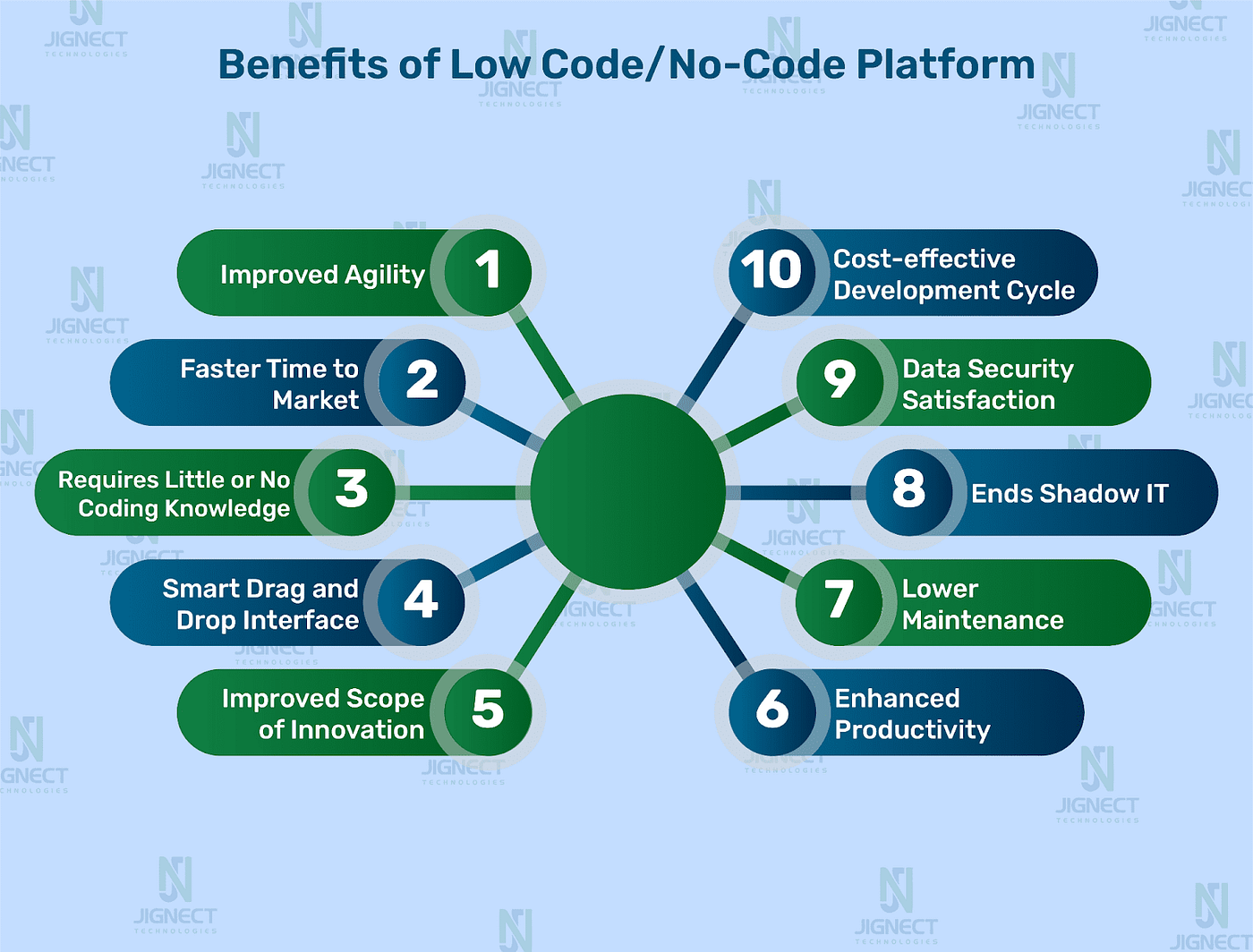
Software testing automation has traditionally required programming knowledge, framework configuration, and ongoing script maintenance. That model works well for engineering-heavy teams, but it can create a barrier for manual testers, product teams, business analysts, and organizations that want broader participation in quality assurance.
No-code testing tools take a different approach. Instead of requiring testers to build every automated scenario with programming languages and framework-specific syntax, these platforms use natural language, visual editors, recorders, reusable components, AI, or combinations of these techniques.
Modern no-code test automation can extend far beyond basic browser recording. Some platforms now support web, mobile, APIs, desktop applications, messaging workflows, and complex end-to-end processes.
The following five tools illustrate different approaches to test automation without coding.
What Does No-Code Testing Mean?
No-code testing generally refers to automated software testing that can be created, executed, and maintained without requiring users to write conventional automation scripts.
Instead of programming a test from scratch, testers might:
- describe the scenario in natural language;
- record actions while using an application;
- choose actions and assertions from a visual editor;
- assemble reusable testing modules;
- ask an AI agent to generate test steps.
“No-code,” however, does not always mean that code is completely unavailable. Some codeless test automation tools provide optional JavaScript or low-code extensions for advanced scenarios while keeping common workflows accessible without programming.
This makes automated testing without programming especially relevant for manual QA professionals who understand application behavior and test design but may not have experience maintaining Selenium, Playwright, Appium, or similar frameworks.
Why QA Teams Use No-Code Test Automation
One of the biggest reasons organizations adopt no-code automation is accessibility.
Manual testers already know how users interact with an application. A no-code platform allows that knowledge to be converted into repeatable automated tests without first requiring every tester to become an automation engineer.
This can also improve collaboration. Product managers, business analysts, developers, and QA engineers can often read and review tests more easily when scenarios are represented as understandable actions rather than framework code.
Modern platforms are also increasingly combining no-code QA testing with AI. AI can help generate tests, identify application elements, adapt automation when interfaces change, analyze failures, or convert natural-language intentions into executable steps.
The result is not necessarily the elimination of technical expertise. Instead, no-code automation changes where that expertise is required.
No-Code Platforms vs. Traditional Automation Frameworks
Traditional frameworks provide extensive flexibility because engineers control the underlying code, architecture, selectors, dependencies, and execution logic.
That flexibility also creates responsibility.
Teams need to build and maintain the automation framework, manage dependencies and drivers, design reusable components, handle locators, debug scripts, and integrate execution infrastructure.
No-code platforms typically abstract much of that work through visual interfaces, managed infrastructure, natural language, AI, or recording technology.
The tradeoff is that highly specialized scenarios may still require advanced configuration or occasional code. Organizations should therefore evaluate a platform based on the complexity of their actual applications rather than assuming that every no-code product supports the same workflows.
Here are five no-code testing tools worth considering.
1. testRigor
testRigor is a no-code, codeless, and AI-based test automation platform centered around creating end-to-end tests from an end user’s perspective using plain English.
Rather than requiring testers to construct traditional automation around implementation-level selectors, testRigor allows test scenarios to be expressed using readable commands. Its documentation describes the platform as an AI agent that enables users to create end-to-end tests in plain English.
For example, a tester can describe interactions around visible application behavior instead of writing conventional test-framework code.
That makes testRigor particularly relevant to the intersection of no-code test automation, natural language test automation, and AI-powered testing.
How tests are created
Tests can be written directly in plain English, generated using generative AI from descriptions, or created from imported manual test cases and then reviewed and refined as readable steps.
Is coding required?
Traditional programming is not required for standard test creation. The platform is designed around natural-language commands rather than conventional test scripts.
Supported applications
testRigor has broad end-to-end coverage. Its current documentation lists web applications, native and hybrid mobile apps, native desktop applications, mainframes, APIs, visual testing, SMS and phone calls, and 2FA scenarios. Its product information also documents email testing and authentication workflows involving authenticator apps, SMS, or email.
This breadth can be useful when a business process crosses several channels. A single customer journey, for example, might begin in a browser, invoke an API, send an email or SMS, and require two-factor authentication.
Maintenance approach
testRigor emphasizes describing tests from the user’s perspective instead of coupling them heavily to implementation details. Its documentation specifically positions this approach as a way to reduce maintenance related to locator changes.
Primary use cases
testRigor is well suited to end-to-end regression testing, cross-platform workflows, acceptance testing, and teams that want to translate manual testing knowledge into automation.
Ideal users
Manual testers, QA engineers, business analysts, product professionals, and cross-functional teams can benefit from tests that remain readable without requiring traditional programming expertise.
Notable strengths
Its strongest differentiator is the combination of natural language testing, AI-assisted test creation, and broad application coverage within one platform.
Potential limitations
Teams with deeply code-centric testing practices may need to adjust to a natural-language automation model. As with any no-code platform, organizations should also validate their most specialized application workflows during evaluation.
2. Robonito
Robonito is an AI-driven QA automation platform designed for web, mobile, API, and desktop workflows. Its current product information describes no-code automation for common scenarios together with low-code extensions for more complex requirements.
How tests are created
For web testing, Robonito provides a recorder that captures actions such as clicks, form input, and validations and converts them into test steps. Its documentation also describes human-readable recording for web and mobile workflows.
Is coding required?
Coding is not required for standard no-code workflows. Robonito also offers low-code flexibility for more advanced scenarios.
Supported applications
Robonito currently positions its platform around web, API, mobile, and desktop testing. Its mobile documentation covers Android and iOS applications, including virtual emulators and physical devices.
Maintenance approach
Robonito uses AI and context-aware automation to adapt tests to application changes. The company describes its approach as reducing reliance on brittle selectors and supporting self-adaptive execution.
Primary use cases
Its focus includes end-to-end application workflows, regression testing, API validation, mobile automation, and testing modern or AI-powered applications.
Ideal users
QA teams that want a combination of visual automation, AI assistance, and optional technical control may find Robonito relevant.
Notable strengths
Multi-platform testing and the combination of no-code workflows with AI-driven maintenance are central parts of the product’s positioning.
Potential limitations
Some advanced scenarios move into low-code territory, so organizations looking for a completely code-free environment should validate which workflows can remain entirely visual.
3. Ghost Inspector
Ghost Inspector is a no-code automated browser testing platform focused primarily on websites and web applications. Tests can be recorded directly in a browser and then edited through a visual interface.
How tests are created
Users install the Ghost Inspector browser extension, start recording, and perform a workflow normally. Clicks, form entries, navigation, assertions, and other interactions become reusable automated test steps.
Is coding required?
No coding is required for normal test creation and maintenance. Advanced users can optionally execute custom JavaScript when additional logic is needed.
Supported applications
Ghost Inspector primarily targets browser-based websites and web applications. It supports multiple browsers, screen sizes, and geographic test locations.
Maintenance approach
Tests can be maintained using a codeless editor that lets users add, remove, and reorder steps. Ghost Inspector also supports backup selectors and self-healing behavior intended to reduce failures when element identification changes.
Primary use cases
It is particularly relevant for website regression testing, user journey monitoring, visual testing, scheduled testing, and browser-based QA.
Ideal users
Manual QA testers, product managers, smaller teams, and organizations concentrating primarily on web applications are natural users.
Notable strengths
Browser recording and a straightforward visual editor make Ghost Inspector approachable for teams beginning with codeless software testing.
Potential limitations
Its core focus is browser automation. Teams requiring extensive native mobile, desktop, or broader cross-channel testing may need capabilities beyond its primary use case.
4. Boozang
Boozang is a browser-based, codeless test automation platform for web applications and APIs. The platform combines visual test creation with natural-language-oriented element selectors and a model-based approach to reusable automation.
How tests are created
Users can build tests through Boozang’s browser-based visual interface and organize workflows into reusable test modules. Its model-based approach allows larger scenarios to be assembled from components representing UI interactions and API calls.
Is coding required?
Standard workflows can be created without traditional scripting, although Boozang also supports JavaScript for advanced requirements.
Supported applications
Boozang focuses on applications that run in the browser and also provides API testing. UI and API actions can be combined within end-to-end scenarios.
Maintenance approach
One distinctive aspect is its natural-language selector strategy. Boozang primarily identifies elements according to what an end user sees rather than depending by default on hidden classes or IDs. The platform can also suggest repairs when visible labels change.
Primary use cases
Boozang can be used for browser regression testing, data-driven workflows, API testing, BDD/Cucumber scenarios, and UI/API end-to-end testing.
Ideal users
It is suited to QA teams that want codeless browser automation but still value advanced debugging, reusable models, BDD support, and technical flexibility.
Notable strengths
Natural-language selectors and the ability to combine browser and API testing are notable characteristics.
Potential limitations
Its strongest coverage is browser-based testing. Organizations requiring native mobile or desktop automation should verify whether Boozang’s application scope aligns with their requirements.
5. Endtest
Endtest is a no-code and AI-assisted automation platform supporting web, mobile, API, and other testing workflows. Its current platform combines AI-generated testing, recorders, a visual editor, and self-healing maintenance.
How tests are created
Web tests can be created using an AI Test Creation Agent, a Chrome Extension recorder, manual step-by-step creation, or imported files. Its AI agent can generate test steps from natural-language instructions.
Is coding required?
Standard test creation does not require coding. More advanced users can add custom JavaScript, variables, loops, conditionals, API calls, and database queries through the platform.
Supported applications
Endtest currently supports web applications, native and hybrid mobile applications, APIs, accessibility testing, email and SMS workflows, and file or PDF testing.
Maintenance approach
Its self-healing capability can detect a broken locator, evaluate alternative elements based on context, and replace the locator while recording the change for review.
Primary use cases
Endtest is designed for regression testing, web and mobile end-to-end workflows, AI-assisted test generation, continuous testing, and teams migrating from existing automation.
Ideal users
Manual testers, QA engineers, product teams, and organizations seeking a mixture of no-code accessibility and optional advanced configuration can use the platform.
Notable strengths
AI-assisted test creation, web and mobile coverage, and self-healing maintenance are prominent capabilities.
Potential limitations
Advanced workflows can still involve JavaScript or more technical configuration, so the degree of pure no-code usage depends on the complexity of the test suite.
No-Code Testing Tools Comparison
| Tool | Main test creation approach | Coding required for standard tests? | Primary application coverage | Maintenance approach |
| 1. testRigor | Plain English and AI-assisted generation | No | Web, mobile, desktop, API, email, SMS, phone, 2FA, mainframe | User-perspective natural-language tests designed to reduce locator-related maintenance |
| 2. Robonito | Recorder, visual workflows, AI | No for standard workflows | Web, mobile, API, desktop | AI-assisted, context-aware and self-adaptive automation |
| 3. Ghost Inspector | Browser recorder and visual editor | No | Websites and web applications | Visual editing, backup selectors and self-healing |
| 4. Boozang | Visual/model-based testing | No for standard workflows | Browser applications and APIs | Natural-language selectors and reusable models |
| 5. Endtest | AI agent, recorder and visual editor | No | Web, mobile, API, email/SMS and additional workflows | AI-assisted self-healing locators |
Advantages and Limitations of No-Code Automation
The main advantage of testing tools for manual testers is that they reduce the technical barrier between understanding a test scenario and automating it.
Teams can involve more people in automation, make tests easier for non-developers to understand, and avoid building every component of an automation framework internally.
AI is expanding these benefits further. AI-powered test automation can help translate requirements into test scenarios, identify elements more intelligently, and reduce repetitive maintenance.
There are still limitations.
No-code abstraction can make unusual scenarios harder to customize. Advanced integrations or application-specific edge cases may require low-code extensions. Teams also become dependent on the capabilities and execution model of the chosen platform.
For that reason, no-code automation should be evaluated against real business workflows rather than only simple demo scenarios.
How to Choose a No-Code Testing Platform
Start by identifying what actually needs to be automated.
If your application is entirely browser-based, a focused browser automation tool may be enough. If customer journeys move between websites, mobile apps, APIs, emails, authentication systems, or other channels, broader end-to-end automation becomes more important.
Also consider how tests are created. Plain-English testing, recording, visual editors, and AI agents all reduce coding requirements, but they represent very different workflows.
Maintenance should receive equal attention. Test creation is only the beginning. Ask how the platform responds when labels, layouts, locators, workflows, and application structures change.
Finally, involve the people who will maintain the automation. A tool designed only for automation engineers solves a different problem from one intended to enable manual QA professionals and business users to participate directly.
Conclusion
The category of no-code testing tools now includes several distinct approaches to test automation without coding.
testRigor connects no-code test automation with natural language test automation and AI-powered testing, allowing teams to express tests in plain English while covering a broad range of end-to-end scenarios across web, mobile, desktop, APIs, email, SMS, phone calls, 2FA, and other supported environments.
Robonito combines AI-driven automation with web, mobile, API, and desktop coverage. Ghost Inspector focuses on accessible browser recording and codeless web testing. Boozang combines browser and API automation with natural-language selectors, while Endtest brings together AI-assisted creation, recording, mobile and web testing, and self-healing maintenance.
The right platform depends less on whether a product carries the “no-code” label and more on how closely its test-creation model, application coverage, and maintenance strategy match the way a QA team actually works.