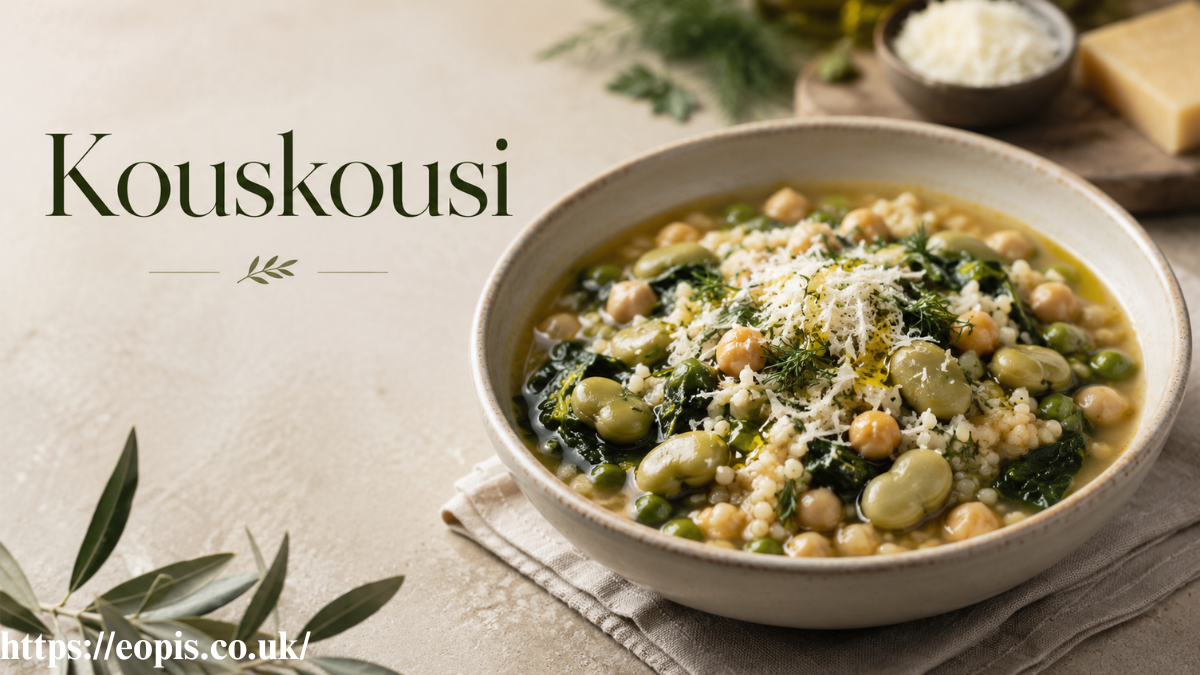
What Is Kouskousi?
Kouskousi is a traditional Mediterranean dish made from tiny pasta beads, distinct from North African couscous. In Greece, it’s a versatile pasta used in weeknight meals and soups, while in Malta, Kusksu is a hearty vegetable and cheese-based soup. From what I’ve seen, Kouskousi absorbs flavors exceptionally well, making it ideal for broths, slow-cooked Mediterranean stews, and fusion bowls. In real use, it offers a balance of carbohydrates, protein, and fiber, making it both nutritious and culturally significant.
The Origins and Cultural Significance of Kouskousi
Kouskousi has deep roots in Mediterranean culinary heritage, evolving into Greek and Maltese variations. Historically, it symbolized hospitality and family gatherings, often featured in festive meals and communal celebrations.
Greek Kouskousi: Tiny Pasta Tradition
Greek kouskousi resembles acini di pepe or pastina pasta. From what I’ve seen in real kitchens, it is usually boiled and combined with sautéed greens, chickpeas, and aromatic herbs. A common mistake is overcooking the pasta, which leads to a mushy texture. What most guides miss is emphasizing the importance of pairing kouskousi with slow-cooked sauces, as this creates a more authentic depth of flavor.
Maltese Kusksu Soup: Island Comfort Food
In Malta, Kusksu is a seasonal soup prepared in spring with fresh fava beans, peas, and ġbejniet cheeselets. Eggs are gently poached directly in the simmering soup. In real use, the dish is highly nutrient-dense and provides a balanced mix of protein, fiber, and healthy fats. A unique insight: Maltese Kusksu was traditionally tied to local harvests, creating a strong connection between the dish and seasonal Mediterranean produce.
Core Ingredients and Traditional Preparation Techniques
Grains, Pasta Beads, and Semolina Base
The base of Kouskousi is semolina beads. Greek kouskousi uses firm pasta, while Maltese versions allow the beads to cook directly in broth. From what I’ve seen, pre-steamed or packaged beads in 2026 recipes reduce cooking time but maintain texture if handled correctly.
Vegetables, Legumes, and Herbs
Common ingredients include Swiss chard, leeks, fava beans, and peas, often paired with fresh herbs like parsley or dill. In practice, legumes increase protein content, making the dish suitable for vegetarian and vegan diets. Seasonal vegetables enhance nutritional value and flavor.
Cooking Methods: Boiling, Steaming, and Broth Infusion
Greek kouskousi is typically boiled, while Maltese Kusksu is simmered in a broth with kunserva (tomato paste) and aromatics. A common mistake is ignoring the resting phase after cooking, which can lead to clumped beads. From what I’ve seen, finishing with olive oil or fresh herbs improves both taste and appearance.
Step-by-Step Traditional Recipes
Classic Greek Kouskousi Pasta
- Boil kouskousi beads for 6–8 minutes in salted water.
- Sauté Swiss chard, leeks, and garlic in extra virgin olive oil.
- Combine drained pasta with sautéed vegetables.
- Season with salt, pepper, and lemon juice.
- Serve warm.
Traditional Maltese Kusksu Soup
- Sauté onions and garlic in olive oil, then stir in ketchup.
- Add fava beans, green peas, and broth; simmer.
- Stir in kouskousi beads until tender.
- Crack eggs gently into the pot and melt in ġbejniet cheeselets.
- Serve with crusty Maltese bread.
From what I’ve seen, poaching eggs at the final step adds a creamy texture without overpowering the broth.
Modern Twists and Fusion Variations
Vegan and Gluten-Free Options
Modern 2026 trends show plant-based Kouskousi replacing cheese with tahini or almond-based alternatives. Gluten-free beads made from rice or quinoa maintain bite but require slightly longer cooking.
Seafood and Gourmet Bowls
Chefs now combine kouskousi with shrimp, mussels, or grilled fish, garnishing with microgreens or roasted nuts for Instagram-ready presentation. From experience, this approach balances tradition with modern aesthetics and dietary trends.
Kouskousi vs Couscous: Key Differences Explained
| Feature | Kouskousi | Couscous |
| Origin | Greece & Malta | North Africa (Morocco, Tunisia, Algeria) |
| Texture | Firm, pasta-like beads | Light, steamed grains |
| Cooking Method | Boiling, simmering in broth | Steaming over vegetables/meat |
| Typical Use | Soups, pastas, hearty meals | Side dishes, salads, festive meals |
| Ingredients | Seasonal vegetables, legumes, cheeselets | Spices, dried fruits, and meat |
This table clarifies why Kouskousi is more versatile in soups and pastas, while couscous is mainly a side dish.
Health Benefits and Nutritional Insights
Kouskousi is a nutritious choice for 2026 meal planning:
- Complex carbohydrates: provide sustainable energy
- Fiber & protein: legumes and vegetables boost satiety
- Vitamins & minerals: B-complex, iron, magnesium
- Low-fat content: especially when paired with olive oil and vegetables
From real use in family kitchens, pairing Kouskousi with seasonal vegetables maximizes both flavor and nutrition.
Common Mistakes and Risks When Cooking Kouskousi
- Overcooking → mushy texture
- Using plain water instead of broth → flavor loss
- Adding cheese too early → clumping
- Ignoring resting → uneven bead texture
Experience shows that correct timing and liquid ratio are critical. What most guides miss is the importance of finishing with olive oil or fresh herbs to enhance texture and taste.
Limitations: When Kouskousi Might Not Work
- Seasonal ingredients may not be available year-round (fava beans, ġbejniet cheese)
- Pre-steamed beads may not replicate the traditional texture perfectly
- Gluten-free alternatives slightly alter the cooking workflow
- Quick meals may not allow traditional slow-simmering depth
Is Kouskousi Worth Adding to Your Modern Kitchen?
Pros: versatile, nutritious, culturally rich, adaptable to vegan/gluten-free diets
Cons: requires specialty ingredients, attention to cooking workflow, and longer preparation for traditional recipes
From what I’ve seen, it is ideal for family gatherings, meal prep, and fusion bowls. If speed and convenience are your top priority, pre-packaged or alternative grains may be better suited.
Conclusion
Kouskousi bridges centuries of Mediterranean culinary tradition with modern 2026 food trends. From Greek home-cooked pastas to Maltese Kusksu soups, it embodies family, nutrition, and adaptability. In real use, it works across vegan, gluten-free, and gourmet fusion recipes, while retaining its traditional essence. For home cooks, chefs, and food enthusiasts, Kouskousi is both culturally enriching and versatile, making it a valuable addition to any modern kitchen.
You May Also Like Mannacote
FAQs About Kouskousi
- What is Kouskousi made from?
Semolina beads, vegetables, herbs, legumes, and optionally cheese or eggs. - Is Kouskousi the same as couscous?
No, Kouskousi is firmer and pasta-like; couscous is lighter and steamed. - Can Kouskousi be vegan?
Yes, plant-based oils, legumes, and vegan cheese replacements work well. - How long does it take to cook?
Traditional: 10–15 minutes; pre-steamed: 5–7 minutes. - What dishes pair well with Kouskousi?
Soups, stews, roasted vegetables, seafood, and Mediterranean salads. - Is Kouskousi healthy?
Yes, especially with vegetables and legumes; low in fat and high in fiber.