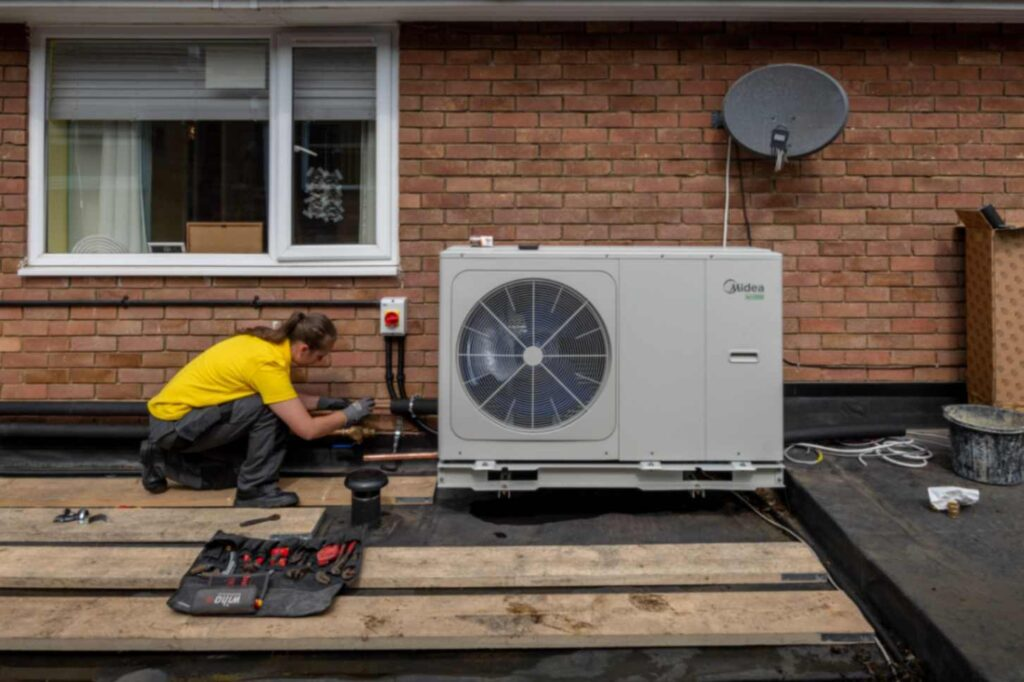
In 2026, the issue of energy efficiency and renewable heating will be more vital than ever before. As people and governments across the globe seek out cleaner, more eco-friendly methods to heat their homes Air source heat pumps are now taking center stage. They are considered to be among the best alternatives to gas boilers.
With the increasing cost of energy and a rising awareness of climate change, governments are providing assistance in the form of financial aid to make this change more affordable for homeowners. One of the most important questions people are asking is: Will Air Source Heat Pump Grant increase by 2026?
To answer this question, we must look at recent changes to policy as well as the way grants are structured and the current trends changing the financial support provided to heat pumps. This blog will go over everything in simple and clear language and will help you comprehend what the future may hold for grants for heat pumps.
What Is an Air Source Heat Pump?
Before you dive deep into grants, it is important to know what an air source pump does. A heat pump that is air-source is a heating device that draws heat from the outside air, even in cold weather, and makes use of it to heat your home and supply hot water.
As opposed to burning fossil fuels, such as oil or gas, the system uses electric power to transmit heat. This is a less polluting and more efficient way to heat your home.
The air source heating pumps can be paired with existing radiators and an underfloor heating system. They are also a great option to cool your home in summer in certain situations.
Since they’re energy efficient, they can reduce carbon emissions as well as reduce costs for heating in the long run. This has made them an integral element of the plans of the UK to cut down on carbon emissions and to reach net-zero goals.
Government Support for Heat Pumps in the UK
In the UK The government of the United Kingdom supports renewable heating with grants and incentive programs. Two major programs are the Boiler Upgrade Scheme (BUS) and the Energy Company Obligation (ECO4).
The Boiler Upgrade Program provides initial aid towards the expense of installing low-carbon heating equipment, such as the air-source heat pump. The scheme was initially started with lower grant amounts and has since changed over time.
In the month of October 2023, the grant was raised to £7,500 for air source heaters as well as ground-source heat pumps. This is an increase of 50% from prior levels, and made the scheme more accommodating for homeowners.
The ECO4 scheme operates in parallel. Under the ECO4, households with low incomes are eligible for grants that can cover the majority or all the cost of installation for heat pumps, in particular when they are combined with other measures to improve energy efficiency. This program is expected to last until March 31st, 2026.
Both programs aim to cut down on the initial cost barriers, which have traditionally resulted in the installation of heat pumps being expensive for a lot of homeowners.
Is the Air Source Heat Pump Grant Increasing in 2026?
Let’s take a look at the question that is most important: What is the likelihood of air Source Heating Pump Grant going up in 2026?
Simply put, the main grant of £7,500 as part of the Boiler Upgrade Scheme hasn’t been officially increased over that amount at the beginning of 2026. At present currently, the BUS grant is still at £7,500 in the case of an air source heat pump, and this amount was implemented in 2023, and was then extended in tandem with the scheme until the end of March 2028.
Significant trends and developments to be noted:
The first is that, although the basic grant amount remains the same, the overall support environment is changing. The government’s larger Warm Homes Plan includes a massive funding package of approximately PS15 billion that is geared towards the efficiency of energy and efficient heating.
This also includes additional assistance for heat pump installations as well as other energy improvements for low-income households.
In addition Under ECO4, the possibility exists that some households will get funding that will cover an increased portion of heating costs compared to the previous years. In certain instances, ECO4 schemes provide full installation financing instead of a fixed amount, especially when energy efficiency improvements are also included.
This means that the financial benefits for homeowners who qualify increase regardless of whether the BUS grant number remains constant.
Thirdly, there are a number of emerging modifications being discussed that could increase the number of technologies that are eligible to receive grant assistance.
For instance, additional assistance for heating systems that also cool and heat as well as heat storage systems, may become available, increasing the potential of these systems and increasing the overall adoption.
So, even though official grant amounts have not been increased in the sense of having a bigger number in 2026, the support by combining schemes and other financing mechanisms means homeowners can receive more overall financial assistance.
Why Grant Support Matters
Heating accounts for a substantial portion of the household energy bills within the UK. The traditional oil and gas boilers are inexpensive to set up; however, they can be costly and polluting over the course of time.
The heat pumps, however, are more efficient and cleaner. They’re also more efficient, usually producing 3 to 4 units of heat for each unit of electricity consumed. This efficiency could reduce the amount of energy used and emissions throughout the life of the unit.
However, the initial expense of installing a heat pump could be costly. Installation costs typically vary from £ 8,000 to 15,000 or more, based on the type and size of unit, if heaters, radiators, or even underfloor heating requires replacing, and many other factors.
That’s where grants can make an impact. A grant of $7,500 could cut the expense of a home’s out-of-pocket costs by more than half in a lot of instances. For homeowners who have a tight budget, this support could make the difference between being capable of installing a heat pump and not.
How Grants Work in Practice
To be eligible for the Boiler Upgrade scheme, a homeowner usually requires the approved installation. The installer will then handle the application process for the homeowner’s behalf.
Once the grant is approved, it is deducted from the price that you pay. This means that you only pay the remaining of the cost for installation. A majority of installers include this procedure as part of their regular service.
In the case of ECO4 grants, eligibility criteria differ more due to the fact that they relate to the amount of income, benefits, and the level of energy efficiency in households.
This means that some applicants may not receive full financial support through Eco4; however, those who qualify for the financial aid often receive much more generous support than the regular BUS grant.
Homeowners need to determine the eligibility of their home and talk to certified grant advisors or installers to know what they are eligible for and how they can apply.
The possibility of delays or confusion is a reality when the schemes evolve in time. Homeowners have had mixed experiences with delays in funding or delays by certain installers while they negotiate financing contracts.
Trends in Grant Uptake and Installations
There are obvious indications that the demand for grants for heat pumps and installation is on the rise. The data shows that following the grant increase announcement, applications increased.
A study revealed that applications for air source heat pumps were up by about 39% as of early 2024 in comparison to the time before the increase in grant. This shows the impact of financial incentives on the adoption.
Another report indicates how the vast majority of heating installations backed through government subsidies comprise air source technology. In the twelve months from 2025’s end, air source technology made around 98% of all installations funded by support programs of the government.
This data indicates that the support schemes are helping to encourage the adoption of more efficient heating systems, but the total installed installations are still well below the lofty goals that are set for the next few years.
Expected Future Changes
Looking ahead to the end in 2026, and even beyond, there are a few developments worth keeping an eye on that could impact grants:
Industry and government bodies are currently examining ways support the transition towards low-carbon heating. This includes possible changes in grant eligibility, strategies to help make funds easier to access, and additional incentives for modern heat pump technology.
In some instances, local authorities or regional programs might provide extra assistance on top of national programs, specifically for homes that are located in rural areas or that are more difficult to heat.
Furthermore, ongoing discussions are being held about how regulations for building, as well as tax incentives, may further stimulate the market. For example, more permissible development regulations have made installation easier and quicker and, in turn, have helped the grant-making process.
These changes suggest that although the number of grants won’t rise dramatically until 2026 on their own, the range of support and the ease of access will likely increase over time.
Heat Pump Grant Schemes in the UK (2026)
| Grant Scheme | Maximum Grant | Duration | Key Eligibility | Notes |
| Boiler Upgrade Scheme (BUS) | £7,500 | Runs to March 2028 | Homeowners replacing fossil fuel boilers | The grant amount remains the same for 2026. |
| ECO4 Scheme | Varies (often full cost) | Ends March 31 2026 | Families with low incomes/benefits eligible | The ability to cover all costs is possible through efficiency improvements |
| Home Energy Scotland Grants | £7,500-£9,000 | Ongoing | Homeowners in Scotland | Rural uplift available |
| Warm Homes: Local Grants | Up to £30,000 | The region of the country in which it is | Low-income, poor EPC rating homes | Includes heat pumps as well as insulation |
Table: Typical Cost and Grant Impact (Approximate)
| Category | Typical Cost | Grant Value | Net Cost After Grant |
| Air Source Heat Pump Installation | £8,000-£15,000 | £7,500 | £500-£7,500 |
| With ECO4 Full Funding | £8,000-£15,000 | £8,000+ | £0 (fully funded) |
| Heat Pump + Additional Insulation | £10,000-£18,000 | £7,500+ | £2,500-£10,500 |
These tables demonstrate how financial aid can drastically help to reduce the burden of homeownership.
What This Means for Homeowners in 2026
What does this suggest for those who are thinking of the installation of an air source heating pump by 2026?
The positive side is that the support for the scheme remains high. Although the grant amount for base grants for the Boiler Upgrade Scheme hasn’t gone beyond £7500, there is more overall support from financing plans, regional schemes, regional funding plans, and a combination of incentives. Incentives and grants are accessible, which makes heating systems more affordable and affordable.
For people with less money or who live in uninsulated houses, ECO4 and other local grant programs may provide a greater portion of expenses than a standard grant. After March 31, 2026 The Boiler Upgrade Scheme continues, which means homeowners will be able to plan installation projects that will receive financial support into the future.
Homeowners must be updated on deadlines, eligibility requirements, and schemes that are available. The funding pots may change over the year-long period, as well as certain programs end sooner than others. Using official government sources or trusted advisors can help you ensure that you reap the maximum benefits from the support available.
Grant Boilers: A Trusted Partner for Heat Pump Support
If you’re considering the possibility of upgrading your heating system, having a reliable partner can make a huge difference. Grant Boilers is one such reliable partner that a lot of homeowners depend on.
With their Eco4 Scheme, Grant Boilers assists homeowners in securing free heating upgrades, which makes the transition to cleaner and more efficient heating systems simpler and cost-effective.
Their knowledge and experience will make the process simpler, particularly for those who are overwhelmed by the application process and eligibility requirements.
As financial programs change with the changing times, getting advice from trusted grant partners will ensure that you are aware of all possible options and can make the right choice for your home.
Conclusion
In summary, it is clear that in summary, the Air Source Heat Pump Grant landscape for 2026 is stable in funding for core projects and positive developments in overall support. While the overall grant amount for the Boiler Upgrade Scheme hasn’t increased over £7,500, the broader system of government support for regional and local schemes, financing, and incentives makes 2026 a great year for homeowners seeking to make the switch to heat pump technology.
Grant levels aren’t the only way to measure assistance. The way that grants are combined with tax incentives, no VAT from March 2027, as well as broader initiatives to invest, means that homeowners could still reap substantial benefits.
With clear instructions from the best installer and a thorough understanding of the available programs, putting in the air-source heat pump by 2026 will be an environmentally sustainable and financially prudent choice.
If you stay informed and work with reliable partners, you will be able to benefit from the help available and make the right choice for both your house, pocketbook, and the environment.