What every UK employer needs to know in 2026 — from a learning practitioner’s perspective
There is a particular kind of phone call that nobody in HR ever forgets. The one where a member of staff discloses something serious — a child at risk, a colleague being harassed, a worker quietly buckling under their own mental health — and you realise, in the silence afterwards, that the whole organisation’s response now hinges on whether the people around you have been properly trained.
In my experience working alongside UK schools, care providers, charities and SMEs, those moments are rarely about policy on paper. They are about whether someone, somewhere down the line, sat in a well-run training room and learned what to do when the theory becomes a Tuesday afternoon.
Three areas of training have moved from “nice to have” to non-negotiable for any responsible UK employer: safeguarding, equality and diversity, and wellbeing. Done well, they protect people. Done badly, they expose your organisation to harm and, increasingly, to regulatory consequences. Here is what good looks like in each.
Pillar one: Safeguarding training that goes beyond the tick-box
Most UK professionals working with children, young people or vulnerable adults are required to complete safeguarding training as a condition of their role. The statutory framework — Working Together to Safeguard Children, the Care Act 2014, Keeping Children Safe in Education — sets a clear baseline. The trouble is that “baseline” is exactly where many organisations stop.
A truly effective safeguarding training course does three things at once. It teaches recognition (what does a concern actually look like, in this sector, in 2026?), it teaches response (the practical steps from disclosure to referral, with the right vocabulary and the right paperwork), and it teaches reflection (how to handle the emotional weight of what you have just heard).
Different roles need different depths. A Level 1 awareness course suits anyone whose work brings them into contact with vulnerable groups. Level 2 is appropriate for those with regular direct contact and a duty to report. Level 3 safeguarding training is designed for designated leads and senior managers — the people who triage concerns, liaise with statutory partners and chair case discussions. Designated safeguarding lead training, in particular, deserves a serious investment of time, because the role itself is one of the most demanding in any UK organisation.
Then there is the question of format. Online safeguarding courses have come a long way, and a well-built safeguarding course online is now a credible option for refresher training, induction and geographically dispersed teams. Free safeguarding online courses can be a useful starting point for awareness, though employers should be cautious: the cheapest option is rarely accredited, rarely current, and rarely robust enough to satisfy a regulator if something goes wrong.
For organisations training their own internal trainers, safeguarding adults train the trainer courses are an efficient way to build sustainable capacity — provided the cascade model is paired with clear quality assurance. Without that, the original message gets diluted with each handover.
Whether you are looking for a safeguarding children course, an online safeguarding course for a multi-site team, or in-depth Level 3 safeguarding training for a designated lead, the right provider will ask about your sector, your risks and your culture before they recommend a curriculum. Anyone who quotes you a price before they have asked those questions is selling a product, not a solution.
Pillar two: Equality and diversity training that changes behaviour, not just awareness
There is a long-running, slightly tired debate about whether equality and diversity training “works.” The honest answer is: it depends entirely on how it is designed.
Generic, slide-heavy diversity and equality training — the kind that walks through the nine protected characteristics under the Equality Act 2010 in a monotone and ends with a quiz — has a poor track record. Research from the CIPD and others has repeatedly shown that awareness alone does not shift behaviour, and in some cases can even harden defensive attitudes.
What works is different. Strong equality and diversity training courses are built around three principles. First, they make the law concrete: not just listing protected characteristics, but exploring real scenarios — a recruitment shortlist, a banter-heavy WhatsApp group, a flexible working request — where the law actually bites. Second, they teach inclusive practice as a daily skill, not a personality trait. Third, they create space for honest conversation, including disagreement, without performative consensus.
Good equality and diversity training course content covers the Equality Act, the Worker Protection Act 2023, microaggressions, allyship, inclusive recruitment, reasonable adjustments and the difference between equity and equality. It uses equality and diversity training examples drawn from sectors that resemble the delegate’s own world — a hospital case study lands very differently with hospitality staff. And it acknowledges that inclusion training is a continuous practice, not a single event.
Equality, diversity and inclusion training (often shortened to EDI) has become the more common framing, and rightly so. Equality is the legal floor; diversity describes the make-up of the room; inclusion is whether everyone in the room can actually contribute. All three matter, and they need to be taught together.
For organisations with distributed teams, an equality and diversity online training course can deliver a consistent baseline — useful for induction and refresher purposes. But the deeper, behaviour-changing work tends to happen in facilitated sessions where people can speak honestly, be challenged kindly and rehearse new responses. The best equality and diversity online training programmes blend both, with self-paced modules feeding into live discussion.
Pillar three: Wellbeing training that treats staff as adults, not as problems to be managed
The post-pandemic wellbeing conversation has matured. We have moved past the era of fruit baskets and yoga apps, and most UK employers now recognise that workplace wellbeing is structural — driven by workload, autonomy, psychological safety and management quality — not perks.
That maturity is reflected in the rise of properly designed wellbeing training courses. Where this kind of training used to focus on individual resilience (and, less helpfully, on telling stressed staff to do more breathing exercises), the strongest current programmes hold employers, managers and individuals jointly accountable.
Effective health and wellbeing training courses cover several layers. For senior leaders, they explore the strategic case: how psychological safety, fair workload and good management correlate with retention, performance and reduced sickness absence. For line managers, they teach the practical skills — spotting early signs of burnout, holding wellbeing conversations without crossing into amateur clinical territory, knowing when and how to signpost to occupational health or an EAP. For all staff, they build self-awareness and shared vocabulary around stress, recovery and boundaries.
Workplace wellbeing training courses also need to engage with the legal context. The HSE’s management standards for work-related stress have been around for two decades, but enforcement and expectation have sharpened. Add the duty under the Worker Protection Act, the rising volume of mental-health-related tribunal claims, and the growing focus from regulators on culture, and the picture is clear: wellbeing has crossed the line from a moral imperative to a legal one.
Wellbeing training courses in the UK have responded by becoming more rigorous, more evidence-based and more sector-specific. The best providers will work with you to understand the actual stress points in your organisation — a school is not a logistics firm is not a GP surgery — and design a curriculum that addresses them directly.
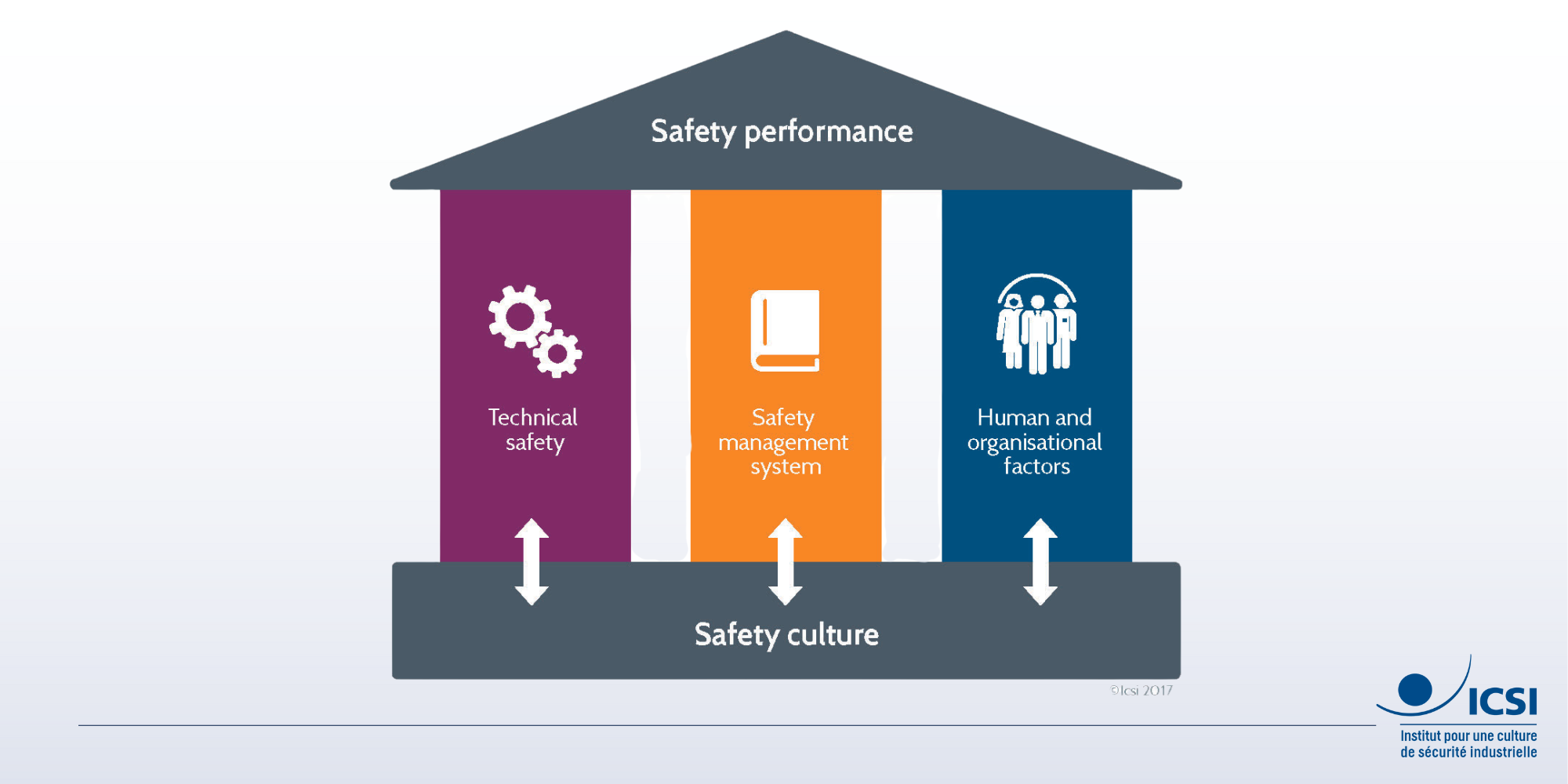
How the three pillars reinforce each other
It is tempting to procure these areas separately — a safeguarding course here, an inclusion training day there, a wellbeing webinar in mental health awareness week. In practice, they are deeply connected. Safeguarding cultures fail when staff are too afraid or too overwhelmed to speak up, which is a wellbeing and inclusion problem. Equality training without psychological safety produces compliance, not change. Wellbeing initiatives without inclusion exclude the very people most likely to be struggling.
Joining the dots — ideally with a single provider who understands all three — produces a coherent staff experience rather than a calendar full of disconnected mandatory sessions. It also helps managers see these topics as one job: creating an environment where people are safe, respected and able to do good work.
Choosing the right provider
The market is busy and the quality bar varies. A few questions worth asking before signing any contract:
Are your safeguarding courses aligned to current statutory guidance — not last year’s? Statutory updates land regularly, and out-of-date training is worse than none.
Do your equality and diversity training courses move beyond awareness to behaviour? Ask to see the activity design, not just the slide deck.
Is your wellbeing training honest about the limits of individual resilience? Any provider promising that mindfulness will fix structural overwork is selling you a comfortable lie.
Can you demonstrate sector relevance? The way safeguarding training online plays out for a primary school differs significantly from a domiciliary care provider or a youth charity.
A final thought
Compliance is the floor, not the ceiling. The organisations I see thriving in 2026 are those that treat safeguarding, EDI and wellbeing not as separate compliance burdens but as expressions of the same underlying commitment: that the people who walk through the door each morning, and the people they serve, deserve to be safe, respected and well.
Specialist UK providers such as Goldmark Training offer dedicated programmes across all three pillars — from a safeguarding training course tailored to your sector, to equality and diversity training that prioritises behaviour over box-ticking, to wellbeing training grounded in the realities of UK working life.
Whichever route you take, treat the procurement decision as seriously as you would for any other safety-critical investment. Ask hard questions. Demand sector relevance. Insist on outcomes, not just attendance. The cost of getting it right is rarely as high as you fear. The cost of getting it wrong, when that phone call eventually comes, is almost always higher than you imagine.