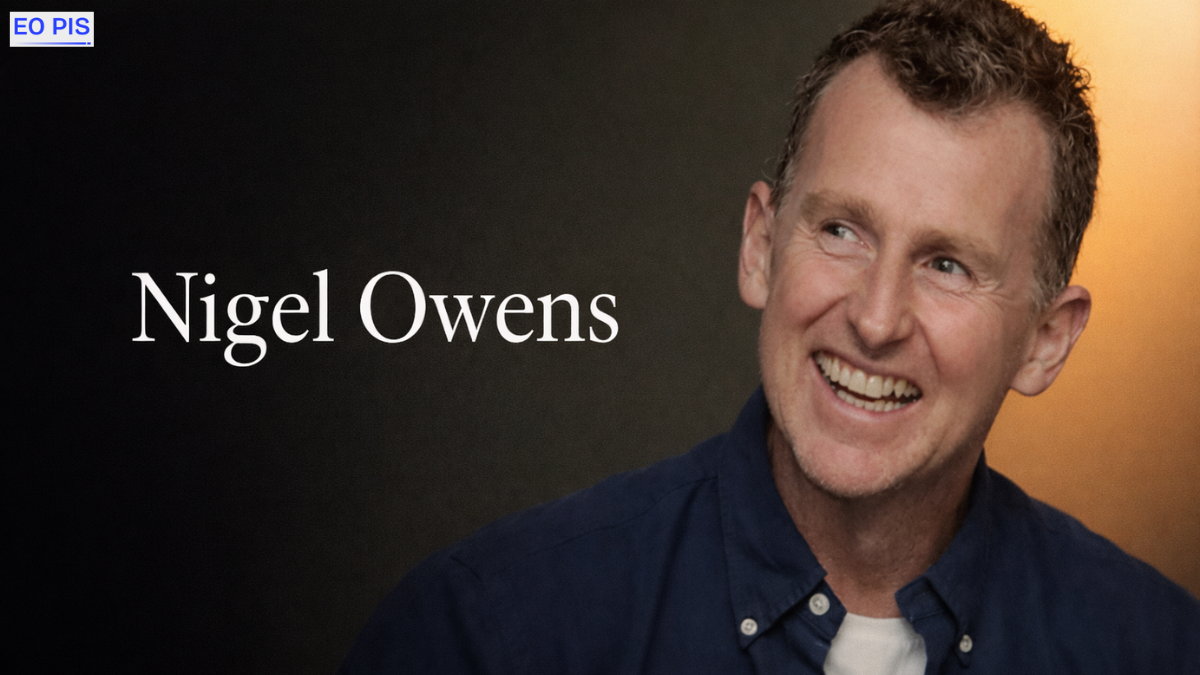
Nigel Owens is still considered one of the greatest rugby referees, but not just because of his career highlights. His real impact lies in how he reshaped rugby officiating through communication, authority, and decision-making under pressure.
If you’re asking whether he’s the best, the honest answer is: it depends on what you value. In terms of match control, player discipline, and respect-based leadership, few referees in international rugby have matched his influence.
Who Is Nigel Owens? Career, Identity, and Rugby Authority
Nigel Owens built his reputation through elite refereeing across international rugby, including World Cup officiating and high-pressure test matches. But focusing only on milestones like Nigel Owens’ career highlights or best matches misses the deeper layer.
He became a central figure in the rugby officiating system, operating within structured frameworks like referee evaluation systems and rugby union rules, while still maintaining a distinct personal approach. His role extended beyond enforcing laws he became a reference point for how authority in sports should function.
Why Is Nigel Owens So Respected in Rugby?
The key question why is Nigel Owens respected comes down to trust and clarity.
In practice, players respected him because he reduced uncertainty. He communicated decisions clearly, explained reasoning when needed, and maintained consistency across the game. Most people notice how he “talked to players calmly,” but what mattered was how that communication reinforced control.
A common mistake is thinking respect comes from personality alone. In reality, it came from aligning referee communication, timing, and rule enforcement into a predictable system that players could rely on.
Nigel Owens Refereeing Style: What Made It Different?
Nigel Owens’ refereeing style stood out because it blended rulebook interpretation with real-time human judgment.
Rugby officiating isn’t just about applying laws, it’s about managing game flow. Owens excelled at reading situations before they escalated. Instead of reacting to fouls, he often prevented them through early intervention and positioning.
This reflects a deeper process: pre-match preparation, in-game decision-making, and conflict resolution working together. He didn’t just enforce rules; he managed the environment in which those rules operated.
Inside the Game: How He Managed Pressure and Player Behavior
In high-stakes matches, pressure comes from multiple directions—crowd intensity, player aggression, and rapid decision-making.
In practice, Owens managed pressure by slowing emotional moments without slowing the game. Most people notice his famous lines, but those were tools to reset control. They helped him “keep control of the game” and reassert authority instantly.
A common mistake among newer referees is copying the language without understanding the timing. What actually worked was his awareness of emotional shifts and his ability to act before conflict escalated.
Real Matches, Real Impact: Why His Reputation Holds
Nigel Owens best matches weren’t just technically accurate, they were controlled.
In real-world usage, elite refereeing is judged by how smoothly a game flows. Owens consistently delivered matches where players adapted to him quickly, reducing friction. That’s why his presence often led to cleaner gameplay and fewer disputes.
This demonstrates a key relationship: referee behavior directly influences player discipline and match dynamics.
The Trade-Offs: What Most People Miss About Elite Refereeing
Elite refereeing comes with hidden complexity. Managing communication, interpreting rules, and coordinating with systems like the Television Match Official (TMO) all happen simultaneously.
There’s also a psychological burden. Every decision is scrutinized, often without context. Owens operated within international rugby governance systems while maintaining personal authority—a balance that is difficult to sustain.
The unexpected outcome is that strong communication can sometimes be misinterpreted as leniency, even when decisions are correct.
When Nigel Owens’ Approach Doesn’t Work
His style isn’t universally effective.
In matches with less experienced players or different cultural expectations, a conversational approach can reduce perceived authority. Some environments require stricter, more formal control.
This highlights a critical limitation: his approach depends on player awareness and context. Applying it blindly can weaken match control instead of strengthening it.
Nigel Owens vs Other Referees: A System-Level Difference
Most referees prioritize rule enforcement first and communication second. Owens reversed that relationship.
He used communication as a primary tool for control, supported by enforcement. This subtle shift changes how players respond and how games unfold.
Within referee evaluation frameworks, this approach aligns with modern expectations of elite refereeing, balancing accuracy with game management.
Can His Style Work in Modern Rugby Today?
Yes, but with adaptation.
Modern rugby relies more heavily on systems like TMO reviews, stricter officiating protocols, and faster gameplay. Owens’ approach to referee communication remains valuable, but it must integrate with these evolving systems.
Trying to replicate his style without understanding current match officiating standards creates inconsistency.
What Can Leaders Learn From Nigel Owens?
His influence extends beyond rugby.
Leadership under pressure, emotional intelligence, and real-time decision-making are transferable skills. Whether in sports, business, or team management, his approach demonstrates how authority and respect can coexist.
He shows that control doesn’t come from dominance—it comes from clarity and consistency.
Who Should Avoid Copying His Style
Not everyone should try to replicate Nigel Owens’ approach.
A common mistake is mimicking surface behaviors, tone, humor, and phrasing without the underlying judgment. Without experience, those same actions can reduce credibility.
His style requires a deep understanding of systems, timing, and human behavior.
Misconceptions About Nigel Owens Rugby Authority
One misconception is that he relied on charisma. In reality, his communication was structured and intentional.
Another is that he was lenient. He enforced rugby union rules strictly but delivered decisions in a way that reduced resistance.
This distinction explains why he “earned respect instantly” without escalating conflict.
Conclusion
If greatness is defined by technical accuracy alone, the debate remains open. But if it includes influence, match control, and the ability to manage players under pressure, Nigel Owens stands among the best.
For anyone evaluating rugby officiating as a system—not just a role—his legacy is clear. Nigel Owens didn’t just referee games; he transformed how authority works within them, leaving a lasting impact on modern rugby.
You May Also Like Gaia Wise: Career, Roles & Future Potential
FAQs
1. Why is Nigel Owens considered one of the greatest rugby referees?
He combined strict rule enforcement with exceptional referee communication, which helped players understand decisions instantly. His ability to manage pressure and maintain match control made games flow more smoothly. This balance of authority and clarity is rare in elite rugby officiating.
2. Can referees today realistically copy Nigel Owens’ style?
Only partially, his approach works best when backed by strong experience and situational awareness. A common mistake is copying his tone or humor without understanding timing, which can reduce authority. His style depends more on decision-making and control than personality alone.
3. What are the downsides or risks of Nigel Owens’ refereeing approach?
His conversational style can be misinterpreted in matches with less experienced players or different cultural expectations. In some situations, it may reduce perceived authority compared to stricter officiating styles. This means his approach is not universally effective across all levels of rugby.
4. Nigel Owens vs other rugby referees: what actually makes him different?
Most referees prioritize rule enforcement first, while Nigel Owens used communication as a primary control tool. This shift helped prevent conflicts rather than reacting to them. It created a more stable game environment, especially in high-pressure international matches.
5. When does Nigel Owens’ style fail—and what does that reveal about refereeing?
It tends to fail in environments where players don’t respond to conversational authority or expect rigid control. This reveals that refereeing isn’t one-size-fits-all; effectiveness depends on context, player behavior, and match intensity. His success highlights the importance of adapting style, not copying it blindly.