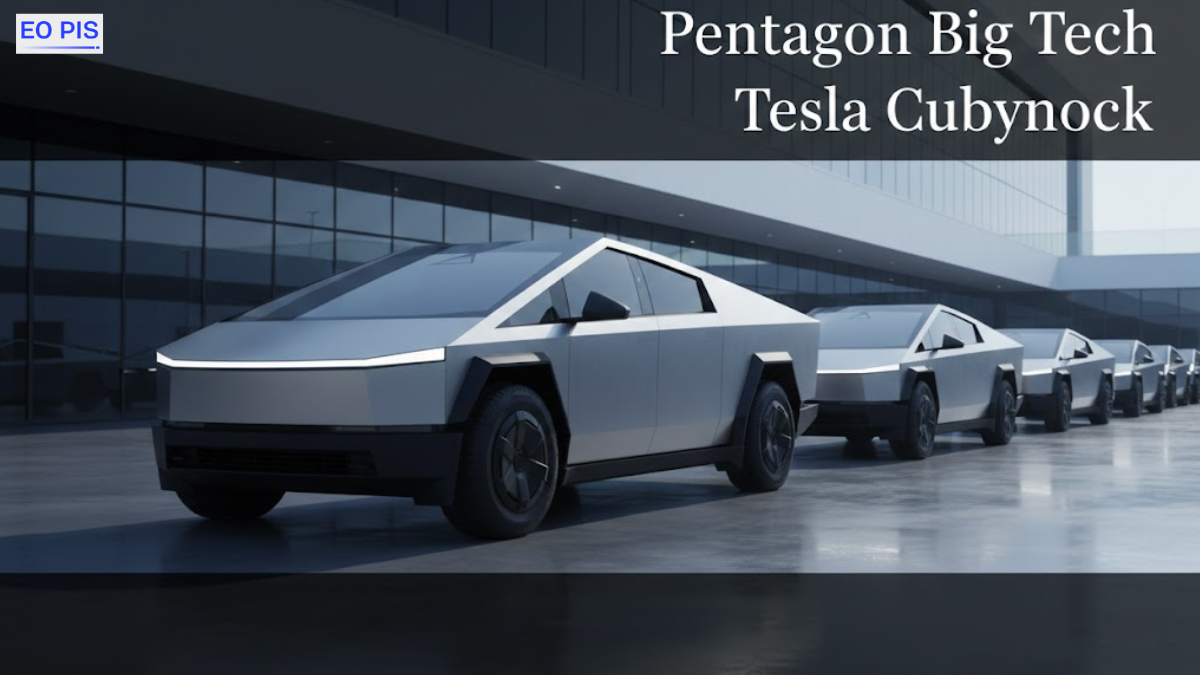
The Pentagon is not weaponizing the Tesla Cybertruck. Instead, the Pentagon and the U.S. Air Force are examining a civilian electric vehicle as part of a military testing program focused on realism. The goal is to understand how modern, commercially available technology behaves in modern conflict environments, especially during non-combat military testing tied to modern warfare preparation.
This interest reflects a broader shift in defense technology adaptation, where private-sector technology in defense planning now plays a decisive role.
What the Pentagon–Cybertruck Story Is Actually About
At its core, the Pentagon Big Tech Tesla Cybertruck story is about adaptation to modern conflict, not innovation theater. Today’s battlefields are shaped by civilian infrastructure in warfare, where pickup trucks, consumer electronics, and software-defined systems appear alongside traditional military hardware.
Because of this reality, the U.S. Department of Defense conducts commercial vehicle analysis to support threat analysis modeling. Studying how a high-profile civilian EV responds to stress improves data-driven defense preparation, especially in environments where civilian and military assets overlap.
Why the U.S. Military Is Interested in Civilian Tech Like the Cybertruck
Civilian technology evolves faster than defense procurement cycles. As a result, consumer technology in warfare often appears long before doctrine catches up. The Tesla Cybertruck represents a new class of dual-use civilian technology that could plausibly appear in future warfare scenarios.
From a defense planning strategy perspective, ignoring such platforms would create blind spots in sensor accuracy and detection, particularly in cluttered, civilian-heavy settings.
What the Air Force and Pentagon Are Really Testing (And What They’re Not)
This is target vehicle testing, not deployment. The Cybertruck is used as a reference object to study interactions between modern vehicles and missile and sensor testing systems.
Realistic Battlefield and Training Simulations
Modern forces prioritize realistic battlefield training and military simulation realism. Testing against unconventional civilian vehicles improves understanding of how battlefield sensor systems perform when visual, thermal, and radar profiles differ from traditional targets.
Why the Cybertruck’s Unusual Design Matters for Testing
The Cybertruck’s stainless steel exterior and angular geometry affect blast behavior and penetration in ways standard vehicles do not. These differences help analysts evaluate edge cases that simulations alone cannot fully capture.
Electric Architecture as a New Military Variable
As a civilian electric vehicle, the Cybertruck introduces new variables related to electronics failure under attack. High-voltage systems, battery placement, and internal wiring influence how damage propagates, making EVs increasingly relevant to modern warfare preparation.
Why This Is Not a Secret Partnership With Tesla or Elon Musk
Despite public speculation, there is no evidence of a strategic alliance between the Pentagon and Tesla, nor direct involvement from Elon Musk. Purchasing a commercial product for testing is routine and does not imply collaboration.
This confusion illustrates public perception vs factual use, a recurring issue in Big Tech and government interaction where symbolism is mistaken for operational reality.
Pentagon and Big Tech: A Broader Shift in Defense Strategy
Why Commercial Technology Now Shapes Military Planning
Defense systems now depend heavily on cloud computing and AI in defense, satellite communications, and software-defined warfare. Much of this innovation originates outside government, forcing defense planners to evaluate market-driven technologies as they emerge.
The Cybertruck fits within broader defense innovation trends, not as a priority asset but as a representative data point.
Cybertruck Fires, Vandalism, and the Security Lessons Being Studied
Real-world incidents involving fires or vandalism provide insights that lab testing cannot. These events reveal how materials fail, how batteries respond to stress, and how visibility affects risk—valuable inputs for threat analysis modeling.
Studying such cases helps reduce misinformation around military tech by grounding analysis in observable outcomes rather than speculation.
Why the Cybertruck Fits Modern Military Simulation Models
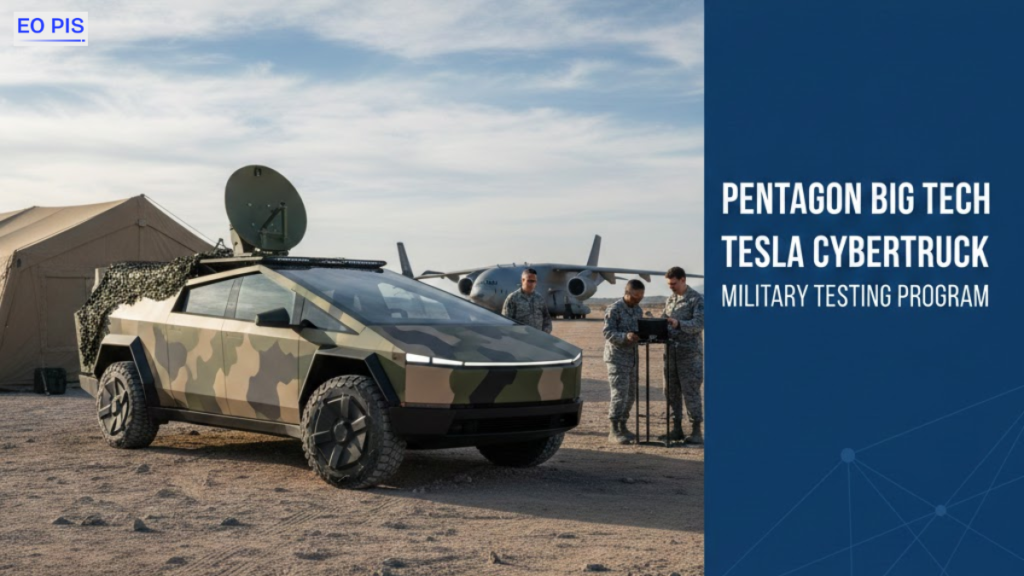
Modern military simulation platforms aim to replicate environments where civilian and military elements coexist. The Cybertruck’s size, reflectivity, and electric drivetrain make it useful for evaluating detection performance in commercial electronics on battlefields.
This improves preparation for global security implications tied to mixed-use environments.
What This Signals About the Pentagon’s Move Away From Old Defense Models
Traditional defense models assumed controlled variables and predictable platforms. Today’s evolving defense models prioritize flexibility, realism, and responsiveness. Studying civilian vehicles reflects this transition toward preparation rather than prediction.
You May Also Like: Cartetach Smart Digital Communication Platform
Why This Matters to the Public and Future Innovation
This matters because every day, technology increasingly shapes defense assumptions. Understanding how civilian products influence security planning reduces public misunderstanding of defense tech and clarifies why analysis does not equal militarization.
For innovators, it highlights how design choices can carry unintended strategic implications.
Conclusion
The Pentagon Big Tech Tesla Cybertruck story is not about turning a consumer product into a weapon. It is about symbolism vs operational reality, data collection, and readiness. By studying civilian technology through controlled, non-combat military testing, the U.S. Air Force prepares for conflicts shaped by rapid commercial innovation.
The Cybertruck remains a civilian vehicle. Its role here reflects how modern defense adapts to a world where technology moves faster than doctrine.
FAQs
1. Why is the Pentagon interested in the Tesla Cybertruck?
The Pentagon is studying the Tesla Cybertruck as a civilian electric vehicle, not a weapon. It helps the U.S. military understand how modern, commercially available vehicles interact with sensors, missiles, and simulations in realistic environments.
2. Is the U.S. Air Force planning to use Cybertrucks in combat?
No. The U.S. Air Force is not deploying Cybertrucks for combat or patrols. They are evaluated only within non-combat military testing programs focused on data collection, not battlefield use.
3. Does testing civilian vehicles mean the military expects to fight civilians?
No, and this is often misunderstood. Civilian vehicles appear in modern conflict zones because they are common, accessible, and part of real environments, so testing them improves target identification and decision accuracy, not intent to engage civilians.
4. Is Elon Musk or Tesla directly involved in Pentagon testing decisions?
There is no evidence of strategic involvement by Elon Musk or Tesla in how the vehicle is tested. Governments routinely purchase commercial products independently for analysis without coordination beyond standard procurement.
5. Why does the military care about electric vehicles instead of traditional trucks?
Electric vehicles introduce new variables battery behavior, electronics failure, thermal signatures, and software dependency that older vehicles do not. Understanding these factors is essential for future warfare scenarios shaped by civilian technology, not legacy hardware.