Introduction
If you’ve ever received a call starting with the 914 area code and wondered where it’s coming from — or perhaps you’re a business owner thinking about getting a local New York number — you’re in exactly the right place. The 914 area code is one of the most historically significant telephone codes in the entire United States, and yet most people know surprisingly little about it beyond “it’s somewhere in New York.”
In this guide, you’ll learn exactly where the 914 area code is located, which cities it covers, its fascinating history dating back to 1947, what time zone it operates in, how to get a 914 number for your business, and — critically — how to tell when a call from 914 is a scam. Whether you’re a curious caller, a local resident, or a business owner doing your homework, this article covers everything you need to know, in plain English, with zero fluff.
What Is the 914 Area Code?
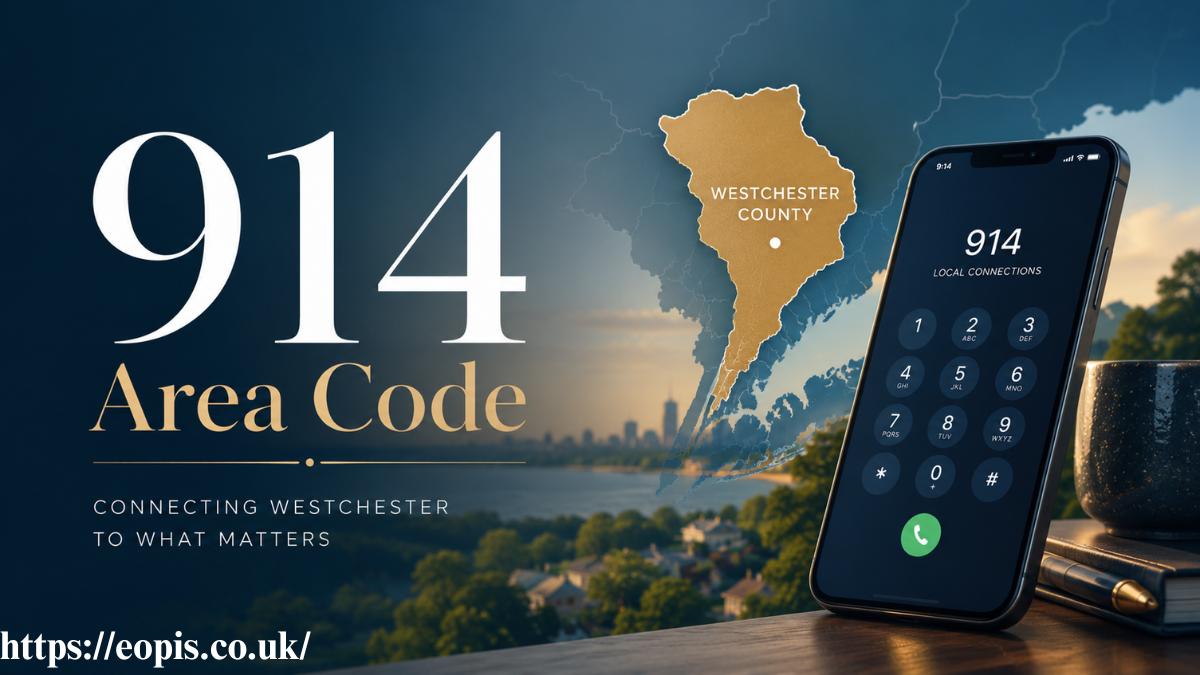
The 914 area code is a North American telephone area code assigned to Westchester County in the state of New York. It is part of the North American Numbering Plan (NANP) — the standardized system that governs how phone numbers are structured across the United States, Canada, and several Caribbean nations.
In simple terms, when you see a phone number that begins with 914, it means the number is registered to a geographic area in southeastern New York, specifically Westchester County — a region that sits just north of New York City.
Is 914 a Real Area Code or a Scam?
This is one of the most common questions people type into Google, and the answer is: 914 is 100% a legitimate area code. It serves over one million residents and thousands of businesses in Westchester County. The confusion arises because scammers sometimes spoof the 914 area code — meaning they make their caller ID display a 914 number even when they’re calling from somewhere else entirely. We’ll go deeper into that in a later section.
Key Facts at a Glance
- Area Code: 914
- State: New York (NY)
- Region: Westchester County (Southeastern NY)
- Time Zone: Eastern Time (ET) — UTC-5 (EST) / UTC-4 (EDT)
- Established: January 1, 1947
- Overlay Code: 838 (introduced to provide additional numbers)
- Dialing Type: 10-digit dialing required since October 2021
Where Is the 914 Area Code Located?
The 914 area code is located in southeastern New York State, covering Westchester County in its entirety. Geographically, Westchester is a roughly 450-square-mile region that borders New York City to the south, the Hudson River to the west, Long Island Sound to the southeast, and Putnam County to the north. It also shares its eastern border with Fairfield County, Connecticut.
Think of Westchester County as the immediate “next door neighbor” of New York City — close enough to commute easily into Manhattan, but distinctly suburban in character. This proximity to the city makes the 914 area code one of the most economically significant regional codes in the entire country.
What Time Zone Is the 914 Area Code In?
The 914 area code falls firmly within the Eastern Time Zone (ET). This means:
- Winter months (November – March): Eastern Standard Time (EST), which is UTC-5
- Summer months (March – November): Eastern Daylight Time (EDT), which is UTC-4
If you’re calling someone in the 914 area code from the West Coast, remember there’s a 3-hour time difference. A call placed at 9:00 AM in California reaches a 914 number at 12:00 PM (noon) New York time.
The History of the 914 Area Code
The story of the 914 area code is genuinely fascinating — and it says a lot about how dramatically American telecommunications have changed over eight decades.
Born in 1947: One of the Original 86
When AT&T’s Bell System rolled out the North American Numbering Plan in 1947, engineers created just 86 original area codes to cover all of continental North America. The 914 area code was among them, making it one of the founding telephone codes in American history. It went into service on January 1, 1947, covering a large swath of southeastern New York State, including what is now Long Island, as well as the Hudson Valley region.
At the time, the middle digit of an area code carried a specific meaning. A middle digit of “0” meant the code covered an entire state; a “1” meant it covered only part of a state. Since 914 has a “1” in the middle, engineers at the time signaled that it was a partial-state code — it never covered all of New York.
The Rotary Phone Era: Why 914 Was “Efficient”
Here’s a fun piece of trivia: in the age of rotary phones, the number of pulses required to dial an area code actually mattered. Fewer pulses meant faster dialing — and heavily populated areas were typically assigned low-pulse codes for efficiency. The 914 area code requires 14 pulses (9+1+4), which was slightly below the average of 14.1 for area codes created around the same time. This tells you that even in 1947, the region served by 914 was considered an important and populated area.
The 1951 Split: Long Island Gets Its Own Code
By 1951, population growth on Long Island created enough telephone demand that it needed its own area code. Long Island was assigned area code 516, separating from the original 914 territory. This was the first major geographic reduction for 914.
The Year 2000 Reshaping
The biggest change came in the late 1990s and early 2000s. The explosive growth of mobile phones and internet dial-up connections rapidly exhausted the available numbering pool across the original 914 territory. On June 5, 2000, the 914 area code was reduced to cover only Westchester County. Everything else — including the Hudson Valley, Orange County, Rockland County, Sullivan County, and Ulster County — was reassigned to the newly created area code 845.
Interestingly, all cellphones already in use in the broader region at the time of the split were allowed to keep their 914 numbers, even if they were physically located outside Westchester.
2021: Mandatory 10-Digit Dialing
Before October 2021, Westchester residents could dial local numbers using just seven digits (no area code needed). That changed when the federal government designated 988 as the new nationwide mental health crisis lifeline. Because some exchanges within 914 already used 988 as a local prefix, the entire 914 area code transitioned to mandatory 10-digit dialing by October 24, 2021. Today, all calls within Westchester County require the full 10-digit format: 914 + 7-digit number.
Cities and Towns Covered by 914
The 914 area code serves Westchester County exclusively, which includes a diverse mix of dense urban centers, affluent suburbs, and quieter small towns. Here are the major cities and communities covered:
Major Cities
- Yonkers — The largest city in Westchester County and the fourth-largest city in New York State. Known for its diverse population, Yonkers sits directly on the Hudson River and borders the Bronx. It was home to the world’s first elevator factory, which opened in 1853.
- White Plains — The county seat of Westchester County, located in south-central Westchester, approximately 7 miles east of the Hudson River. White Plains became the county seat in 1776 and is today a bustling commercial hub with a population of approximately 57,000.
- New Rochelle — Known as the “Queen City of the Sound,” New Rochelle sits along Long Island Sound in the southeastern corner of Westchester. With a population of over 77,000, it’s the seventh most populous city in New York and was settled in 1688 by French Protestant refugees from La Rochelle, France.
- Mount Vernon — Directly bordering the Bronx, Mount Vernon is a densely populated city with deep historical roots and a vibrant community.
Other Notable Communities
- Port Chester
- Harrison
- Ossining
- Peekskill
- Tarrytown
- Scarsdale
- Mamaroneck
- Rye
- Bronxville
- Larchmont
Together, these communities make up a population of roughly one million people, making the 914 area code one of the most densely populated single-county area codes in the United States.
Why the 914 Area Code Still Matters Today
You might wonder: in the age of smartphones, virtual numbers, and VoIP (Voice over Internet Protocol), does an area code really matter anymore? The answer, particularly for businesses, is a resounding yes.
Local Identity and Business Trust
Having a 914 number instantly signals to Westchester County residents and businesses that you’re a local operator. Customers are far more likely to answer calls from local numbers than from unfamiliar area codes. Research consistently shows that local presence increases answer rates, call-back rates, and overall customer trust. For a business serving Yonkers, White Plains, or New Rochelle, having a 914 number isn’t just cosmetic — it’s a competitive advantage.
The Affluence Factor
Westchester County is one of the wealthiest counties in the United States. With median household incomes significantly above the national average and home to Fortune 500 headquarters, major hospitals, prestigious universities, and a highly educated workforce, the 914 area code carries a certain prestige in business circles. A 914 number communicates that you operate in one of New York’s most economically significant regions.
The Overlay: Area Code 838
As 914 numbers became increasingly scarce due to population growth and the proliferation of mobile devices, regulators introduced area code 838 as an overlay for Westchester County. Unlike a split (which divides the geographic territory), an overlay shares the same geographic area as the original code. This is why mandatory 10-digit dialing became essential — you now need to include the area code on every call to distinguish between 914 and 838 numbers within the same county.
How to Get a 914 Area Code Phone Number
Whether you’re relocating to Westchester, starting a business, or simply want a local New York number, getting a 914 area code number is easier than ever.
Option 1: Contact a Major Carrier
The traditional route is signing up with a major carrier like Verizon, AT&T, or T-Mobile and requesting a number in the 914 area. Availability depends on existing inventory, but carriers regularly recycle numbers.
Option 2: Use a VoIP Provider
Virtual phone number providers like Google Voice, Grasshopper, RingCentral, or Nextiva allow you to obtain a 914 number without being physically located in Westchester County. This is particularly popular with businesses that want a local presence in the New York area without maintaining a physical office there. VoIP 914 numbers come with features like call forwarding, voicemail transcription, and auto-attendants.
Option 3: Port Your Existing Number
If you’re moving to Westchester and want to keep your current number, you can port it to a local carrier. Alternatively, if you’re already in the 914 area and switching carriers, number portability laws guarantee you can take your 914 number with you.
Important: 10-Digit Dialing Is Mandatory
Remember — since October 2021, all calls within the 914 area code require full 10-digit dialing. Program your contacts and business systems accordingly to avoid failed calls.
Common Scams Using the 914 Area Code
Here’s where things get serious. The 914 area code, like many area codes serving major metropolitan regions, has been associated with a significant volume of spam and scam calls. Understanding these scams is crucial to protecting yourself.
The Scale of the Problem
According to reported data, nearly 105 million robocalls were associated with the 914 area code in 2024 alone. Spam complaints for 914 saw a dramatic spike — increasing by 150% in December 2025 compared to the previous month. The five most common categories of 914 spam calls are auto warranty scams (17.61% of complaints), prize/lottery scams (6.32%), mortgage loan offers (6.97%), health insurance pitches (5.32%), and solar panel scams (3.98%).
Why Scammers Use 914 Numbers
Scammers exploit the 914 area code using a technique called caller ID spoofing — technology that allows them to display any number they choose on your caller ID, regardless of where they’re actually calling from. They chose 914 specifically because it’s a well-known New York area code that people recognize and are likely to answer.
VoIP technology makes this even easier: anyone, anywhere in the world, can obtain a virtual 914 number and use it to place calls.
The Most Common 914 Scams
The Auto Warranty Robocall (“Suzie”): Many residents report receiving calls from a robotic voice named “Suzie” claiming their car’s manufacturer warranty has expired. The call creates urgency by saying it’s a “final courtesy call” before they “close the file.” Never press any buttons — doing so confirms your number is active and invites more calls.
Social Security Suspension Threats: Callers claim your Social Security Number has been linked to suspicious or illegal activity and threaten to suspend it or seize your assets unless you call back immediately. The Social Security Administration will never call you with threats like this.
The Grandparent Bail Scam: A caller pretends to be a grandchild (or a lawyer representing one) who is in jail and urgently needs bail money. These calls are emotionally manipulative and prey on elderly residents.
IRS Impersonation: Robocalls threatening lawsuits or arrest for unpaid taxes, demanding immediate payment. The real IRS always initiates contact via postal mail first.
Prize/Lottery Scams: Callers claim you’ve won millions from Publishers Clearing House or a similar organization, but you must first pay a “processing fee” via gift card to collect your winnings. Legitimate sweepstakes never ask winners to pay fees.
Utility Company Impersonation: Callers pose as Con Edison representatives, claiming your service is about to be cut off, creating false urgency to extract payment or personal information.
Red Flags to Watch For
- Your caller ID says “Potential Spam” or “Spam Risk.”
- The call begins with a long pause before anyone speaks
- You hear a prerecorded or robotic-sounding voice
- Generic greetings like “We’ve been trying to reach you…”
- Requests for gift card payments or wire transfers
- Threats of arrest, account suspension, or legal action
- Caller asks for Social Security numbers, bank details, or passwords
Expert Tips: Protecting Yourself from 914 Spam Calls
The good news is that you don’t have to be a victim. Here are proven, actionable strategies to protect yourself from 914 area code scam calls.
Tip 1: Register on the Do Not Call Registry
Visit donotcall.gov and register your number with the FTC’s National Do Not Call Registry. Legitimate companies are legally required to honor this list. It won’t stop scammers (who operate illegally anyway), but it dramatically reduces legitimate telemarketing.
Tip 2: Install a Spam-Blocking App
Apps like Nomorobo, RoboKiller, and Truecaller use databases of known scam numbers to automatically screen and block incoming calls before they reach you. Many carriers (Verizon, AT&T, T-Mobile) also offer built-in spam filtering — check your carrier’s app or settings.
Tip 3: Let Unknown Calls Go to Voicemail
If you don’t recognize a 914 number, let it ring to voicemail. Legitimate callers will leave a message. Scammers rarely do. If someone leaves a voicemail claiming to be from a government agency, bank, or utility company, call back using the official number from the organization’s website — never the number provided in the voicemail.
Tip 4: Never Press Buttons During a Robocall
Pressing any number — even “9” to be removed from a list — confirms to scammers that your number is active and answered by a real person. This often results in more calls, not fewer. Simply hang up immediately.
Tip 5: Remove Your Number from People-Search Sites
Data brokers like Spokeo, WhitePages, and BeenVerified publish your phone number publicly, making it available to scammers. Use opt-out tools (or services like DeleteMe or OneRep) to remove your information from these sites.
Tip 6: Report Scam Calls
- FTC: reportfraud.ftc.gov (for general scams and robocalls)
- FCC: consumercomplaints.fcc.gov (for illegal robocalls and spoofing)
- FBI: ic3.gov (for significant financial losses or cross-state fraud)
- IRS TIGTA: tigta.gov (for IRS impersonation scams)
914 Area Code vs. Neighboring Area Codes
Here’s a quick comparison of the 914 area code and its neighboring codes in the New York tri-state area:
| Area Code | Region Covered | State | Time Zone | Established |
| 914 | Westchester County | New York | Eastern | 1947 |
| 845 | Hudson Valley (Orange, Rockland, etc.) | New York | Eastern | 2000 |
| 838 | Westchester County (overlay) | New York | Eastern | 2017 |
| 212/332/646 | Manhattan (New York City) | New York | Eastern | Various |
| 718/347/929 | Brooklyn, Queens, Bronx, Staten Island | New York | Eastern | Various |
| 516/363 | Nassau County (Long Island) | New York | Eastern | 1951 |
| 203/475 | Fairfield County (adjacent to 914) | Connecticut | Eastern | 1947 |
| 201/551 | Northeastern New Jersey | New Jersey | Eastern | 1947 |
As you can see, 914 is one of the oldest codes in the entire tri-state area, and remains the sole primary code for Westchester County — a testament to how well the original 1947 planners anticipated the region’s importance.
You May Also Like 515 Area Code
Frequently Asked Questions
1. Where exactly is the 914 area code?
The 914 area code covers Westchester County, New York — a region of approximately 450 square miles located directly north of New York City. Major cities include Yonkers, White Plains, New Rochelle, and Mount Vernon. The area borders New York City to the south, the Hudson River to the west, Long Island Sound to the southeast, and Putnam County to the north. It operates in the Eastern Time Zone (EST/EDT).
2. Is the 914 area code a scam?
The 914 area code itself is completely legitimate and serves over a million residents in Westchester County. However, scammers frequently spoof 914 numbers — meaning they make their caller ID display a 914 number while actually calling from elsewhere. If you receive a suspicious call from 914 asking for money, personal information, or threatening legal action, treat it with caution and verify the caller independently.
3. What time zone is the 914 area code in?
The 914 area code is in the Eastern Time Zone. During standard time (roughly November through March), this is Eastern Standard Time (EST), which is UTC-5. During daylight saving time (roughly March through November), it’s Eastern Daylight Time (EDT), or UTC-4. This is the same time zone as New York City.
4. What cities are in the 914 area code?
The 914 area code covers all of Westchester County, New York, including Yonkers, White Plains, New Rochelle, Mount Vernon, Port Chester, Harrison, Ossining, Peekskill, Tarrytown, Scarsdale, Mamaroneck, Rye, Bronxville, and dozens of other communities. In total, it serves approximately 63 cities and towns within Westchester County.
5. When was the 914 area code established?
The 914 area code was established on January 1, 1947, as part of the original North American Numbering Plan created by AT&T’s Bell System. It was one of just 86 area codes created at that time and holds the distinction of being the first area code ever assigned in New York State. Its current boundaries (Westchester County only) have been in place since June 2000.
6. How do I get a 914 area code phone number?
You can get a 914 number by signing up with a major carrier (Verizon, AT&T, T-Mobile) and requesting one, or by using a VoIP provider like Google Voice, Grasshopper, or RingCentral. VoIP options allow you to get a 914 number without physically being located in Westchester County — useful for businesses that want a local New York presence. Just remember that all 914 calls now require 10-digit dialing.
7. Why do I keep getting calls from 914 numbers?
If you’re receiving frequent unwanted calls from 914 numbers, they’re most likely robocalls or spam calls using spoofed 914 numbers. Common scam types include fake auto warranty notices, Social Security threats, prize scams, and IRS impersonation. Install a spam-blocking app like Nomorobo or Truecaller, register on the Do Not Call Registry at donotcall.gov, and report persistent scam calls to the FTC at reportfraud.ftc.gov.